
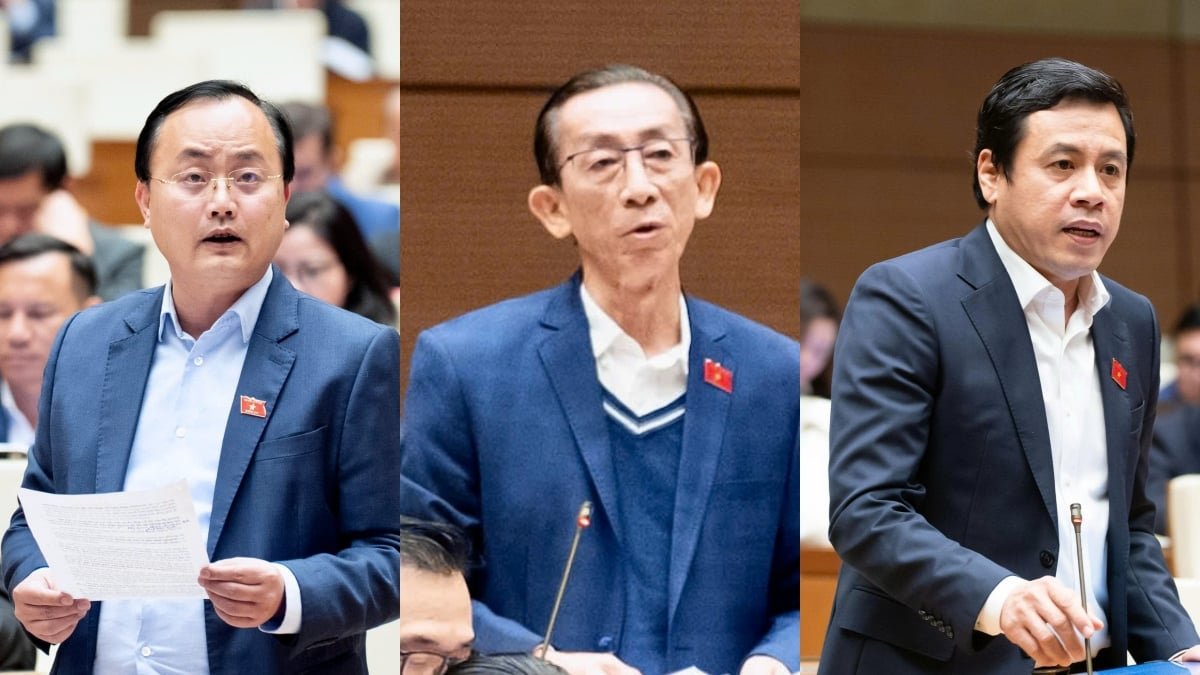
During the afternoon session on November 20th, in addition to voting on and approving many important draft laws and resolutions, National Assembly deputies contributed many in-depth opinions to further refine the draft Law on Commodity Derivatives Transactions .
Ensuring the true nature of risk prevention and price control for agricultural products.
Acknowledging the drafting committee’s efforts in incorporating numerous contributions to finalize the draft law presented on November 19th, Representative Tran Hoang Ngan (Ho Chi Minh City National Assembly Delegation) commented that this is a highly specialized law that must both meet the requirements of international integration and be closely linked to monetary security and foreign exchange management in the context of foreign exchange reserves and cybersecurity factors requiring strict management.
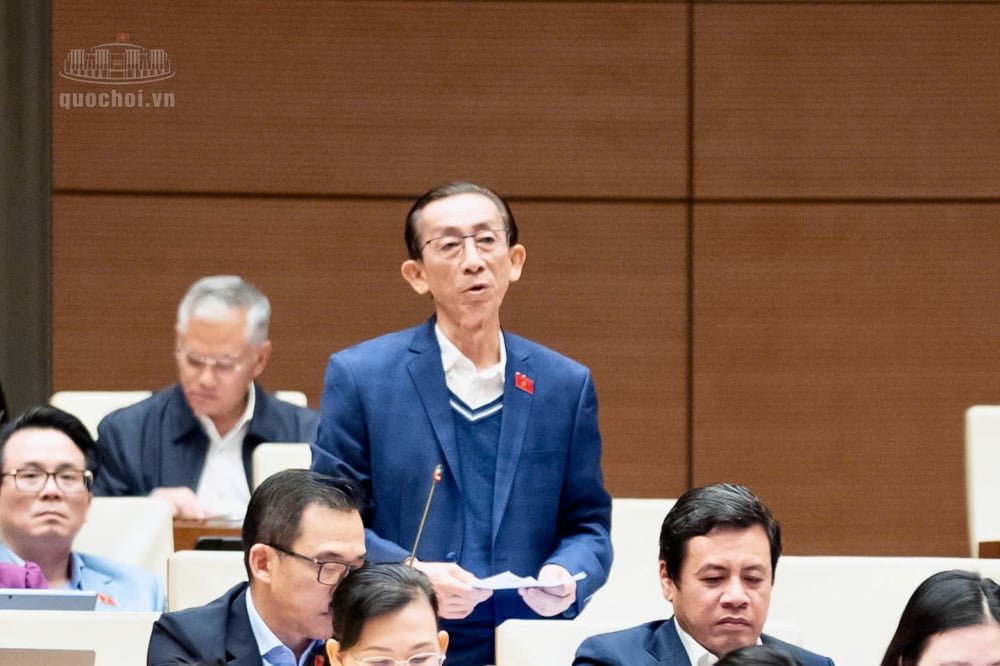
Analyzing the practical experience of the Vietnamese stock market, which needed 17 years of operation on a new foundation to develop into a derivatives market, Representative Tran Hoang Ngan pointed out that derivatives need to be developed on the basis of readily available physical commodities. According to data from the Government report, out of a total of 50,000 commodity trading accounts currently in operation, up to 99.5% are individual accounts, mainly conducting short-term transactions rather than aiming to hedge risks for production. Therefore, the representative suggested that the law needs to strictly regulate derivative trading to bring it back to its true nature as a risk insurance tool for farmers, producers, and import-export businesses.
Representative Tran Hoang Ngan also proposed considering expanding the scope of regulation to “Law on Commodity and Derivative Transactions” to ensure consistency with the Commercial Law, fully encompassing participating entities such as market makers, clearing centers, electronic warehouse certificates, and dispute resolution mechanisms.
“One of the reasons for the establishment of an international financial center is that it allows us to mobilize international capital in the Vietnamese market, and secondly, it helps us control the prices of goods and agricultural products in which Vietnam holds a leading position, for example, top exporters of coffee, cashews, pepper, and rice,” emphasized delegate Tran Hoang Ngan.
Strengthen inter-agency coordination mechanisms and improve legal consistency.
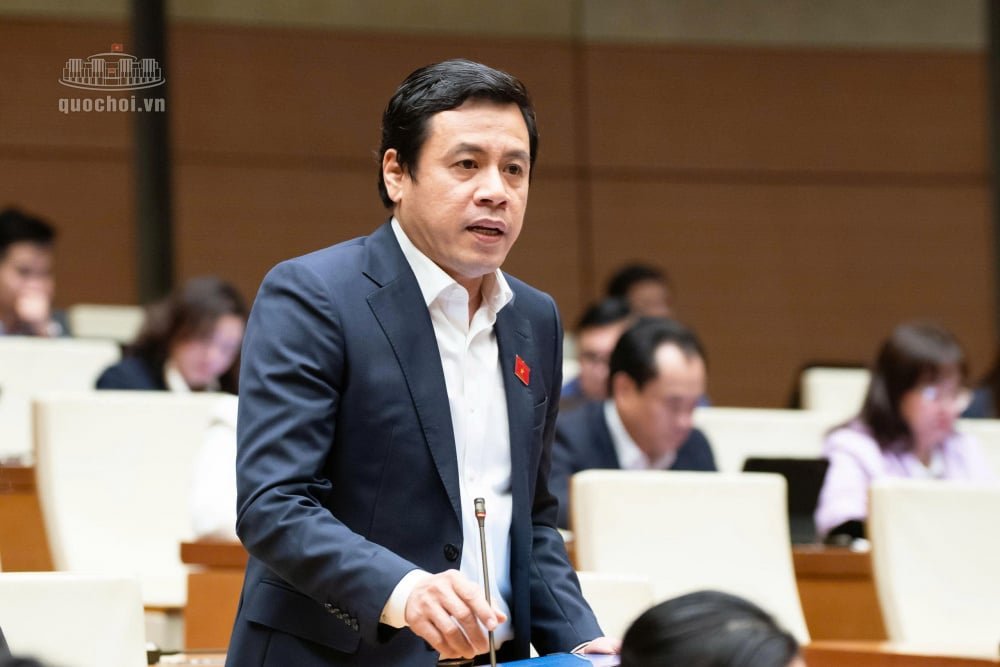
Agreeing with the necessity of enacting a law to establish tools for preventing price volatility risks, Representative To Huy Vu ( Hanoi City National Assembly Delegation) emphasized that the development orientation of the derivatives market should be linked to the goal of gradually establishing reference prices for Vietnam’s key commodities.
Citing data from the Ministry of Industry and Trade ‘s feedback report, the delegate stated that from the end of 2018 to June 2026, out of a total of 50,000 accounts, individual accounts accounted for 99.9% and organizations accounted for 0.1% (approximately 9% of the transaction value); in 2025 alone, the average nominal transaction value was approximately VND 7,500 billion per day, mainly consisting of standard contracts linked with foreign countries, early settlements, and transactions involving cross-border foreign currency deposits.
To ensure system security and control cross-border foreign exchange flows, Representative To Huy Vu proposed specifying in Articles 8, 15, and 39 the principle: “There must be written agreement from the Ministry of Finance and the State Bank of Vietnam regarding the licensing of clearing centers and approval of cross-border interoperability,” and simultaneously granting the State Bank of Vietnam the authority to establish foreign currency deposit limits and temporarily suspend interoperability when necessary to ensure foreign exchange security.
In addition, delegate To Huy Vu proposed applying a minimum foreign ownership limit and a limit on the ownership of a shareholder and related parties at the Clearing and Settlement Center at the same level as the regulations for the Commodity Exchange (not exceeding 49%); and simultaneously reviewing and improving the regulations in Article 6 on the controlled testing mechanism and comparing the compatibility of regulations on price manipulation and insider trading in Articles 7 and 52 with the current Penal Code to ensure the consistency of the legal system.
Ensuring infrastructure independence and protecting customer assets.
Appreciating the Drafting Committee’s proactive approach in incorporating feedback from group discussions to finalize the draft on November 19th, Representative Tran Anh Tuan (Ho Chi Minh City National Assembly Delegation) agreed with the urgency of promptly implementing the Commodity Exchange model to boost the economy and support agricultural producers.
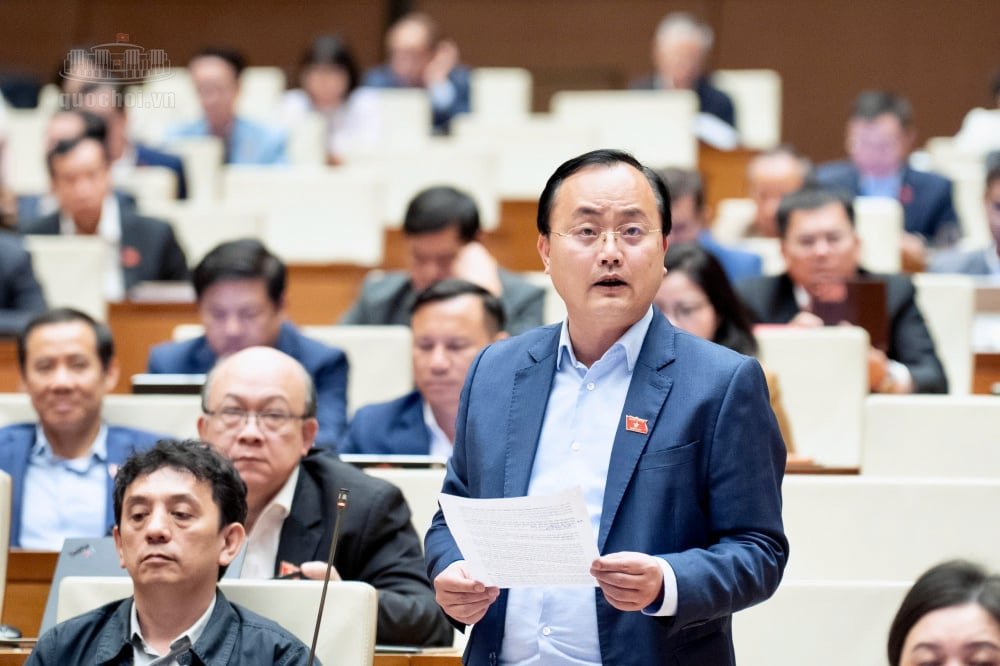
Regarding specific comments on the operational structure, delegate Tran Anh Tuan agreed with the principle that the Clearing and Settlement Center operates independently from the Commodity Exchange. However, to ensure genuine objectivity, the delegate proposed adding a regulation that these two units should not be under the same ownership agency, avoiding a situation where a single entity owns them, which would make it difficult to ensure operational independence and protect the rights of all parties.
Regarding the rights of investors under Clause 4, Article 44, the representative proposed reviewing and supplementing the mechanism for returning and transferring assets not only when clearing members become insolvent, but also in cases where trading members, brokerage members, or intermediary organizations holding customer assets face similar situations.
Furthermore, regarding the regulations allowing investment in margin funds and highly liquid assets in Articles 17 and 50, the delegates suggested clarifying the mechanism for delineating decision-making authority, profit sharing, and responsibility, ensuring customer participation in decision-making regarding assets under their ownership.