
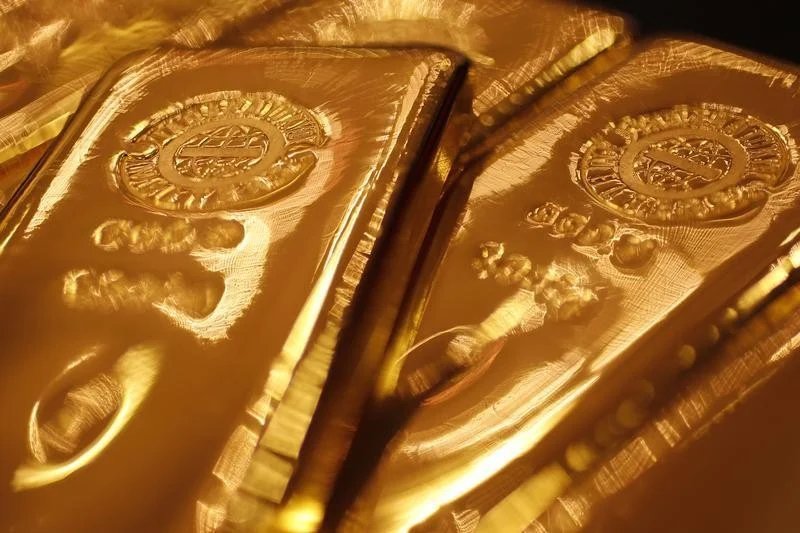
Investing.com — Gold prices slipped on Thursday, as investors moved to lock in profits after the yellow metal jumped to a fresh two-month high, as soft inflation data this week dented expectations for an imminent Federal Reserve interest rate hike.
At 09:22 ET (13:22 GMT), had fallen 0.4% to $4,393.12 an ounce, while had declined 0.4% to $4,451.60 an ounce.
Gold briefly climbed to around $4,450 on Wednesday, buoyed by figures showing a deceleration in U.S. consumer price growth to 3.4% from 3.5% in the twelve months to July, in line with forecasts. On Thursday, a separate gauge showed that producer prices were unchanged month-on-month in July.
The data has contributed to a reduction in expectations for an imminent Fed rate increase. Markets were last pricing in a roughly 36% probability of a hike at the central bank’s September meeting, down from 46% before the release consumer price, according to CME FedWatch.
The Fed held rates at a range of 3.50% to 3.75% at its July gathering, although three policymakers dissented in favor of an increase.
Investors are also expected to parse through Fed Chair Kevin Warsh’s comments at the Jackson Hole symposium later this month for insight into how policymakers will calibrate rates in the months ahead. Elevated borrowing costs could present a headwind for gold because bullion does not generate interest income.
However, Warsh’s insistence that the Fed will offer less of a policy roadmap will translate into “more guesswork for the market,” Max Baecker, President of American Hartford Gold, told Investing.com.
“Warsh’s limited guidance makes gold’s outlook more dependent on each new data point and more volatile in both directions,” Baecker said.
Hormuz uncertainty persists
Elsewhere, diplomatic efforts to end the Middle East conflict and reopen the Strait of Hormuz have shown little sign of an immediate breakthrough, leaving severe traffic restrictions in the vital waterway in place. are heading for a one-week gain.
“Oil is influencing gold through inflation, interest rates and the Fed,” Baecker said.
Meanwhile, the , which tracks the greenback against a basket of currenices, weakened slightly, helping moderate declines in gold. A softer dollar can be supportive of bullion, as it makes the metal less expensive for overseas buyers.
Central bank purchases of gold, especially in China, have also been an important source of support in recent days. Baecker suggested that gold demand is “broadening because buyers are responding to structural risks, while rates, geopolitics, and momentum deterim how quickly prices move.”
(Roushni Nair contributed reporting)