
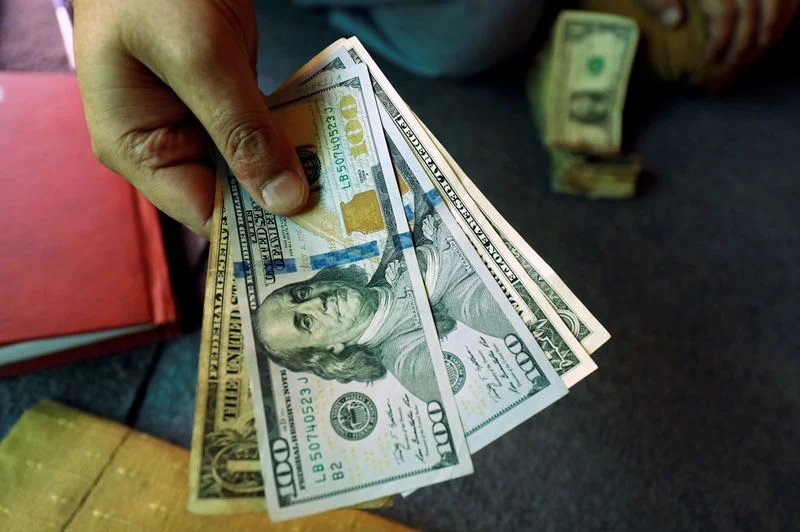
Investing.com– The dollar retreated from near 13-month highs on Friday and was on track for a weekly loss after softer-than-expected U.S. employment data cooled expectations for further Federal Reserve interest rate hikes.
The downturn opened the door for a robust recovery in the euro and other major currencies.
A U.S. market holiday on Friday also kept broader trading volumes muted, while Caution over tenuous U.S.-Iran peace talks, amid some progress in negotiations held in Qatar this week, also made for small moves in risk-driven markets.
The euro and pound both rose 0.1% in European trade.
Get more insights on the dollar and FX markets by subscribing to InvestingPro
Dollar stalls after soft payrolls cools rate hike questions
, which tracks the greenback against a basket of six rival currencies, fell [X.XX]% to [XXX.XX], extending overnight losses. The currency was poised to snap a two-week winning streak with a 0.8% decline for the week.
Trading volumes remained thin due to a U.S. market holiday, keeping broader moves contained.
Sentiment was also characterized by quiet caution as investors parsed the latest diplomatic headlines out of Qatar, where technical peace talks between the U.S. and Iran reported “positive progress” before pausing for the funeral of late Iranian Supreme Leader Ayatollah Ali Khamenei.
A softer dollar enabled some gains in Asian currencies on Friday. The Australian dollar’s pair– viewed as a barometer of regional risk appetite– rose nearly 0.3%.
The euro capitalized on the greenback’s retreat, climbing 0.5% for the week.
Prior to the jobs data, the CME FedWatch tool had priced in an over 60% probability that new Fed Chair Kevin Warsh would oversee an interest rate hike in September. Those bets were largely dialed back to an October hold.
However, analysts note the dollar’s floor remains robust after Warsh reiterated this week that the central bank remains strictly independent and heavily committed to its 2% inflation target amid sticky U.S. price pressures.
Yen steadies with intervention in focus
The Japanese yen steadied on Friday, with the pair hovering around 161.14 yen after falling sharply in overnight trade.
The currency recovered from its weakest levels in 40 years this week as Japanese authorities kept up their warnings on foreign exchange intervention to curb excessive speculation against the yen.
Reuters reported that Tokyo had switched to a more targeted campaign to squeeze speculators and boost the battered yen, abandoning their prior habit of telegraphing intervention.
The government has in the past intervened directly during U.S. market holidays, and could potentially act on Friday.
The yen is among the worst-performing Asian currencies this year, as the impact of high oil prices, a wide gulf with U.S. interest rates, and questions over Japan’s fiscal spending saw traders largely bet against the currency.
“While intervention risks can generate bouts of volatility and sharp corrections, verbal and actual intervention alone are unlikely to drive a sustained reversal in USDJPY without a shift in underlying macro fundamentals,” OCBC analysts wrote in a note.
(Ambar Warrick contributed reporting)