
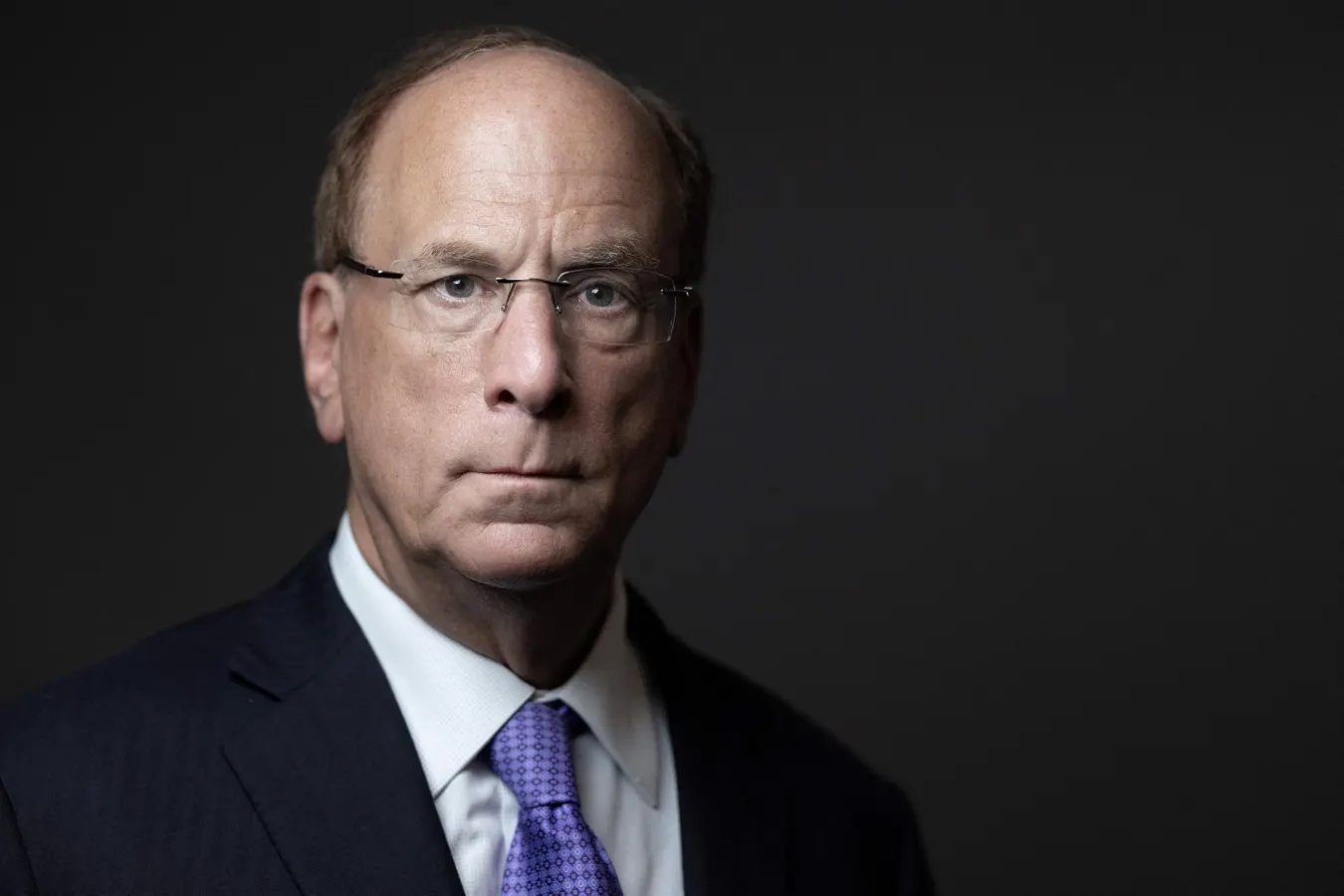

US chairman and CEO of BlackRock Larry Fink poses during a photo session in Paris on June 22, 2023. (Photo by Joël SAGET / AFP) (Photo by JOEL SAGET/AFP via Getty Images)
AFP via Getty Images
“BREAKING: Senior ETF Analyst Eric Balchunas reveals BlackRock’s Bitcoin Premium Income ETF $BITA is launching,” posted crypto commentator @MartiniGuyYT this week. The fund, he wrote, citing Balchunas, would “target 15-25% annual yield while trying to capture at least 70% of Bitcoin’s upside.”
BlackRock, the world’s largest asset manager, started trading the iShares Bitcoin Premium Income ETF, ticker BITA, on Nasdaq in mid-June. It pays a double-digit cash yield on an asset that has never paid one. Bitcoin was changing hands near $65,800 when it went live.
The mechanics matter. BITA sells covered call options against BlackRock’s spot fund, IBIT, handing investors steady premium income but trading away part of bitcoin’s explosive upside. Robert Mitchnick, BlackRock’s global head of digital assets, told CoinDesk it is the natural next step for bitcoin funds, built for income investors and institutions that could never hold an asset with no native yield. He said it is meant to shine in flat or falling markets and to lag during sharp rallies.
Why the bulls think this sends bitcoin higher
“BlackRock Competing With Strategy! This ETF essentially converts demand for high yield into demand for bitcoin,” wrote trader @TimWarrenTrades. “Last time BlackRock released a Bitcoin related ETF bullish things happened.”
IBIT’s flows back the point. @thepfund logged the fund pulling in “+906 Bitcoin ($+57.67 million)” in a single day this week, and @CoinEdition noted that “Fidelity accumulated 37.7K BTC, signaling strong institutional conviction” through the same volatile stretch.
Michael Terpin, a longtime bitcoin investor, thinks the timing fits a pattern he has watched for a decade. “We have been following the four-year cycle unbelievably well, and yet every bear market there’s still, seems like the majority of pundits say the cycle is broken,” Terpin said on the On The Margin podcast. To him, the gloom is the tell: “that allows people like me who’ve been through every cycle to go say, yeah, it’s time to buy. It’s the bottom of the cycle. And there’s reasons they repeat.”
He argues the buyer base has barely formed. “We’re still only around 4 % of the world that has any Bitcoin, maybe about 8 % that has crypto,” Terpin said. “We’re in that crossing of the chasm from the early adopters, which are usually three or 4 % right on schedule, right around 4%.”
The targets match the mood. JPMorgan sees $170,000 this cycle and VanEck $180,000. Standard Chartered called the slide to around $59,000 the bottom and declared the end of “crypto winter.”
The bear case: a ‘yield trap’ in disguise
The bluntest warning comes from inside the industry. Paolo Ardoino, chief technology officer of Bitfinex and Tether, says the rush into funds cuts against bitcoin’s whole point. “I think ETFs are not necessarily positive for crypto as an ecosystem,” he said in an interview. “If 99.99% of the Bitcoin will be in all the ETFs, how we would feel about it?”
The irony is that it is good for his business. “Every single day, I’m like, people are treating us as a bank,” he said. “I wish people would take more ownership of the Bitcoin they have.” Custody “makes more money to us,” he added, but “not necessarily is the right thing.”
Other traders make a narrower case: the yield product carves up existing bitcoin demand rather than expanding it, rerouting money from buyers who would have bought spot anyway. A widely shared short from the channel Glimpse Market put it bluntly: the bitcoin network does not suddenly pay cash, and the yield is pure options engineering, a trap that caps the upside while leaving the downside fully intact.
The floor is unsettled, too. Galaxy Research has floated a cycle bottom as low as $40,000 to $46,000, against Standard Chartered’s all-clear. And the mood is far from euphoric. @Cryptogirl_MD pegged bitcoin at “$65,853.86” with the “Fear & Greed Index – 24 Fear” on Tuesday.
What it means for bitcoin’s price
Terpin draws a line between the new buyers. “ETFs are not permanent capital,” he said on the podcast, unlike the treasury companies that borrow to buy and never sell. Either way, he says the supply side is unforgiving. “We just mined a few weeks ago the 20 millionth Bitcoin,” Terpin said. “And so there’s only 1 million left. It’s going to take over 100 years and then there’ll be no more.”
His own number sits well above the analysts’. “These diminishing returns are going to reverse when you get the S curve of adoption causing great supply shock,” Terpin said. “And so that’s going to like lift us with a God candle or two… that’s how we get to a million.”
BlackRock’s 0.65% fee undercuts rival covered-call funds, and YouTube analysts tracking the filings say it is racing to beat a competing Goldman Sachs product expected in July.
What to watch
The flows will settle it. If BITA and IBIT keep swallowing coins while bitcoin holds the mid-$60,000s, the institutional bid is real; if the yield fund just drains spot ETFs, the trap crowd gets its proof.
“Same Bitcoin price. Completely different context. In 2021, $67K was the top. Now, it may be closer to the low. That’s what Bitcoin bears keep missing,” wrote @frugalbc.