
This article adheres to strict editorial standards. Some or all links may be monetized.
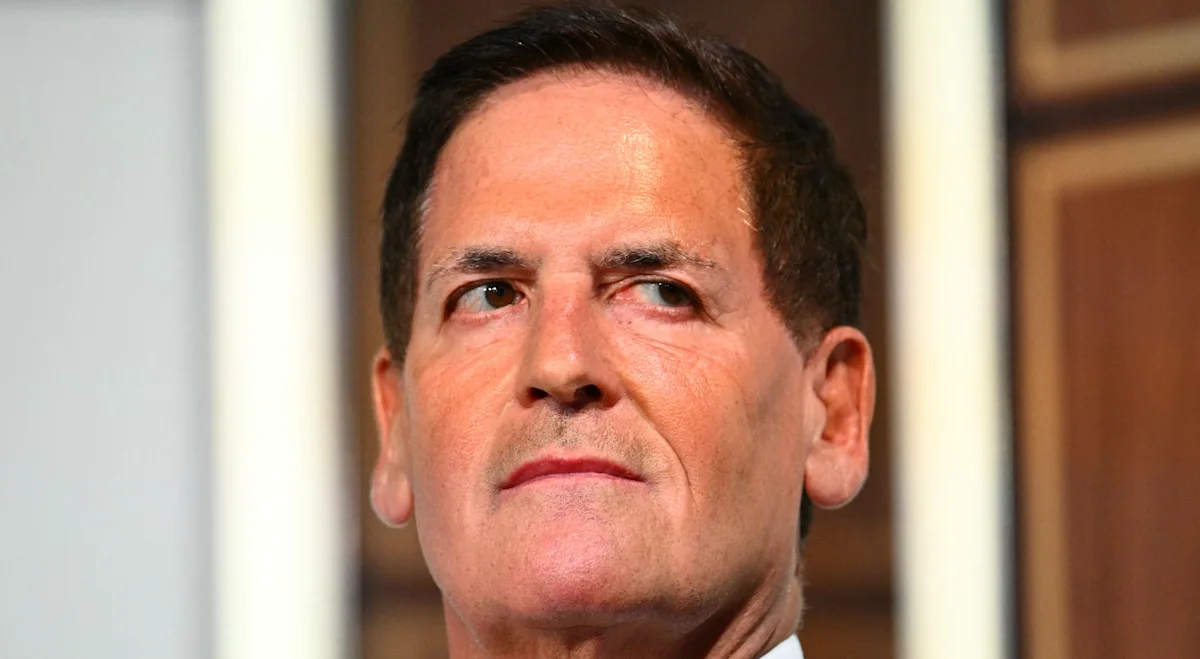
“I don’t know if it’s dead, but I’d say it’s disappointing.” That’s what Mark Cuban had to say about crypto in a recent interview with Front Office Sports (1).
Bitcoin is a major source of Cuban’s disappointment. “This might get some people upset: I think bitcoin has lost the plot,” he said. The former Shark Tank host says he recently sold most of his holdings because they aren’t performing well as an inflation hedge, especially now that the Iran War is causing inflation hikes.
Top Picks
-
The IRS usually taxes gold as a collectible — but this little-known strategy lets you hold physical bullion tax-free. Get your free guide from Goldco
“I always thought it was a better version of gold than gold. Well, gold just blew up and went to $5,000; bitcoin dropped,” Cuban said. “Every time the dollar dropped, bitcoin should have gone up.”
Some bitcoin aficionados, such as Blockstream CEO Adam Back, say Cuban hasn’t given bitcoin a fair shake (2). “I don’t know what @mcuban is trying to say .. doesn’t line up with data unless he sold the bottom,” Back said on X (3) last week.
Does bitcoin make a good inflation hedge? Was Cuban right to sell? Here’s how the math breaks down.
Does bitcoin work as an inflation hedge?
An investment counts as an inflation hedge when it helps protect its investor against the ever-decreasing purchasing power of money. In other words, when fiat currency dips, a hedge retains — or sometimes even increases — in value.
Fiat currency, like the US dollar, loses some value each year because the government can (and will) print more of it as needed (4). The more dollars are printed, the less each individual dollar is worth.
Meanwhile, the number of bitcoins that can exist is computationally capped. There can only ever be 21 million coins (5). In theory, this makes bitcoin a good hedge against inflation.
While bitcoin underwent a rough crypto winter — with prices down over 45% from its record highs last October — some think the bear run might be on its last legs (6).
“Top-buyer capitulation is a very common theme in late cycle bear markets. This makes us more confident that BTC’s bear market is in late stages,” Compass Point analyst Ed Engel wrote in a note (7).
But for crypto evangelists, a dip could be the perfect time to bolster your portfolio. Platforms like Kraken can help trading cryptocurrencies a breeze — whether you’re an acolyte or a priest.
You can invest in 600+ cryptocurrencies*, including bitcoin, ether, SOL, XRP and more, or set up recurring buys to invest automatically.
For those who want greater control, Kraken PRO offers a highly customizable interface for active traders.
Opening an account is quick, with a simple sign-up, verification and short investor profile to get started.
*Not investment advice. Crypto trading involves risk of loss. View legal disclosures at kraken.com/legal/disclosures. The views and opinions expressed in this article are those of the author and do not necessarily represent the views or opinions of Kraken or its management.
Tried and true alternatives
Tangible goods with limited reproducibility tend to make good inflation hedges because you can’t easily make more of them as needed. Gold is a classic example, but other tangible goods like real estate can also make good inflation bets if you’re afraid of your money losing its value.
Bitcoin isn’t tangible the same way as gold — you can’t physically hold it, but it still performs some of the same functions. One 2021 study found that bitcoin was a good hedge against inflation. However, it found that the coin was vulnerable to stock market shifts while remaining resilient to changes in government policy (8). Importantly, the study looked at bitcoin specifically, not cryptocurrencies more broadly.
A more recent 2025 study found bitcoin’s use as an inflation hedge is more context-specific, working for one inflation measure (CPI) but not another (Core PCE) (9). It also found bitcoin’s hedging properties have eroded since the COVID-19 outbreak.
So, if you’re looking to hedge, it might be best to combine a few options together — not just digital gold.
A safe haven shines again
Gold has built its reputation as a classic inflation hedge over the years. The precious metal’s supply grows slowly, making it difficult to dilute in value in the same way that governments can expand the supply of paper currency. That’s one reason investors often flock to gold when inflation concerns begin to mount. Plus, the precious metal has also historically been viewed as a defensive asset during market turmoil and geopolitical conflicts.
One way to invest in gold that also provides significant tax advantages is to open a gold IRA through Goldco.
With a minimum purchase of $10,000, Goldco offers free shipping and access to a library of retirement resources. Plus, the company will match up to 10% of qualified purchases in free silver.
Goldco also offers a buyback guarantee — meaning the company will buy back your gold assets guaranteed at the best available rate if you ever wish to sell.
You can download their free gold and silver information guide today to better understand the potential benefits and any risks. From here, you can decide how much of your portfolio could be invested in gold.
Add real estate to the mix
Gold isn’t the only hard asset that can help protect against inflation.
Real estate has long been considered another effective inflation hedge as property values and rental income tend to rise alongside the broader cost of living. When inflation pushes up the price of goods and services, landlords tend to raise rents too.
There’s also a supply-and-demand dynamic at work. Housing can’t be produced overnight, and limited inventory typically helps support property values even during periods of economic uncertainty. That scarcity can make real estate particularly resilient when inflation is running hot.
The good news is that gaining exposure to real estate doesn’t necessarily require buying and managing a rental property yourself. You can also skip the onerous process of putting together a down payment and taking on a 30-year mortgage. This could be especially appealing if your main focus is getting into the market as an investor, not owning a home to live in yourself.
You can invest in shares of single-family rental homes nationwide through platforms like mogul.
Founded by former Goldman Sachs real estate investors, mogul handpicks the top 1% of single-family rental homes nationwide for you. This way, you can invest in institutional-quality offerings for a fraction of the usual cost — while receiving monthly rental income, real-time appreciation, and tax benefits.
The team at mogul carefully vets each property, requiring a minimum 12% return even in downside scenarios. Across the board, the platform features an average yearly return of 18.8%. Their cash-on-cash yields, meanwhile, average between 10% to 12% annually. With investments typically ranging between $15,000 and $40,000 per property, offerings often sell out in under three hours.
Getting started is a quick and easy process. You can sign up for an account and then browse available properties. Once you verify your information with their team, you can invest like a mogul in just a few clicks.
Those with more capital on hand have options in other real estate verticals Accredited investors can now tap into this opportunity through platforms such as Lightstone DIRECT, which gives accredited investors access to single-asset multifamily and industrial deals.
Lightstone DIRECT’s direct-to-investor model ensures a high degree of alignment between individual investors and a vertically-integrated, institutional owner-operator — a sophisticated and streamlined option for individual investors looking to diversify into private-market real estate.
With Lightstone DIRECT, accredited individuals can access the same multifamily and industrial assets Lightstone pursues with its own capital, with minimum investments starting at $100,000.
What to learn from Mark Cuban’s panic sell
Cuban could be right to be disappointed in bitcoin’s inflation hedge capabilities. But should he have sold when he did?
Cuban doesn’t disclose exactly when he sold his bitcoin reserves. But it’s generally not a great plan to sell whenever you see a dip in the market. Bitcoin has gone up by 25% since the Iran War started in February. If Cuban had waited, he could have seen a better return on his funds (10).
Cuban, who Bloomberg estimates has a net worth (11) of over $10 billion, can afford to take a hit when an investment doesn’t turn out the way he wanted. He can also probably afford to invest in a famously volatile cryptocurrency, which a 2021 study found to be almost 10 times more volatile than the exchange rates between major currencies (12).
If you’re focusing on building wealth, you might be better served putting your cash in less volatile — but still profitable — investments like mutual funds and ETFs, skipping crypto altogether. Doing so won’t get you rich quick, but it will let you build up wealth consistently over time.
— With files from Kit Pulliam
You May Also Like
Join 250,000+ readers and get Moneywise’s best stories and exclusive interviews first — clear insights curated and delivered weekly. Subscribe now.
Article Sources
We rely only on vetted sources and credible third-party reporting. For details, see oureditorial ethics and guidelines.
readDanwrite/ X (1); U.Today (2); adam3us/ X (3); Forbes (4), (10); Crypto.com (5); CNBC (6), (7); PubMed Central (8), (12); ScienceDirect (9); Bloomberg (11)
This article provides information only and should not be construed as advice. It is provided without warranty of any kind.