
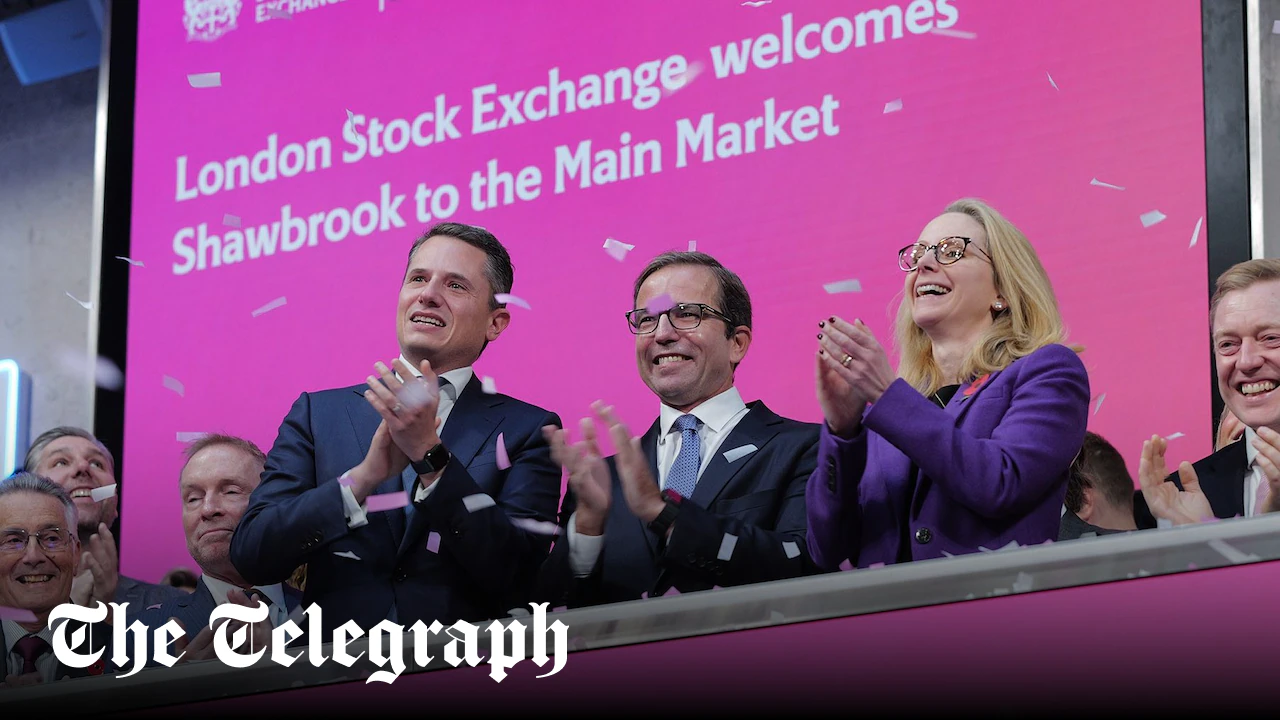
London welcomed its biggest listing in four years on Thursday, delivering a much-needed boost to its embattled stock market.
Small business lender Shawbrook climbed as much as 8.2pc following its debut on the London Stock Exchange, which valued it at £1.9bn.
The company’s stock rose as high as 400.5p in early trading after its float had initially been priced at 370p per share.
“There’s renewed optimism in the UK market,” said Tom Johnson of Barclays. “Investors remain engaged and we’ve seen plenty of interest internationally from the US and Europe.”
“This momentum could really help unlock a wave of listings in 2026, London remains the default choice for many domestic companies.”
Shawbrook’s float follows a lack of London listings in recent years, with the market recently dropping out of the global top 20 for initial public offerings (IPOs).
However, there has been a resurgence in activity of late.
In addition to Shawbrook, cosmetics specialist the Beauty Tech Group also floated earlier this month. Liverpool-based tinned tuna giant Princes Group is also preparing to list in a £1.2bn deal.
Marcelino Castrillo, Shawbrook’s chief executive, said he was “proud to be listing in London, our home market”.
It marks a return to the public markets for Shawbrook, which delisted in 2017 following a takeover by private equity firms BC Partners and Pollen Street Capital.
Its owners had tried to float Shawbrook earlier this year, but the plans were delayed after Donald Trump’s tariffs unleashed a wave of stock market volatility.
Mr Castrillo said: “We have built scale across diverse, attractive markets and, following significant investment under private ownership, are well placed to keep growing as we support UK businesses and households.
“As a listed company, we will continue to invest in our platform and people, deepen our presence in chosen markets and expand selectively where we see attractive demand.”
Shawbrook said it aims to raise £50m through the sale of new shares.
The lender’s loan book stood at £18.3bn at the end of September, up from £17bn on June 30. It wants to almost double this to about £30bn by the end of 2030.