
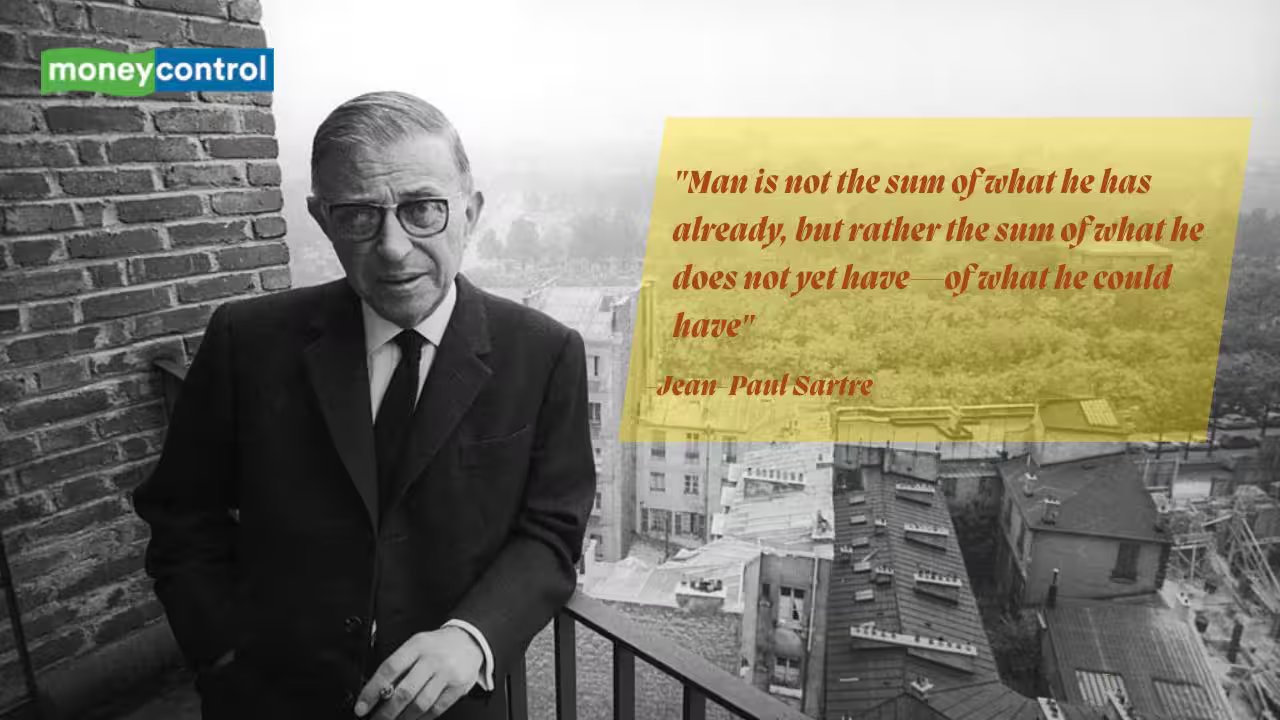
“Man is not the sum of what he has already, but rather the sum of what he does not yet have—of what he could have”.
This amazing observation made by Jean-Paul Sartre reflects the main existential idea according to which people are not static beings, but rather processes.
What does this quote mean exactly?
According to Jean-Paul Sartre, a man cannot be considered according to his past achievements or possession, but according to his future possibilities.
You are not what you have done instead you are what you can still become. It reflects a core idea of existentialism. Humans are always in the process of “becoming,” not “being.”
When was this quote stated by Jean-Paul Sartre?
The idea comes from Jean-Paul Sartre’s broader existentialist philosophy, especially developed in works like Being and Nothingness. So, rather than a one-time quote, it reflects his thinking from the 1940s existentialist period.
What does “man does not yet have” mean?
This phrase represents what one hasn’t accomplished, undergone, or become yet. It entails an individual’s unexplored potential, along with future aspirations and ambitions that require undeveloped skills.
The quote describes about the versions of yourself you haven’t become yet. Jean-Paul Sartre uses this idea to highlight that your identity includes your possibilities, not just your reality.
How is this quote relevant today?
This idea feels even more relevant in today’s world, where people are often defined by job titles, social media identity, past success or failure. Jean-Paul Sartre challenges this by reminding that we do not need to be stuck in the past, one can reinvent themself.
About Jean-Paul Sartre
Jean-Paul Sartre (1905–1980) was a leading figure in existentialist philosophy. He believed that humans are free to make choices and are responsible for creating their own meaning in life.
A philosopher, novelist, and playwright, Sartre explored on freedom and responsibility, identity and self-creation, He also worked on the idea that “existence precedes essence”. His work continues to influence modern thinking about identity, purpose, and personal freedom.