
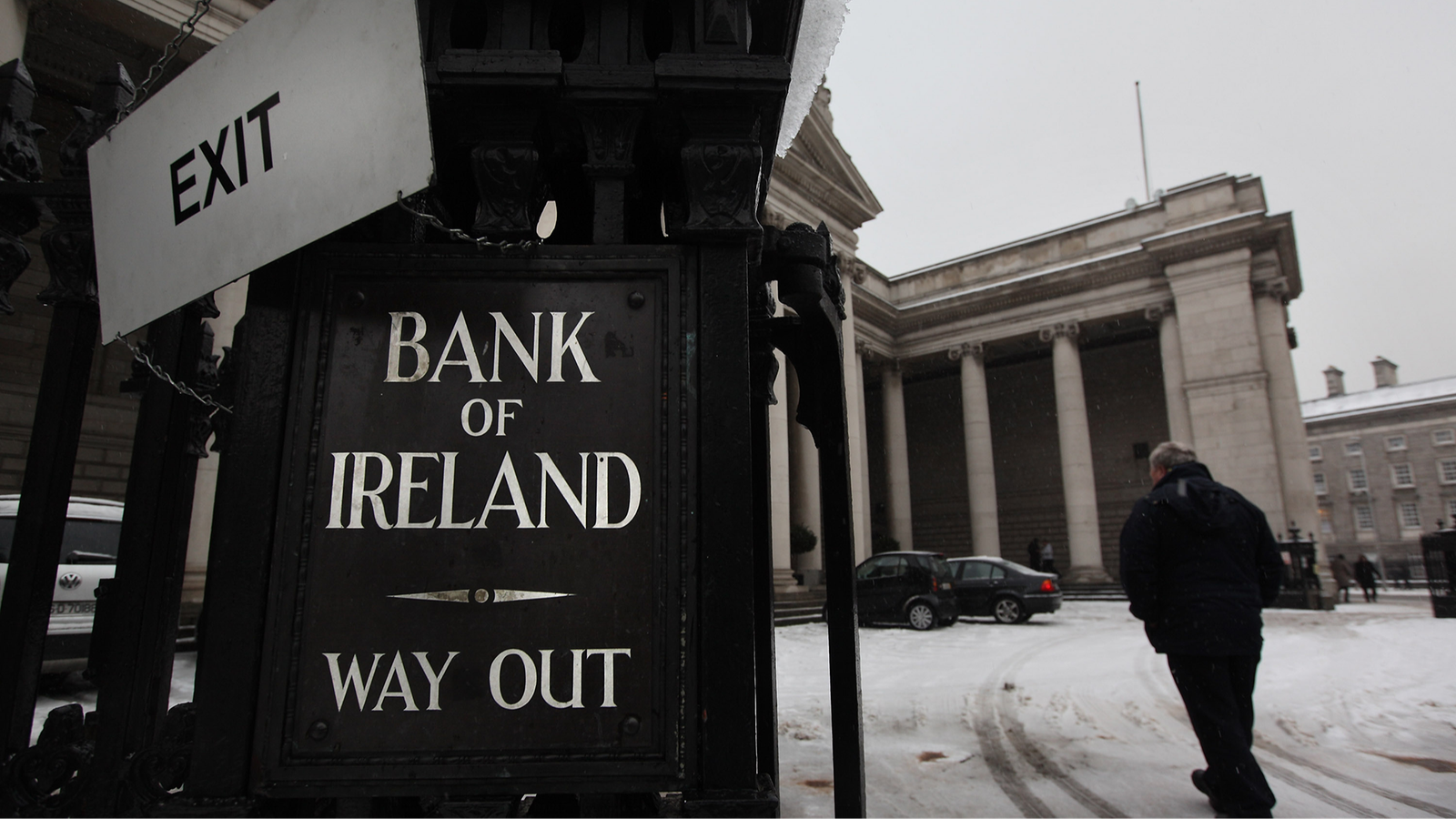
The Bank of Ireland Group is proposing delisting from the London Stock Exchange due to low trading volumes, the second company in a week to propose leaving the market.
The bank, which has a primary listing on Ireland’s Euronext, told shareholders that the board of directors has decided that the cost of maintaining a secondary listing in London is no longer in the interest of the company and investors, and has recommended a cancellation of its shares on the LSE.
“In recent years, trading volume in the ordinary shares of the company on the LSE has been negligible relative to overall trading in the company’s shares,” Bank of Ireland said.
Earlier this week, building materials company CRH cited similar reasons for its delisting from London, its secondary listing, highlighting the cost, regulatory and administrative obligations, and low trading volumes.
The UK government and regulators have been battling against an exodus of companies leaving the LSE, with recent delistings including Arm Holdings, Wise, Flutter Entertainment and mining giant BHP. Many companies highlight the low trading volume of the LSE, which makes the cost of their listings uneconomical, as well as the high burden of regulation and cost required to maintain the listing.
Bank of Ireland — which has 4mn customers and €60bn in assets under management — will take its delisting proposal to shareholders for a vote on May 21.
The raft of delistings in recent years has also been partly blamed on the poor performance of UK markets, with many institutional and retail investors shunning holdings in London in favour of the US.
However, the Financial Conduct Authority recently pushed back on claims over low trading volume, telling the FT that it is planning to publish all trading data for London-listed shares in an attempt to tackle the “drastic under-reporting” of market liquidity.
“The truth is we have way more liquidity here than is often reported and that is just silly,” Simon Walls, interim executive director of markets at the FCA, told the FT.
The FCA has been consulting on rules to create a “consolidated tape” that would show total trading activity in a single stream of data, but the introduction of this could be over a year away.
In the meantime, some high-profile CEOs have previously criticised the UK market.
In December 2024, Revolut’s founder and chief executive Nik Storonsky said the company would not list in the UK — where it was created — and would look to the US instead, saying the UK market is less liquid and more expensive than the US due to stamp duty being paid on some share transactions.
“I just don’t understand how the product which is being provided by [the] UK can compete with the product provided by [the] US,” he told the 20VC podcast. “If I [could] get a better product in the UK I would list in the UK but so far if you just compare these products one is just far ahead compared to the other.”
A number of UK initial public offerings are expected this year, including Norwegian software business Visma, fintechs Monzo and Starling, and credit checker ClearScore. However, the recent war in Iran could result in listings being postponed amid unsettled markets.