
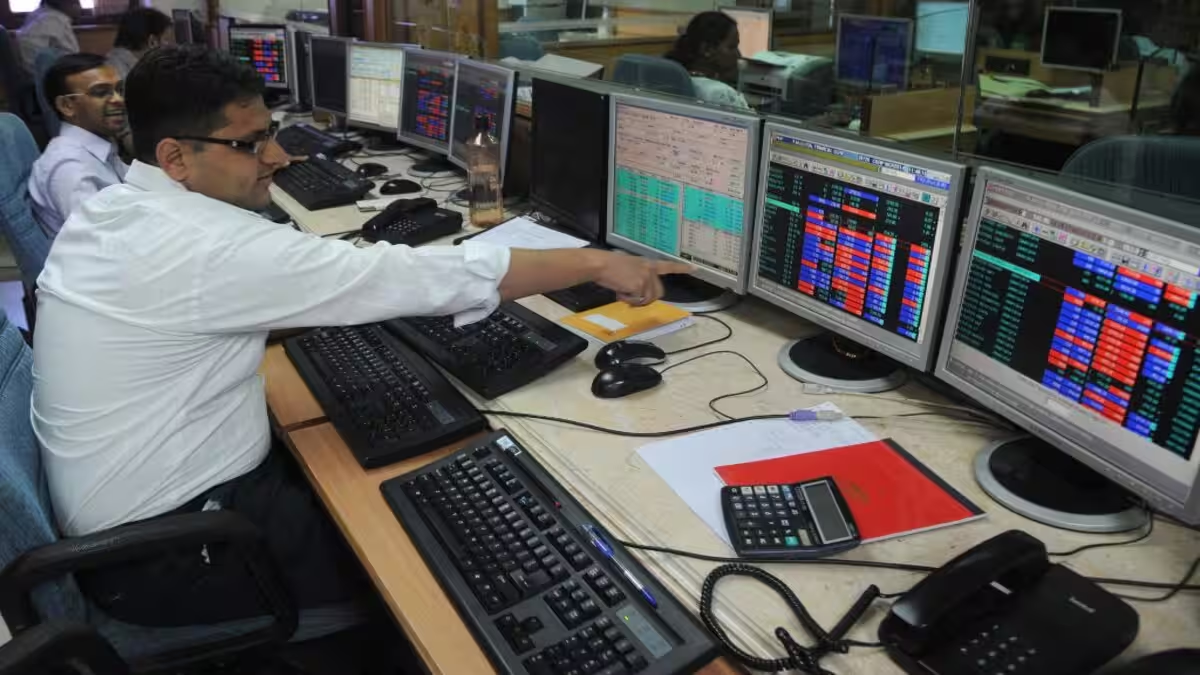
Asian markets are set for their worst monthly fall since 2022 as the escalating West Asia war drives oil prices to record gains, stoking inflation fears, hammering equities, and strengthening the US dollar
Global markets are heading towards their most turbulent month in years, with Asian equities on track for their steepest fall since 2022, as the escalating war in West Asia drives oil prices sharply higher and fuels fears of stubborn inflation and slowing growth.
Brent crude
hovered near $115 per barrel on Tuesday, up roughly 2 per cent on the day and poised for a monthly surge of nearly 59 per cent — the largest on record. US West Texas Intermediate (WTI) crude also climbed, setting up a monthly gain of about 56 per cent, its strongest performance in almost six years.
The surge in oil prices has cast a long shadow over financial markets, triggering a broad risk-off mood among investors. MSCI’s broadest index of Asia-Pacific shares outside Japan is down more than 12 per cent for March, marking its worst monthly decline since September 2022.
Japan’s Nikkei is set to fall about 12.6 per cent this month, while South Korea’s Kospi is headed for a drop exceeding 17 per cent — its sharpest slide since the global financial crisis in 2008.
The sell-off underscores how the war involving the United States, Israel and Iran has rapidly morphed from a geopolitical shock into a full-blown macroeconomic threat.
“It appears markets have gone from mechanically trading headlines into a bit more of a fear mode, taking risk off the table,” Vishnu Varathan, head of macro research for Asia ex-Japan at Mizuho, told Reuters.
Oil shock stokes inflation fears
At the heart of the market turmoil is the relentless rise in energy prices, which is intensifying concerns that inflation could remain elevated for longer than expected.
“I think inflation will be the bigger near-term concern for global markets,” Thomas Mathews, head of Asia-Pacific markets at Capital Economics, told Reuters. “If oil prices don’t fall back over the next few months, we will probably have to start thinking about growth too.”
Asia, heavily dependent on energy imports from West Asia, is particularly vulnerable to the spike in crude prices, amplifying pressure on corporate margins and consumer demand.
Temporary relief, but uncertainty lingers
Markets found some respite after a report said US President Donald Trump had told aides he was willing to end the military campaign against Iran even if the Strait of Hormuz remains largely closed — a key chokepoint for global oil supplies.
The report helped US and European futures recover from early losses, with Nasdaq and S&P 500 futures edging higher, and Euro Stoxx 50 and DAX futures also posting modest gains.
However, the broader sentiment remains fragile, with investors wary of sudden escalations or disruptions in oil supply routes.
Bond rout deepens, dollar strengthens
The inflation shock has triggered a sharp repricing of interest rate expectations globally, leading to a steep sell-off in bond markets.
US Treasury yields have surged, with the two-year yield rising more than 40 basis points this month — its largest increase since October 2024 — while the benchmark 10-year yield has climbed around 37 basis points, the biggest jump since December.
The shift reflects expectations that central banks, particularly the US Federal Reserve, may have limited room to cut rates this year. Fed Chair Jerome Powell signalled a cautious stance, saying policymakers can afford to “wait and see” how the war impacts inflation and growth.
In currency markets, the
US dollar has emerged as the dominant safe-haven asset, heading for its strongest monthly gain since July. The euro is set to lose nearly 3 per cent in March, while the British pound has fallen more than 2 per cent.
The Japanese yen remained under pressure, hovering near the psychologically important 160-per-dollar level.
Gold rises as safe-haven demand builds
Amid heightened uncertainty, gold prices have also rallied, with spot gold rising about 0.6 per cent to $4,538 an ounce, as investors seek refuge from volatile equity and bond markets.
With inputs from agencies.
End of Article