
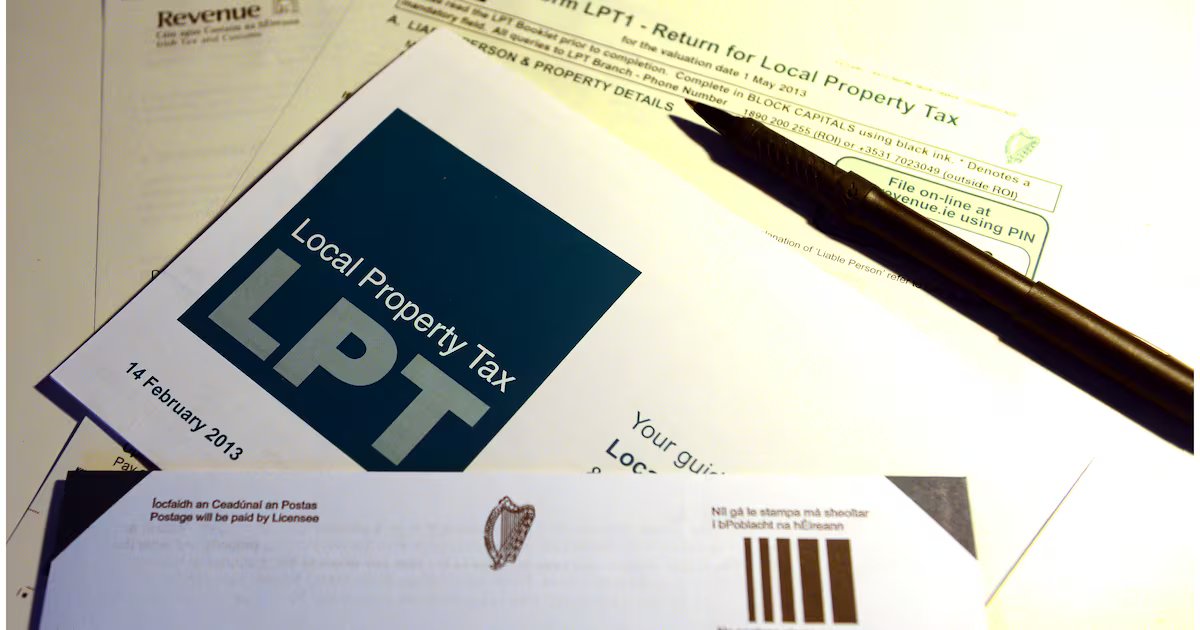
Revenue this week said it is to start a “noncompliance campaign” in relation to almost 170,000 property owners who have not filed a local property tax (LPT) return or put a payment in place. What does that mean?
The property valuation submitted through this process determines the LPT charge applicable for each year from 2026 to 2030.
Returns and payments have been made for more than 1.9 million properties, while returns are outstanding for about 390,000 properties. Of those, the LPT estimate has been paid in full, or a payment instruction is in place, for 227,000 properties.
Property owners were required to do three things: determine the value of their property, as at the valuation date November 1st.
Then, they were required to submit this valuation to Revenue on their LPT return, and, finally, to confirm payment arrangements for the coming year.

Are Government’s fuel measures betting on a quick resolution to the conflict in Iran?
If a property owner does not pay their LPT or submit their LPT return to Revenue, in the first instance the agency says it will “engage with the property owner”.
There are 2.1 million properties on the LPT register owned by about 1.5 million people. As part of the annual cycle, LPT payment compliance rates reach over 95 per cent by year-end.
However, if a property owner fails to engage, or has not made an “honest assessment” of the value of the property, it has a range of collection and enforcement options available.
These include offsetting the liability against any available credits, withholding tax clearance, or the deduction of the liability from the property owner’s salary.
This week, Revenue will write to more than 100,000 property owners in employment advising them that they have 14 days to file their return and payment, or their employer will be instructed to begin deducting their LPT from their wages.
In the coming weeks, further letters will issue to self-employed property owners advising them that they have 14 days to meet their LPT obligations to avoid enforcement action.
For this category of property owner, an LPT surcharge of 10 per cent will apply to income tax, corporation tax, or capital gains tax liability for the year. “Because this is based on the total tax liability, it can be much higher than the actual LPT owed,” Revenue said.
For example, for an income tax liability of €15,000 in income tax, the surcharge would be €1,500, even if the LPT liability is €95.
Revenue will also write to property owners in receipt of Department of Social Protection payments to “advise them of their obligations”.
Some property owners may meet the criteria to qualify for a deferral of LPT, which allows them to delay paying some or all of their LPT until a later date.
However, it is important to note that a deferral is not an exemption. The tax remains a charge on the property and must eventually be paid.
A deferral often happens when the property is sold or transferred. Interest is charged on the deferred amount at a rate of 3 per cent per year.
However, even where property owners meet the eligibility criteria for a deferral of LPT, they are required to elect the deferral option on submission of their LPT return to Revenue.
The LPT “compliance campaign” targets both property owners who have failed to make a return and those who have not paid their LPT. Revenue says its approach is based on “the nature of that noncompliance”.
“Revenue knows from experience that some property owners who agree with the Revenue estimate and pay their LPT by direct debit or through their salary, are often unaware that a formal filing is still required,” a spokeswoman said.
“For those, the compliance campaign is very much a prompt to file. However, for those who have neither filed nor paid, Revenue issues a final demand. Failure to respond to this will trigger immediate enforcement action.”
There are a range of enforcement options available to Revenue for property owners who have not met their LPT obligations.
Firstly, failing to file the LPT can result in a penalty equal to the amount of LPT that would have been payable, capped at €3,000.
For self-employed property owners, a 10 per cent surcharge is added to the total income tax, corporation tax, or capital gains tax liability where the LPT return has not been filed, or there is an LPT liability outstanding. Interest applies at a rate of 8 per cent per year.