
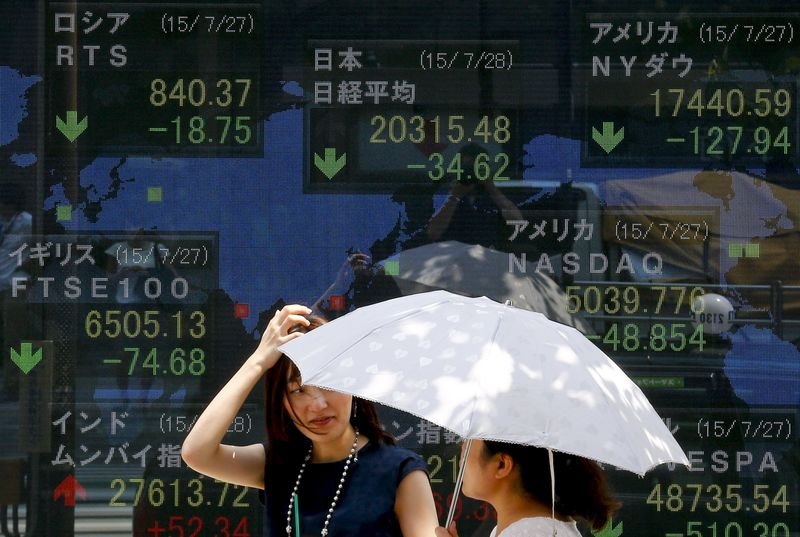
Investing.com– Asian stocks were mixed in choppy trading on Friday, as investors grappled with sharply volatile oil prices driven by escalating Middle East tensions, while China kept its benchmark lending rates unchanged.
Regional markets struggled for direction after a weak lead from Wall Street, where equities closed lower overnight amid renewed inflation concerns linked to energy prices.
Wall Street futures ticked higher during Asian hours.
Get premium Asian stock market insights with real-time updates on InvestingPro
Oil prices remain volatile, ease after hitting $119/bbl
Oil price swings remained the dominant driver. Crude surged to near $119 a barrel on Thursday as fears of supply disruptions around the Strait of Hormuz intensified.
Israeli Prime Minister Benjamin Netanyahu said Israel was assisting the U.S. “in intel and other means” to help reopen the strait.
Prices later pared gains and settled only slightly higher, as some supply fears eased. They fell further in Asian trading on Friday,
The earlier spike has reinforced concerns that energy-driven inflation could persist, particularly for major importers in Asia.
South Korea’s rose 0.5%, in contrast to other regional benchmarks, as tech gains lent support. The index was set to jump over 5% this week.
Elsewhere, Singapore’s Straits Times Index edged 0.3% lower, while Australia’s S&P/ASX 200 edged down 0.2%.
Japanese markets were closed for a public holiday.
Futures tied to India’s rose 0.5%.
China keeps LPR steady; Alibaba drops after earnings
China’s central bank kept its loan prime rates unchanged for a tenth straight month, with the held at 3.00% and the five-year rate, which influences mortgage pricing, at 3.50%, in line with market expectations.
China’s index edged 0.3% lower, while Hong Kong’s fell 0.7%.
In company news, Hong Kong-listed shares declined 5% after the company reported a profit drop, hit by heavy spending and weak e-commerce performance.
Globally, investor sentiment remained fragile after the Federal Reserve earlier this week signalled a cautious stance on rate cuts, warning that rising oil prices could complicate the inflation outlook.
Markets have since scaled back expectations for near-term monetary easing.