
Transatlantic trade and EUDR: key summary
- EU and US agree the latter poses no risk to deforestation for beef, soy, wood
- A fourth ‘negligible risk’ category is being considered by the EU
- Two-thirds of EU agriculture ministers support adding negligible risk
- Critics warn this could allow deforestation-linked goods to bypass checks
- WTO challenges may arise if US receives special compliance treatment
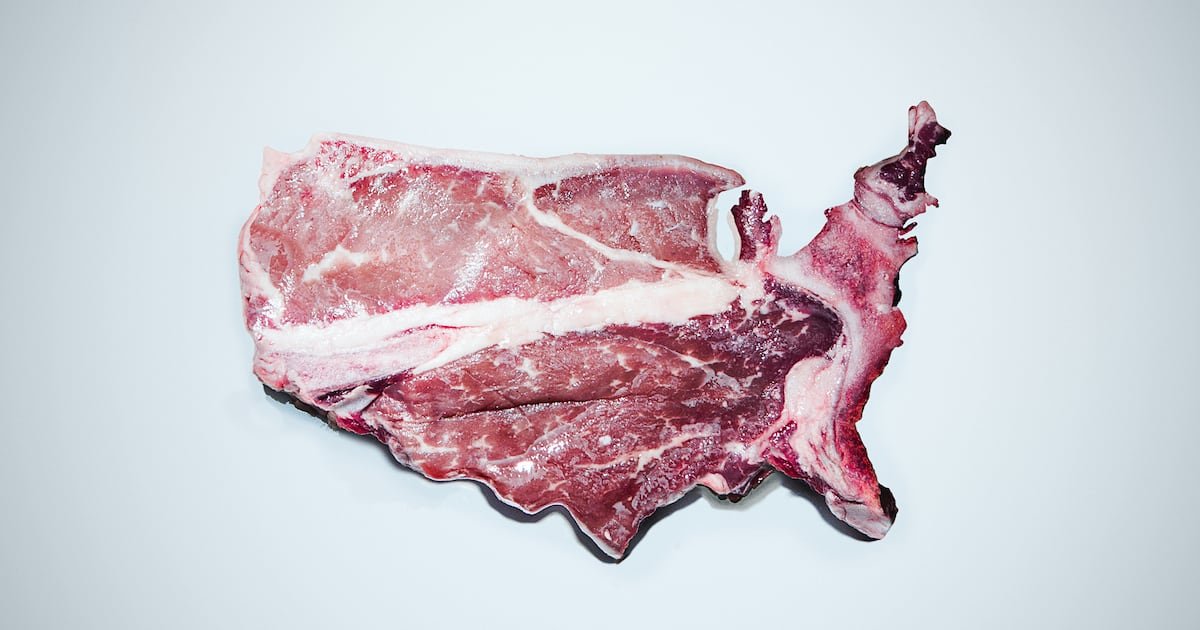
The United States and European Union have penned a framework agreement on transatlantic trade, in which they agree US commodities – including cattle, soy and wood – pose zero deforestation risk.
US poses ‘zero risk’ to deforestation
The European Deforestation Regulation (EUDR) is due to come into effect in December 2025 for bigger companies, followed by smaller ones six months later.
Countries importing relevant commodities (cattle, cocoa, coffee, oil palm, rubber, soy, and wood) to the EU have been given a risk status: from low to standard or high risk. The higher the risk, the more thorough the due diligence required by food businesses.
The US has been assigned low risk status, alongside all EU member states. But behind the scenes in Europe, a new ‘negligible risk’ category is being discussed. If it’s added as a fourth risk category, the US would be looking for a status update.
According to the trade agreement, the EU is committed to working to “address the concerns of US producers and exporters regarding the EU Deforestation Regulation”, with a view to “avoiding undue impact on US-EU trade”.
Since the EU has now described the US as posing negligible risk to deforestation, it’s highly likely that under a four-risk category system, the US would get what it wants: a move from low to negligible risk.
What is ‘negligible risk’ and who wants it?
In Europe, pressure is mounting on the Commission to update its benchmarking system with the addition of a fourth, negligible risk, category.
Agriculture ministers from two-thirds of EU countries want the fourth category integrated into law, the European Parliament has voted in favour of it, and a guidance document has even been produced defining exactly what ‘negligible risk’ means.
What is ‘negligible risk’?
A product is considered of negligible risk if due diligence processes find there is no cause for deforestation concern.
The benefit for attaining negligible risk status for products and countries is that it would streamline the due diligence process.
But if the commodity is found to breach compliance, due diligence requirements would ramp up.
The vote is non-binding, but it signals the pressure the Commission is under to revise the legislation.
The problem with moving US to ‘negligible risk’ status
Those warning against such a change are concerned that in theory, an ingredient or product associated with illegal deforestation could more easily enter the EU via a ‘no risk’ country.
In the case of the US for example, it’s feasible that a product could pass across the border from ‘standard risk’ country Mexico into the US, and then onto the EU with minimal checks.
There could be another, more immediate problem for the Commission if the US is granted ‘negligible risk’ status.
According to palm oil media platform Palm Oil Monitor, any special treatment granted to the US must either be extended to all trading partners – including ‘standard risk’ countries Indonesia and Malaysia – or risk severely damaging those relationships.
Palm Oil Monitor has also raised concerns that any “special treatment” shown to the US could invite World Trade Organisation (WTO) challenges on grounds of inconsistency. “Either everyone gets simplified compliance or no one does – there’s no middle ground that survives WTO scrutiny.”