
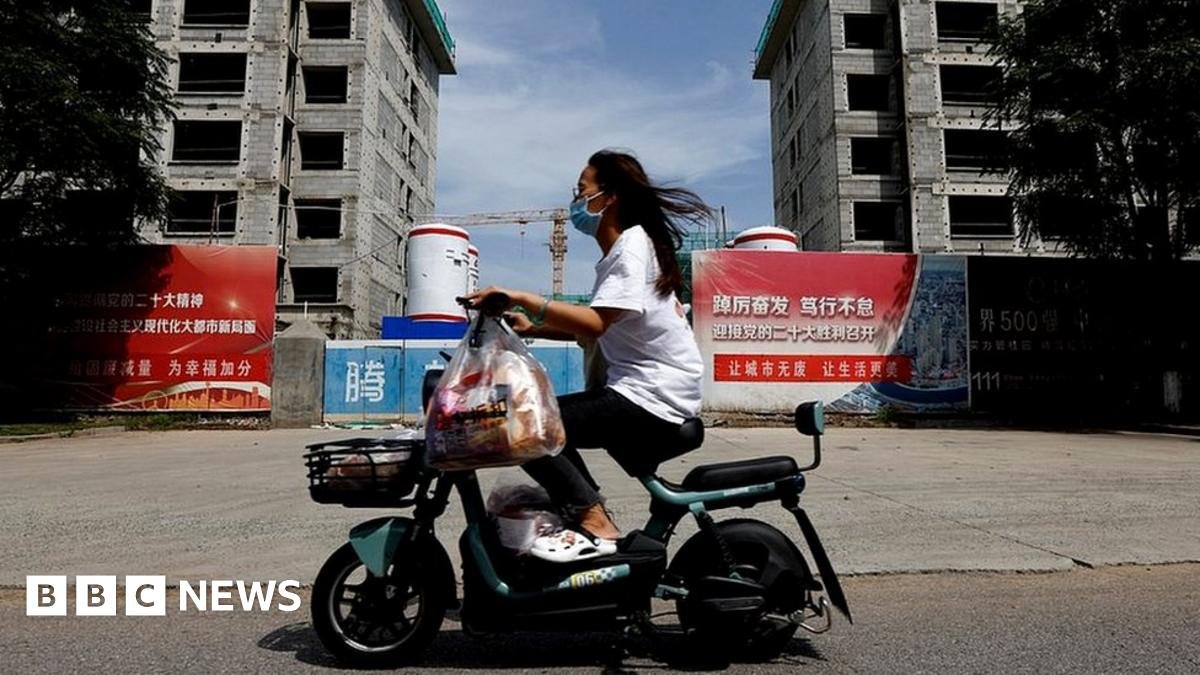
Problems in China’s property market – which includes everything from building homes to industries making the goods that go in them – is having a major impact as it accounts for around a third of the economy.
China’s real estate industry was rocked when new rules to control the amount of money big real estate firms could borrow were introduced in 2020.
Evergrande, which was once China’s top-selling developer, racked up debts of more than $300bn as it expanded aggressively to become one of the country’s biggest companies.
Its financial problems have rippled through the country’s property industry, with a series of other developers defaulting on their debts and leaving unfinished building projects across the country.
At the weekend, Evergrande posted a 33bn yuan loss for the first six months of the year.
Its shares fell by almost 80% on Monday, in their first day of trading in Hong Kong for a year and a half.
Evergrande shares have lost more than 99% of their value in the past three years as Beijing cracked down on property firms.
China is also facing other problems – including weak economic growth, ballooning local government debt and record-high youth unemployment.
On Thursday, official data showed that activity in China’s factories shrank for a fifth month in a row.
The Purchasing Managers’ Index came in at 49.7 in August. It was an improvement from the previous month, but still below 50, indicating contraction.