
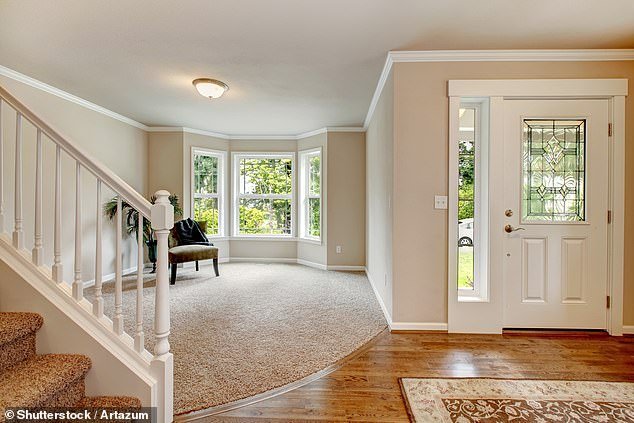
An interiors expert has revealed the seven spots homeowners often miss when redecorating – which can lead to a tired looking interior and even a reduced property price.
Jessie Brooks, product manager at Davincified, a platform offering custom paint-by-numbers kits, revealed that that accidentally neglecting these areas can impact the entire look of a space.
Among the areas she noted, were door frames and the tops of skirting boards. Jessie said: ‘Most of us focus on walls when we think about painting, but it’s the smaller, forgotten details that can make or break a room’s appearance.’
She added that it is these neglected spots that gather scuffs, show their age, and quietly drag down the whole look of your home, as attention to detail elevates a home’s aesthetic.
However, according to Jessie, the good news is that a ‘quick refresh of these areas can transform your space without the hassle or expense of a full repaint’.
She continued: ‘People spend hours choosing the perfect wall colour, then wonder why the room still feels tired. Nine times out of 10, it’s because the trim is chipped, the skirting boards are grimy, or the window sills are showing their age. These small details frame everything else in the room.’
Jessie shared seven of the most overlooked spots in many homes that deserve a refresh – she also explained why tackling them will give homeowners the ‘biggest bang for their buck’.
1. Door frames and trim

Jessie Brooks, product manager at Davincified, has revealed the seven spots homeowners often miss when redecorating (stock image)
Door frames take more abuse than almost any other surface in most home: every time someone brushes past with a bag, leans against the frame, or a child runs their hand along it, you’re adding another layer of dirt and wear.
‘Door frames literally frame every room transition in your house,’ Jessie explained. ‘When they’re scuffed or yellowing, it cheapens the entire space. A fresh coat of paint here makes everything look sharper and more intentional.’
What to use: Jessie recommended a semi-gloss or satin finish, which are durable and easy to wipe clean. She added that while brilliant white is classic, it’s also worth considering a soft off-white or even a subtle contrast colour to add character.
2. Skirting boards and baseboards
Jessie described skirting boards as ‘magnets for scuff marks’ – especially if there are children or animals in the home, or if they get bumped while the room is being hoovered. She noted that they ‘sit at eye level when you’re relaxing on the sofa, so any chips or marks are more noticeable than you’d think’.
‘Skirting boards are one of those things you don’t notice until they’re pristine,’ said Jessie. ‘Once you paint them, you’ll wonder how you lived with the old ones for so long.’
What to use: A durable eggshell or semi-gloss finish works best here, according to the expert. White or cream keeps things traditional, but darker shades like charcoal or navy can add a modern, grounded feel to a room.
3. Window sills

When repainting windowsills, Jessie suggested people can ‘go bold with a pop of colour if you’re feeling adventurous’ (stock image)
Window sills fade, crack, and peel faster than most surfaces – this is because they face ‘constant exposure to sunlight, moisture from condensation, and the occasional plant pot overflow’, according to the expert, who noted that a tired window sill can ‘make even the nicest curtains look shabby’.
‘Windows are focal points in any room, and the sill is part of that frame,’ Jessie noted. ‘Giving it attention makes the whole window area feel fresh and well-maintained.’
What to use: A moisture-resistant paint with a satin or gloss finish should be used. Jessie suggested ‘matching it to your trim for a cohesive look, or go bold with a pop of colour if you’re feeling adventurous’.
4. Radiator covers
Radiators and their covers often get forgotten in the decorating process, Jessie said, but they’re usually positioned prominently in living rooms and bedrooms. Because od this, chipped or discoloured radiator paint stands out – and not in a good way.
‘Radiators are functional, but they don’t have to be eyesores,’ said Jessie. ‘A quick refresh can blend them into your décor or even turn them into a feature.’
What to use: Radiator-specific paint should always be used – it won’t yellow or crack with heat. She added: ‘Stick to neutrals to keep them subtle, or match them to your wall colour so they disappear entirely.’
5. Inside closets and pantries

Painting inside closets and pantries (even if they aren’t huge open-space areas) makes them feel cleaner and more organised (stock image)
It might seem pointless to paint spaces no one sees, but opening a cupboard to reveal a dingy, peeling interior feels depressing, said Jessie, who added that a fresh coat inside closets and pantries ‘makes them feel cleaner and more organised, even if nothing else changes’.
‘This is one of those small upgrades that makes you feel better every time you open the door,’ Jessie said. ‘It’s a little luxury that costs almost nothing but improves your daily experience.’
What to use: Bright white or light pastels work brilliantly here, as they reflect light and make small spaces feel bigger advised Jessie, who noted that a ‘wipeable eggshell finish is ideal for areas that store food or shoes’.
6. Behind furniture
When furniture is moved for a deep clean, behind, there will often be scuffed, marked walls that look completely different from the rest of the room. According to Jessie, these patches ‘stand out like a sore thumb if you ever rearrange your layout’.
‘It’s easy to ignore what’s hidden, but life changes, and you might move furniture, redecorate, or decide to sell,’ Jessie explained. ‘Painting behind furniture now saves you stress later and keeps your home looking polished from every angle.’
What to use: Match the existing wall colour as closely as possible. If the original paint details have been lost, a small chip can be taken to a paint shop for colour matching.
7. Cupboard edges and interiors

Two of the areas that experience the most action in any home are the kitchen and bathroom cupboards, where edges get nicked, interiors gather grime, and handles leave marks over time. According to Jessie, refreshing these areas ‘instantly lifts the look of your entire kitchen without the cost of replacing units’.
‘You’d be amazed what a difference it makes,’ she said. ‘Painting cupboard interiors and touching up edges is one of the most budget-friendly ways to modernise a dated kitchen.’
What to use: For interiors, choose a wipe-clean satin finish in white or a soft neutral. For edges and exteriors, match existing colours or go bold with a trendy shade like sage green or deep blue.
Jessie Brooks, product manager at Davincified, concluded: ‘The difference between a house that feels well-loved and one that feels neglected often comes down to the details. These forgotten spots, such as the trim, the skirting, and the window sills, all work together to create the overall impression of a space.
‘What I love about these small painting projects is that they’re achievable for anyone. You don’t need professional skills or a huge budget.
‘A weekend, a few tins of paint, and a bit of attention to detail can completely reshape how your home feels. It’s about taking pride in the little things that add up to something beautiful.’