
What Are Property Rights?
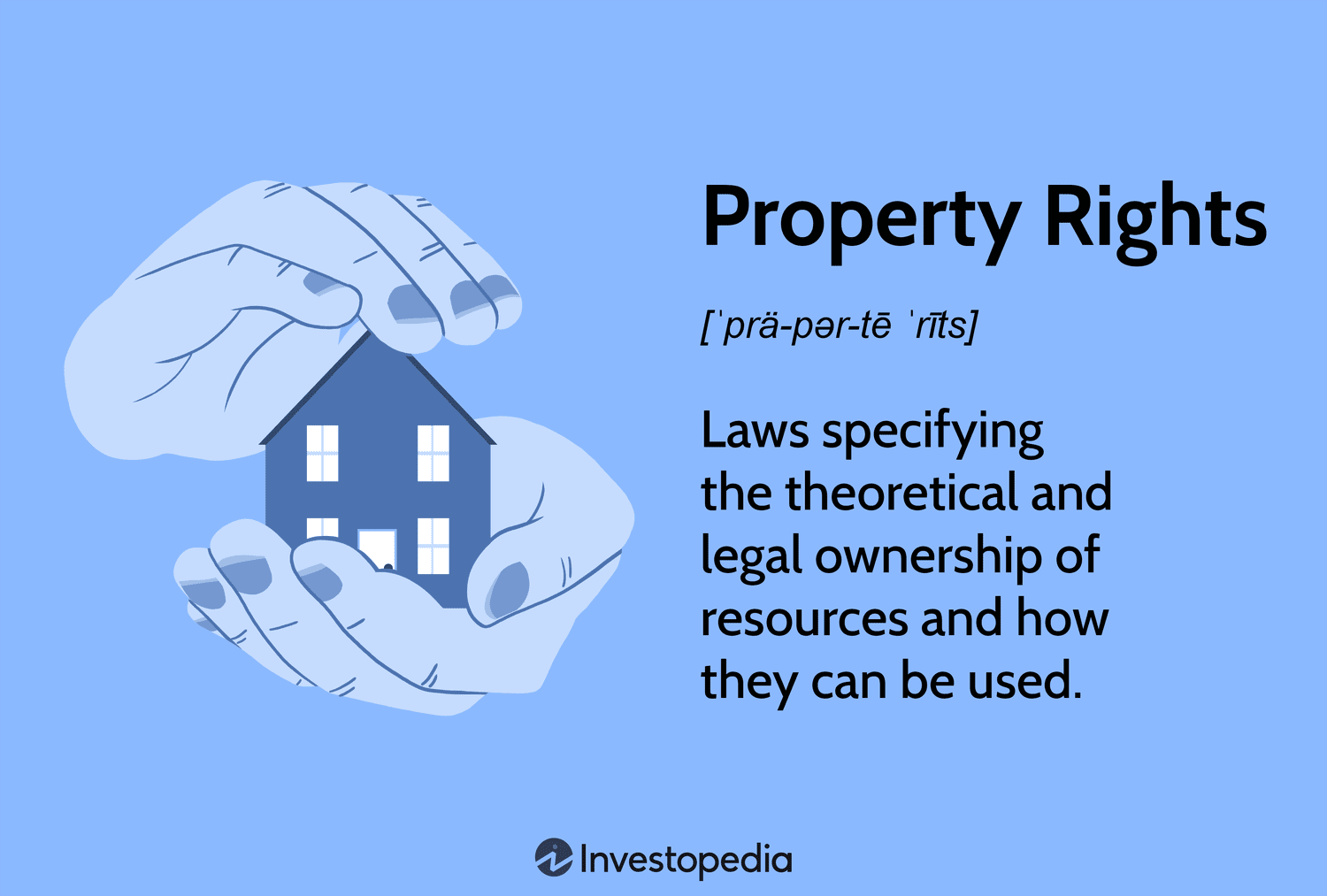
Property rights are the rules and limitations associated with ownership of a property, including tangible and intangible assets. That includes holding on to it, selling or renting it out for profit, or transferring it to another party. Well-defined property rights are essential to market efficiency and economic transactions.
While the concept of property rights exists in most countries, the exact rights of ownership vary by jurisdiction. Each country has different rules regulating the exchange and transfer of ownership.
Key Takeaways
- Property rights let owners decide how to use their property, including holding, selling, renting, or transferring it.
- These rights serve as the backbone of market exchanges and impact resource use efficiency.
- Property ownership is legally defined and enforced by governments, and rights differ between jurisdictions.
- Resources can be tangible or intangible and owned by individuals, businesses, or governments.
- Property rights in a capitalist economy are crucial, allowing exclusion and private ownership of resources.
The Importance of Understanding Property Rights
Property is secured by laws that are clearly defined and enforced by governments. These laws define ownership and any associated benefits that come with holding the property. “Property” covers many items, and legal protections can vary by jurisdiction.
Property is generally owned by individuals or by small groups of people. The rights of property ownership can be extended by using patents and copyrights to protect:
- Physical resources such as houses, cars, books, and cellphones
- Non-human creatures like dogs, cats, horses, or birds
- Intellectual property such as inventions, ideas, or words
Other types of property such as communal or government property are legally owned by well-defined groups. These are typically deemed to be public property. Ownership is enforced by individuals in positions of political or cultural power.
How to Acquire Property Rights
In a private property rights system, people acquire and transfer property through mutual agreements or homesteading. Mutual transfers include rents, sales, sharing, inheritances, gambling, and charity.
An individual may acquire a previously unowned resource in homesteading by mixing their labor with the resource over some time. Examples of homesteading acts include plowing a field, carving stones, or domesticating a wild animal.
In areas without property rights, governments often allocate resources by force. These resources are distributed based on political ends rather than economic ones. Governments determine who may interact with, who can be excluded from, or who may benefit from the use of the property.
Important
No one owns or manages open-access property such as waterways.
Exploring Private Property Rights
Private property rights are one of the pillars of capitalist economies as well as many legal systems and moral philosophies. Individuals need the ability to exclude others from the uses and benefits of their property within a private property rights regime.
All privately owned resources are rivalrous. Only a single user may possess the title and legal claim to the property. Private property owners also have the exclusive right to use and benefit from the services or products. Private property owners may exchange the resource voluntarily,
Key Considerations for Property Rights
In a capitalist society, market prices come from private property transfers. Transactions occur between a property owner and a buyer. The exchange value depends on how each party values the property.
Suppose an investor purchases $1,000 in shares of stock in Apple. They’re able to do so because Apple values that $1,000 more than it values the stock. The investor has the opposite preference and values ownership of Apple stock more than $1,000.
What Is Common Property?
Ownership of common property is shared by more than one individual and/or institution. Rights to its disposition and other factors are divided among the group. No single individual or entity has absolute control. This is commonly the case when you purchase a condominium or in a development with a homeowners’ association or if you own property with another individual as tenants in common.
Does the Federal Government Provide Property Rights?
The Fifth and Fourteenth Amendments of the American Constitution grant certain property rights to citizens. The Fifth Amendment prohibits the American government from taking control of any privately owned property without providing fair compensation in exchange. The Fourteenth Amendment states, “nor shall any State deprive any person of life, liberty, or property, without due process of law.”
What Is Open-Access Property?
No individual, business, or even a government entity can claim property rights to open-access property. It’s not owned by anyone or anything. No one or nothing can claim that the Atlantic Ocean belongs to them. Anyone can fish there, dive there, or build a floating home on its surface.
Conclusion: Why Property Rights Matter
Property rights refer to the laws that give the owner of a property the right to do what they like with it, including selling, renting, and giving it away. This doesn’t apply just to real estate but to anything you own outright as well, such as your furniture, automobile, or intellectual property.
Property rights are crucial in a market economy, where voluntary exchanges are the basis of most economic activity. However, the rules of ownership can become murkier for assets with a co-owner or co-tenant. It’s essential to understand the limitations of your property rights before disposing or otherwise encumbering an asset.