

XIN XIN / CHINA DAILY
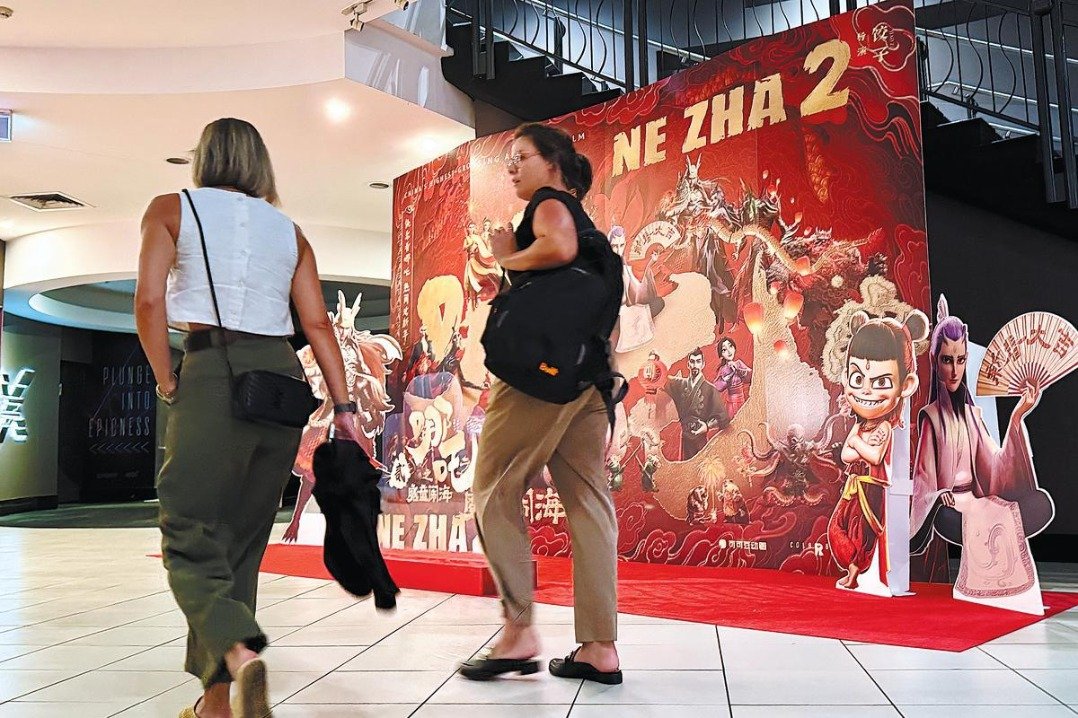
The beginning of this year witnessed China reaching two significant milestones, signaling a potential shift in its role on the global stage. The global release of Deep-Seek, an advanced artificial model designed for complex reasoning and natural language processing, complete with its Chinese large language model (LLM), and the success of the animation film Ne Zha 2 have triggered discussions on China”s burgeoning intellectual property (IP) industry.
For decades, China had been seen as the “world’s factory”, producing a vast array of goods, from clothing to electronics, which people across the globe liked for their competitive prices and quality. But the recent developments mark a new departure for China, showcasing the advancements it has made, not in manufacturing, but in the realm of original intellectual property creation.
DeepSeek offers a new approach to developing cost-effective AI chatbots with promising open-source development, challenging the dominance of established close-sourced players in this field. Simultaneously, Ne Zha 2, along with the release of the much-anticipated video game Black Myth: Wukong last year, demonstrates China’s growing capacity for creating compelling narratives and characters rooted in the country’s culture. DeepSeek, Ne Zha 2 and Black Myth: Wukong mark a potential turning point for the Chinese industry. They suggest a transition from a manufacturing-focused economy to one that values and cultivates creativity and innovation.
This emerging trend is intrinsically linked to China’s industrial transformation over the past three decades, driven largely by the private sector. China’s massive domestic market, with its almost 1 billion well-off mobile phone users, has fueled the growth of the mobile phone manufacturing industry and its associated app ecosystem. This technological expertise has been transferred to the electric vehicle (EV) and battery sectors, positioning China at the forefront of this rapidly expanding market. Chinese-made EVs and batteries are evolving into mobile entertainment hubs, mirroring the functionality of smartphones.
In these vehicles, users consume a variety of digital content, including movies, video games, and apps. This burgeoning digital landscape underscores the critical importance of robust intellectual property rights (IPR) protection. Creative talents, whether in software development, film production or game design, need assurance that their ideas and creations are legally well protected to foster innovation and investment.
To realize the full potential of this new era, China needs to nurture a vibrant ecosystem of programmers, creators, writers, artists, producers and filmmakers, which requires strategic investment in talent development, robust technological infrastructure and effective distribution networks. This echoes the trajectory of Japan, a country known for its prolific output of cultural products, including manga, animes, video games, films, and TV dramas. Japan’s success demonstrates the power of a strong IPR protection framework in fostering a thriving creative economy.
The Regional Comprehensive Economic Partnership agreement, which both China and Japan are members of, with its emphasis on IPR, further reinforces the importance of IPR protection in international trade and collaboration.
Moreover, China’s demography, characterized by a rapidly aging population, presents both challenges and opportunities. The increasing demand for eldercare solutions necessitates the development and deployment of AI-powered robots. Low-cost, AI-embedded robots are crucial for supporting China’s vast population of 1.4 billion, as well as addressing similar needs in Japan, with its aging population of 125 million (World Bank, 2023). Japan’s experience in using robotics and related technologies for eldercare offers valuable insights and potential collaboration opportunities to China.
A partnership between China and Japan in this domain could lead to the development and global leadership of a new industry focused on assistive technologies and AI-driven solutions for aging societies. By combining China’s manufacturing prowess and rapidly advancing AI capabilities with Japan’s expertise in robotics and eldercare, the two countries can address their demographic challenges while simultaneously driving innovation and economic growth.
The rise of DeepSeek, the success of Ne Zha 2, and last year’s anticipation surrounding Black Myth: Wukong are not isolated incidents. They represent a broader trend, a shift toward a knowledge-based economy where creativity and innovation are valued and protected. China’s journey from the “world’s factory” to a creator of original intellectual property is just beginning.
By investing in its creative talents, strengthening its IPR protection framework, and fostering international collaborations, particularly with countries like Japan, China can consolidate its position as a global leader in the IP industry. This transition promises not only economic growth but also a richer cultural landscape, contributing to a more diverse and vibrant global creative ecosystem.
The author is an associate professor at the Graduate School of Management, Ritsumeikan Asia Pacific University, Japan.
The views don’t necessarily reflect those of China Daily.
If you have a specific expertise, or would like to share your thought about our stories, then send us your writings at opinion@chinadaily.com.cn, and comment@chinadaily.com.cn.