
Investing.com – The Trump administration is telling G7 counterparts that the Iran war is not expected to drag out for an extended period, despite global worries that the situation is escalating. U.S. Secretary of State Marco Rubio said Friday at a G7 meeting in France that U.S. operations in Iran will wind down in weeks rather than months. He added that the U.S. can meet its objectives without sending in ground troops.
Earlier today, it was reported that Iran turned back two vessels owned by state-backed Chinese firm from sailings through the Strait of Hormuz on Friday, according to the Wall Street Journal.
Citing ship tracker MarineTraffic and Chinese crew members near the strait, the paper said the two ships were forced to reverse course roughly 20 miles from the port of Bandar Abbas in southern Iran. Some container ships signaling ownership by Chinese companies and Chinese crews have been able to cross the strait in recent days, the WSJ added.
Iran’s Revolutionary Guard said it had turned back three container vessels of different nationalities, and stressed that traffic through the strait is banned for any ships to and from supporters of either the U.S. or Israel, the WSJ reported, citing the Nour News agency in Iran. Sources told the WSJ that only ships with cargoes of certain items destined for Iran are allowed to traverse the strait, a vital waterway through which roughly one-fifth of the world’s oil flows.
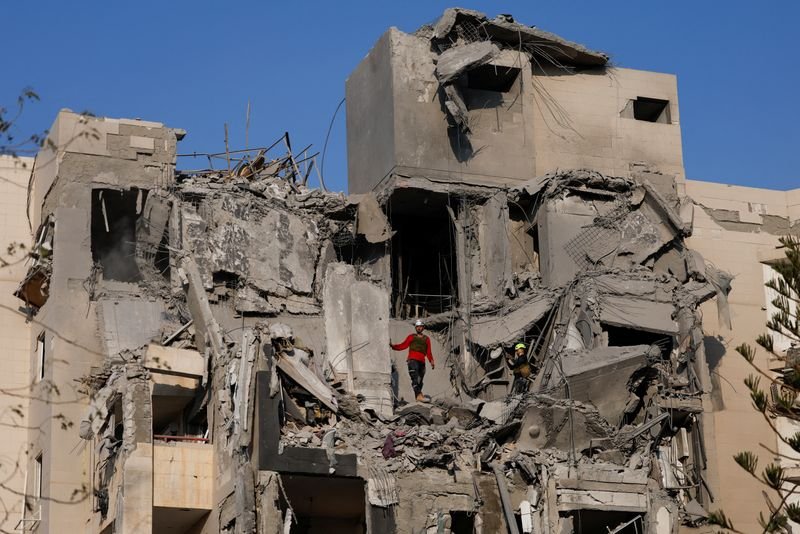
Fighting raged on in the Middle East. Israel and Iran exchanged fresh air strikes early on Friday, even as media reports said diplomatic efforts to end the nearly month-old war in Iran continued. Weapons facilities in Tehran and other parts of Iran were targeted by Israel’s military, which also said that it had detected earlier missile launches from Iran.
The U.S. — which is conducting a joint assault on Iran with Israel — is considering possibly sending up to 10,000 additional ground troops to the Middle East as part of a bid to give President Donald Trump more options has he continues to weigh peace talks with Tehran, the WSJ reported. Defense Department officials told the paper said the force would likely include infantry and armored vehicles, and would be in addition to the around 5,000 Marines and thousands of paratroopers who have already been ordered to deploy to the region.
Meanwhile, Trump announced late on Thursday that a White House deadline for Iran to reopen the Strait of Hormuz or face U.S. attacks on energy facilities would be extended until April 6. In a Truth Social post, Trump claimed the extension came at the request of the Iranian government, adding that Tehran was engaged in “ongoing” talks with the United States that are “going very well.” Media reports to the contrary, he insisted, were “erroneous.”
Trump previously issued an ultimatum to Iran last weekend in which he vowed to strike power plants in the country’s if it did not unblock the Strait of Hormuz. Trump later said he would not do so until Friday after what he described as “very strong” discussions with Iran.
Tehran, for its part, has publicly denied that any such negotiations with Washington are happening.
Against this backdrop, oil prices remained stubbornly elevated. The futures contract expiring in May for Brent crude, the global benchmark, crept back above $110 a barrel, paring back much a decline earlier this week and staying well above pre-war levels.
In a note, analysts at ING said that while Trump’s extension eases some near-term supply pressures, the extra compensation investors demand to hold oil in the face of geopolitical instability is “intact.”
U.S. stocks declined, as did equities in Europe, dragged down in part by a climb in government bond yields fueled by bets that central banks may need to lift interest rates to combat a potential energy-induced spike in inflation. Stocks in South Korea and India also fell.