
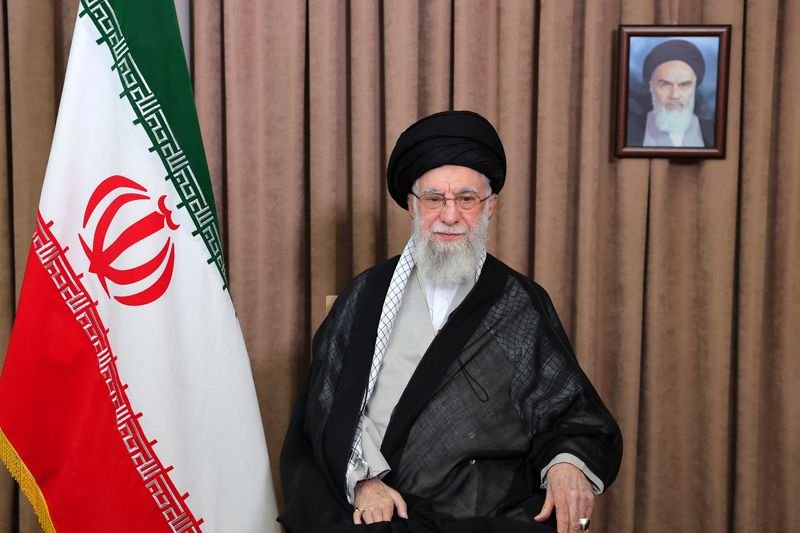
Investing.com — The death of Iran’s Supreme Leader Ali Khamenei in U.S. and Israeli air strikes has created “enormous uncertainty about Iran’s political future,” with wide-ranging implications for the country, the region, and global energy markets, Capital Economics said.
Under Iran’s constitution, a successor will be chosen by the 88-member Assembly of Experts, while a transitional council — including President Masoud Pezeshkian and two close Khamenei allies — governs in the interim.
Even though there is a clear succession process, Capital Economics says there is “a large amount of uncertainty about how smoothly this will happen and what this means for Iran’s relations with the West and economic policy.”
1) The first and most likely outcome is a status quo scenario. Khamenei may have “stacked it in favour of choosing someone in his mould,” preserving a hardline stance toward the West and a state-heavy economic model, said William Jackson, chief emerging markets economist at Capital Economics.
In this case, sanctions would continue to debilitate Iran’s economy, while persistent geopolitical risk could keep oil prices elevated, potentially pushing crude above $100 per barrel in an extreme disruption scenario.
“For the Gulf economies, higher oil prices would boost export and government revenues,” Jackson wrote. “But the threats to airspace and shipping lanes in the region might weigh on logistics and tourism sectors in the region – and, more broadly, their diversification efforts.”
2) A second path involves rapprochement within the existing political system. Pressure from protests or further attacks could push the Assembly to select a reform-minded leader seeking to ease tensions with the West.
Sanctions relief would likely come slowly, with “deep mutual suspicion between Iran and the West” lingering. Over time, the political risk premium in oil would fade, potentially pulling prices back toward $50–$60 per barrel,” Jackson said.
“Iran’s history would suggest that Scenarios 1 or 2 are the most likely outcomes – that Iran’s political future occurs within the framework of the existing political system, which has remained intact through wars and protests since 1979,” he wrote.
Other scenarios, however, would involve more dramatic political shifts.
3) The third scenario, for instance, envisions a democratic transition. Jackson said humiliating military setbacks have historically triggered such changes. While the early phase could involve recession and high inflation as distortions unwind, the longer-term outlook would be stronger, with faster reforms and deeper global reintegration. Oil prices could initially spike but eventually decline as Iranian supply expands.
4) Finally, a messy transition represents the key tail risk. In this case, attempts at political change could fracture central authority and create multiple power centers.
Sanctions would likely remain, the economy could contract further, and disruptions to Iran’s own oil output could push crude into an $80–$100 range, Jackson noted. Paradoxically, Gulf states might benefit if Iran’s military threat diminished while oil prices stayed elevated, he added.