
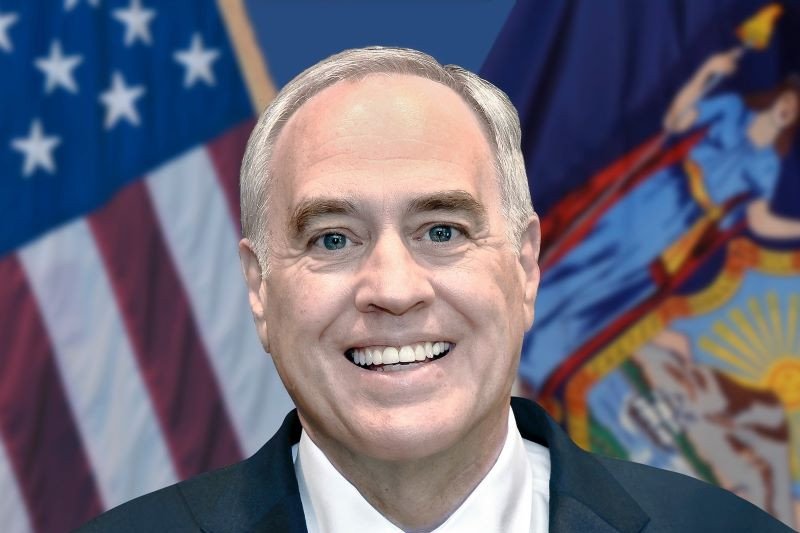
New York’s financial outlook is in a relatively stable position, but continues to have a structural budget deficit, with a cumulative three-year budget gap of $13.9 billion forecasted by the Division of the Budget (DOB), according to a report by State Comptroller Thomas P. DiNapoli on the State Fiscal Year (SFY) 2024-25 Enacted Budget Financial Plan. DiNapoli says action is needed to align projected state spending with revenues and address factors that challenge the state’s finances, economic competitiveness, and ability to offer services effectively over the long term.
“The current economic expansion enabled the state to close the prior fiscal year in a stronger financial position than the Division of the Budget anticipated, reduced outyear budget gaps and allowed for increasing rainy day reserves,” DiNapoli said. “But the structural imbalance in the state’s finances remains. With the state in a relatively stable position, now is the time to be strategic in managing the budget to better prepare for upcoming fiscal challenges and ensure long-term success.”
According to DOB, All Funds disbursements in SFY 2024-25 are projected to total $239.2 billion, compared to $236.7 billion in All Funds receipts. DOB projects growth in disbursements will far exceed growth in revenues over the course of the Financial Plan, ending in SFY 2027-28. Compared to SFY 2023-24, State Operating Funds spending is estimated to increase by more than 18.8%, compared to a projected increase in State Operating Fund revenues of 4.2%, through SFY 2027-28.
Spending Pressures Pose Risk to Budget Gaps
While DOB’s projected decrease in the three-year cumulative budget gap, from $20.1 billion to $13.9 billion, is an improvement, gaps could widen if state spending increases beyond DOB’s projections or economic conditions weaken. A slowdown in the economy will likely lead to an increase in demand for government services, putting further pressure upon the estimated budget gaps.
Spending in recent years has been driven by school aid and Medicaid; the two are forecasted to account for over 50% of all General Fund disbursements in SFY 2024-25, and the share is projected to grow to 52.3% by SFY 2027-28. State-share Medicaid is projected to grow more than 24.2% from SFY 2023-24 to SFY 2027-28.
Resources to Address Budget Gaps
DiNapoli commended the planned $1.5 billion deposit to the Rainy Day Reserve Fund in the SFY 2024-25 Financial Plan. If acted upon, that deposit would bring the total of the state’s statutory rainy day reserve funds to nearly $7.8 billion, less than 6% of State Operating Funds spending in the current year.
The Financial Plan indicates an additional $13.8 billion in informal reserves are designated for “economic uncertainties,” but these reserves are subject to administrative use by the Executive and are not governed by statutory requirements for their use or repayment. While this increases the flexibility in using these reserve funds, such flexibility also reduces the likelihood that the funds will be available for truly pressing economic circumstances or other emergencies.
Economics and Revenue
DOB’s forecast was revised from March to reflect higher economic and employment growth in 2024. For 2025, DOB now projects stronger employment gains both nationally and in New York. The state had regained all the jobs lost in March and April 2020 in April of this year. For the current fiscal year, DOB is projecting a somewhat stronger economy for New York, with both wages and personal income forecasted to accelerate from their previous fiscal year levels. However, employment is projected to slow.
For the remainder of the Financial Plan period, DOB forecasts an $11.3 billion (10.2%) increase in All Funds tax collections from SFY 2024-25, which is largely expected to occur from SFY 2026-27 to SFY 2027-28. Major provisions of federal and state tax law are scheduled to sunset during the Financial Plan period, which may influence projected collections, including the expiration of temporary tax rate increases under the state corporate franchise tax and PIT on Dec. 31, 2026, and Dec. 31, 2027, respectively. At the federal level, the scheduled expiration of the Tax Cuts and Jobs Act at the end of 2025 may impact the realization of nonwage income (such as capital gains).
Principles to Improve the State’s Fiscal Outlook
DiNapoli’s report outlined six principles to improve the state’s fiscal outlook:
- Ensure the competitiveness of state tax policy. With a tax burden among the highest in the nation, New York policymakers will need to carefully evaluate the combined impact of looming federal and state decisions to ensure the state’s tax revenue are both adequate for long-term fiscal stability and reasonable to ensure economic competitiveness.
- Increase transparency and use of data in budgeting. Better information is needed on several areas of the budget, most notably Medicaid, to help understand cost drivers. Policymakers and other stakeholders should be able to access key performance data on the state’s essential programs and services and to understand how financial plan decisions may alter that performance.
- Address spending pressures in school aid and Medicaid programs. Placing these two programs on a sustainable fiscal path without compromising outcomes requires a bold roadmap and stakeholder engagement and commitment.
- Use one-time resources for the greatest long-term benefit. Relying on one-time resources for recurring spending worsens the state’s structural imbalance. Priority should be placed on directing one-time resources for purposes that would help improve long-term finances, such as retiring debt or bolstering the rainy day reserves.
- Strengthen rainy day reserves and Retiree Health Benefit Trust Fund. Make routine, monthly reserve fund deposits as economic and financial conditions allow, rather than leaving them to the Executive’s discretion, and adhere to a schedule of deposits to help grow the Retiree Health Benefit Trust Fund.
- Reform debt practices. The state’s excessive reliance on “backdoor” borrowing by public authorities continues, as total state-supported debt outstanding is projected to grow 65% from SFY 2023-24 to SFY 2028-29. DiNapoli has recommended establishing comprehensive and binding constitutional debt limits to enhance transparency, accountability and affordability. Debt practices should be examined so capacity is maintained for capital improvement projects critical to New York’s infrastructure and economic well-being.
Have all the Finger Lakes news from Finger Lakes News Radio delivered to your email every morning for FREE! Sign up by clicking here.
Get the top stories on your radio 24/7 on Finger Lakes News Radio 96.3 and 1590, WAUB and 106.3 and 1240, WGVA, and on Finger Lakes Country, 96.1/96.9/101.9/1570 WFLR.