
Last Updated:
Lok Sabha passed the Finance Bill, 2026 by a voice vote following Union Finance Minister Nirmala Sitharaman’s reply to the debate




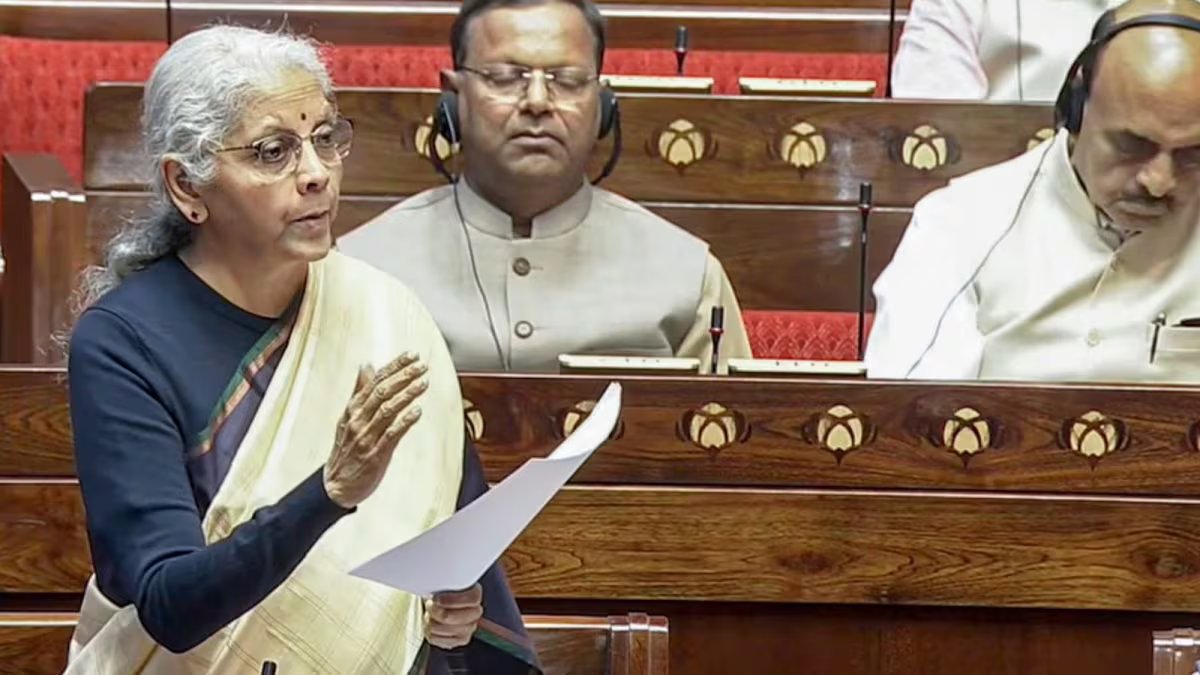
Union Finance Minister Nirmala Sitharaman (Image: Sansad TV/PTI)
The Lok Sabha on Wednesday (March 25, 2026) passed the Finance Bill, 2026 by a voice vote following Union Finance Minister Nirmala Sitharaman’s reply to the debate. The Bill seeks to give effect to the Central government’s financial proposals for the 2026–27 fiscal year.
Meanwhile, the Rajya Sabha is set to take up the Transgender Persons (Protection of Rights) Amendment Bill, 2026 for consideration and passage. The Bill was cleared by the Lok Sabha a day earlier through a voice vote amid a walkout by Opposition members.
The Finance Bill is a crucial legislative measure that provides legal backing to proposals announced in the Union Budget. Its passage will bring into effect changes in income tax rates, duties and other levies, directly impacting individuals and businesses. The provisions are expected to influence disposable income, savings and investment returns.
Speaking in the Lok Sabha, Finance Minister Nirmala Sitharaman said the Finance Bill for 2026–27 is anchored on five key principles, emphasising a continued push towards trust-based tax administration. She also underscored the importance of improving ease of living for citizens and ease of doing business.
What are the key Budget 2026–27 proposals?
The Union Budget 2026–27 places a strong emphasis on growth, job creation and inclusive development. A key focus is on capex-led expansion to boost infrastructure and crowd in private investment, alongside employment and skilling initiatives such as Yuvashakti. The government has also outlined support for MSMEs through easier credit access and targeted incentives.
The Budget aims to strengthen manufacturing, industry and agriculture through production-linked schemes, development of industrial corridors, irrigation projects and rural infrastructure. It also prioritises green energy, digital governance, urban development and connectivity, while investing in human capital through education, healthcare and nutrition.
On the social front, the government has reinforced its push for inclusive growth through welfare schemes, direct benefit transfers and targeted support for vulnerable sections.
Earlier, in her February 1 Budget speech, Finance Minister Nirmala Sitharaman announced several reforms while retaining the existing income tax slabs and standard deduction for FY 2026–27. The Budget also proposed a new Income Tax Act, effective April 1, 2026, aimed at simplifying rules and compliance. Additionally, TCS on overseas tour packages and LRS remittances for education and medical purposes has been reduced to 2%. The deadline for filing revised returns has been extended to March 31, with no change in tax slabs or age-based exemptions.
March 25, 2026, 14:00 IST
Read More