
Unlock the Editor’s Digest for free
Roula Khalaf, Editor of the FT, selects her favourite stories in this weekly newsletter.
If any recent movie-goers found Marty Supreme to be too calm, unhurried and altogether stress-free, then along comes Industry to warm the blood and elevate the pulse. The sleeper hit about finance, but mostly about skulduggery and ego, has grown in popularity since its low-key launch in 2020, and now finds itself returning as a scion of prestige television. It burnt down the house at the end of its third series, with the Pierpoint investment bank closing its London trading floor and principal characters moving on to new ventures. Some reached the top, and some reached the very bottom. Such is the Industry way.
That ending would have been a neat overall finale, but now a fourth series is tasked with making itself new again. It sticks to what it knows — sex, drugs and a lot of jargon — but, as hard as it may be to believe, it tightens the screws even more. Creators Mickey Down and Konrad Kay have cited the influence of the 2007 film Michael Clayton, which they have called “the greatest corporate thriller of all time”, and this new razor-sharp focus is apparent from the off. Stranger Things’ Charlie Heaton joins the cast as financial muckraker Jim Dycker, who employs less-than-ethical tactics in his pursuit of Tender, a payment-processing company with ambitions of becoming an app-based bank. Fellow newcomer Max Minghella plays Whitney Halberstram, harnessing some of the icy chill of his character in The Handmaid’s Tale as Tender’s ambitious and cut-throat CFO.
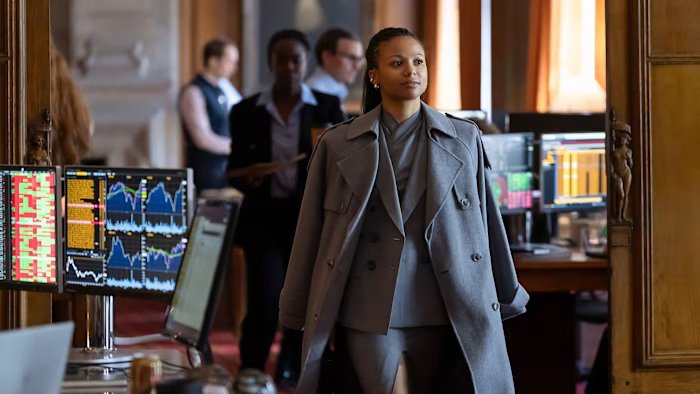
If the series looks set to be a full-blown reboot, with a whole new cast of characters, then it has the common sense to retain its two leads and weave them into this new corporate hellscape. Harper (Myha’la) is running her own fund, while Yasmin (Marisa Abela) has married into the aristocracy and is pulling the strings of her feckless husband Sir Henry Muck (a wonderfully self-loathing performance from Kit Harington). Both have achieved their goals, on paper, but remain hamstrung by the people around them. There are many cynical lessons to be derived from Industry, but one of its favourites is that no matter how terribly a person behaves, there is always someone willing to act worse.

Industry’s already breathless pace is hurried along by its fondness for responding to real-life headlines. At the beginning, Tender’s biggest client is Siren, an online subscription service dealing in similar territory to OnlyFans. But the association which made Tender’s fortune now threatens to tarnish its image at a sensitive moment in the company’s evolution. The new Labour government’s crusade against pornography enabled by tech giants bleeds into the lives of all of the characters here, with Harper and Yasmin emerging on opposing sides of the argument.
The show retains its operatic squalor as well as its ability to mine near-comically horrific situations for poignancy. In the past, the relentlessness of its cynicism has threatened to become wearing and was saved by the brevity of its eight-episode runs. But in shifting its tone and altering its direction, new heights are scaled. Later in the season, in what might be one of Industry’s best ever episodes, we learn more about Sir Henry’s malaise, and when the thriller angle eventually takes the wheel, it is practically impossible to tear your eyes away.
★★★★★
On BBC1 on Mondays and iPlayer in the UK and HBO on Sundays and HBO Max in the US