
Stay informed with free updates
Simply sign up to the Eurozone economy myFT Digest — delivered directly to your inbox.
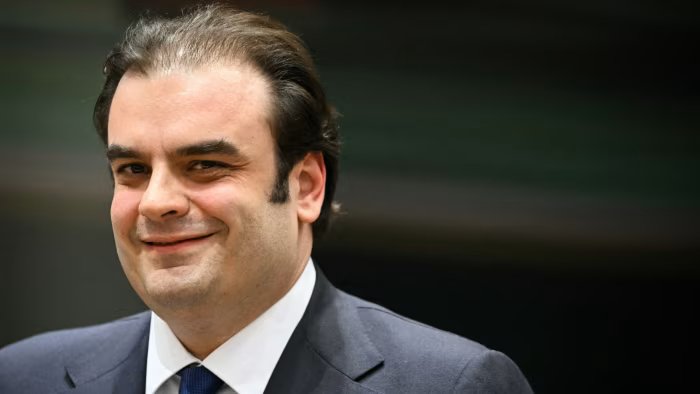
Greece’s finance minister has been elected president of the Eurogroup, the body coordinating Eurozone policy, in a sign of the country’s economic turnaround.
Kyriakos Pierrakakis, 42, secured unanimous support in a second-round vote of finance ministers from the 20-strong currency bloc. His supporters included Germany, the country that demanded some of the most stringent terms for a Greek bailout during the Eurozone debt crisis.
The job had become vacant when Ireland’s Paschal Donohoe stepped down to take up a position at the World Bank. Pierrakakis beat the Belgian deputy prime minister Vincent Van Peteghem in the race for the chair.
For Greeks, the Eurogroup presidency is tied to difficult memories of the decade-long financial crisis, during which strict reforms and tough fiscal targets were approved by the body of Eurozone finance ministers.
The election of a Greek official to chair the Eurogroup comes as a surprise — and, for many in Greece, marks a moment of quiet pride for a country that once feared the outcome of every Eurogroup meeting.
The Eurogroup role, which has a renewable two-and-a-half-year mandate, involves leading the currency bloc as it seeks to move back to sustained growth, rein in high debt, shape the euro in its digital form and deepen the single market for financial services.
Pierrakakis rose to prominence as Greece’s minister for digital governance, where he created the gov.gr platform that brought state services online, introduced the system used to verify Covid-19 vaccinations and replaced the notorious queues and paperwork of the Greek state with digital applications.
He later moved to the education ministry before taking over the finance portfolio in March 2025, where his priorities have included maintaining primary surpluses, reducing debt and strengthening Greece’s credit profile.
Pierrakakis is a close ally of Prime Minister Kyriakos Mitsotakis and is associated with the administration’s technocratic reform agenda.
Greece has been repeatedly running large primary surpluses and managed to put its excess debt, the highest in the Eurozone at more than 150 per cent of GDP, on a downward trajectory.