
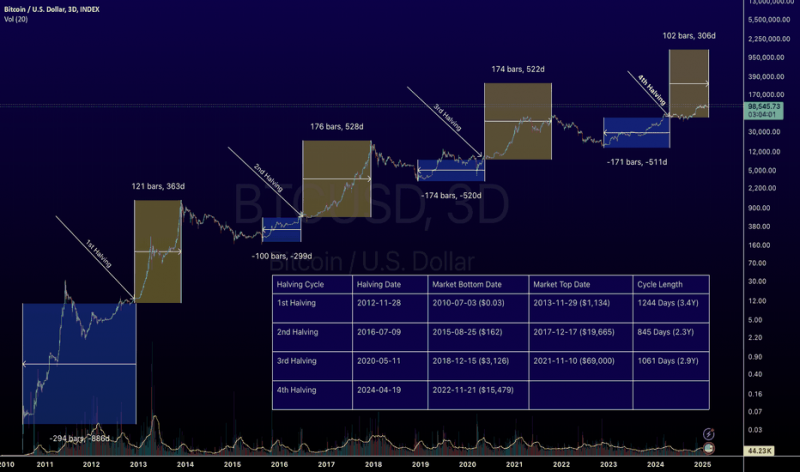
Bitcoin’s halving cycle is one of the most closely watched events in the cryptocurrency ecosystem, often seen as a key driver of long term price trends and market sentiment.
Occurring approximately every four years, the halving reduces the reward miners receive for validating transactions, effectively slowing the rate at which new Bitcoin enters circulation.
As the market moves beyond the latest halving event, investors, analysts, and policymakers are asking a critical question: what comes next for Bitcoin. This FAQ explainer examines the mechanics, historical patterns, economic implications, and future outlook of Bitcoin after the halving cycle.
What is Bitcoin halving and why does it matter
Bitcoin halving is a programmed event in the Bitcoin protocol that reduces the block reward given to miners by 50 percent. This mechanism is designed to control inflation and ensure that the total supply of Bitcoin remains capped at 21 million coins.
The halving matters because it directly affects supply. By reducing the rate at which new Bitcoin is created, it introduces a scarcity dynamic that can influence price over time. In simple terms, if demand remains constant or increases while supply growth slows, prices tend to rise.
This built in scarcity model is one of the core features that differentiates Bitcoin from traditional fiat currencies.
How often does halving occur
Bitcoin halving occurs approximately every 210000 blocks, which translates to roughly every four years. The timing is not exact because it depends on the speed at which blocks are mined.
Since Bitcoin’s launch in 2009, several halving events have taken place, each reducing the mining reward and shaping the economic structure of the network.
These events are predictable and widely anticipated, allowing markets to prepare in advance.
What has happened to Bitcoin prices after previous halvings
Historically, Bitcoin has experienced significant price increases following halving events. However, the timing and magnitude of these increases have varied.
In previous cycles, prices often remained relatively stable immediately after the halving, followed by gradual increases and eventually sharp rallies over the following 12 to 18 months.
This pattern has contributed to the belief that halvings trigger bull markets. However, it is important to note that correlation does not guarantee causation, and other factors also play a role.
Why does halving influence Bitcoin’s price
Halving influences price primarily through supply dynamics. When the reward for mining new Bitcoin is reduced, fewer new coins enter the market.
At the same time, demand from investors, institutions, and users may remain steady or increase. This imbalance between supply and demand can create upward pressure on prices.
In addition, the halving event itself generates significant attention and media coverage, which can attract new investors and reinforce positive sentiment.
Is the halving effect already priced in
There is ongoing debate about whether the impact of halving is already reflected in Bitcoin’s price before the event occurs.
Because halving is predictable, some investors anticipate the effect and buy in advance, potentially pushing prices higher before the actual event.
However, historical data suggests that the most significant price movements often occur after the halving, indicating that the market may not fully price in the long term supply shock immediately.
The reality is likely a combination of both pre event anticipation and post event market dynamics.
What happens to miners after the halving
Miners are directly affected by halving because their rewards are reduced. This can impact profitability, especially for those with higher operating costs.
After a halving, less efficient miners may be forced to shut down operations, leading to a temporary decrease in network hash rate. Over time, the network adjusts, and more efficient miners continue to operate.
Transaction fees become increasingly important as a source of revenue for miners. In the long term, the Bitcoin network is expected to rely more on fees than block rewards.
Does halving affect Bitcoin’s security
Bitcoin’s security is tied to its mining activity. A higher hash rate generally indicates a more secure network.
After a halving, if many miners exit due to reduced profitability, the hash rate may temporarily decline. However, the network includes mechanisms to adjust mining difficulty, ensuring that blocks continue to be produced at a stable rate.
Over time, as prices potentially rise and mining becomes profitable again, hash rate typically recovers or increases.
This dynamic has been observed in previous cycles and suggests resilience in the network’s security model.
What role does demand play after halving
Demand is a critical factor in determining Bitcoin’s future after halving. While supply reduction creates the conditions for price increases, actual price movement depends on whether demand grows.
Institutional adoption, retail interest, and macroeconomic conditions all influence demand. If demand expands significantly, it can amplify the effects of reduced supply.
Conversely, if demand weakens, the impact of halving may be limited.
How are institutions influencing post halving dynamics
Institutional participation has become a defining feature of recent Bitcoin cycles.
Large financial institutions are now investing in Bitcoin, offering related products, and integrating digital assets into their portfolios. This creates a more stable and sustained source of demand compared to purely retail driven markets.
After a halving, institutional inflows can accelerate price movements by absorbing newly reduced supply more quickly.
The presence of institutions also enhances market credibility and attracts additional participants.
What is the role of macroeconomic conditions
Macroeconomic factors are increasingly important in shaping Bitcoin’s trajectory.
Interest rates, inflation, and global liquidity all influence investor behavior. In environments where traditional financial returns are low or uncertain, Bitcoin may become more attractive.
Geopolitical tensions and currency instability can also drive demand for decentralized assets.
The interaction between halving driven supply changes and macroeconomic demand factors is a key determinant of future price trends.
Can Bitcoin reach new all time highs after halving
Many analysts believe that halving cycles can lead to new all time highs, based on historical patterns.
However, each cycle is different, and past performance does not guarantee future results. Market maturity, regulatory developments, and external economic conditions all play a role.
While the potential for new highs exists, it should be viewed within the context of broader market dynamics.
What are the risks after the halving
Despite the positive outlook often associated with halving, several risks remain.
Market corrections can occur at any time, even during bullish cycles. Over speculation and excessive leverage can amplify downturns.
Regulatory changes may impact market sentiment and access. Technological risks, including security vulnerabilities, also persist.
In addition, if expected demand does not materialize, the reduced supply alone may not sustain price growth.
How does the halving affect long term scarcity
Halving reinforces Bitcoin’s scarcity by reducing the rate of new supply. Over time, this contributes to its narrative as a deflationary asset.
As more halvings occur, the incremental supply of new Bitcoin becomes smaller, increasing the importance of existing holdings.
This scarcity model is central to Bitcoin’s value proposition and differentiates it from inflationary currencies.
What is the long term outlook for Bitcoin beyond halving cycles
While halving cycles are important, Bitcoin’s long term future depends on broader adoption and integration into the financial system.
Key factors include regulatory clarity, technological development, and use case expansion. Institutional involvement and global recognition also play significant roles.
Over time, Bitcoin may evolve from a speculative asset to a more widely accepted store of value and medium of exchange.
Halving will continue to influence supply, but demand side factors will become increasingly important.
What should investors consider after the halving
Investors should approach post halving markets with a balanced perspective.
Understanding the supply dynamics is important, but it should be combined with analysis of demand, macroeconomic trends, and market sentiment.
Risk management is essential, given the volatility of crypto markets. Long term strategies and diversification can help mitigate potential losses.
Avoiding emotional decision making and focusing on fundamentals can improve investment outcomes.
How does the current cycle compare to previous ones
The current cycle differs from earlier ones in several ways.
Institutional participation is higher, regulatory frameworks are more developed, and market infrastructure has improved. Global awareness of Bitcoin is also significantly greater.
These factors suggest a more mature market, but they also introduce new complexities and uncertainties.
The interaction between traditional finance and crypto is becoming more pronounced, influencing how halving cycles play out.
Conclusion
Bitcoin’s halving cycle remains a fundamental aspect of its economic model, shaping supply dynamics and influencing market expectations. While historical patterns suggest that halvings can lead to significant price increases, the future of Bitcoin depends on a broader set of factors.
Institutional adoption, macroeconomic conditions, regulatory developments, and technological progress all play critical roles. As the market evolves, the impact of halving may become more nuanced, interacting with these external forces.
Understanding both the opportunities and risks associated with halving cycles is essential for anyone seeking to navigate the future of Bitcoin in an increasingly complex global financial environment.