

📌 Top story — scroll down for more updates
A Brutal Blow for Burford Capital
3:49 pm — BUR -45.47%, YPF +3.09%

By Rich Greifner
Burford Capital (BUR 45.46%) shares fell more than 40% after a U.S. appeals court reversed the company’s $16.1 billion judgment against Argentina for seizing control of state-owned oil company YPF (YPF +3.06%).
While this decision is deeply disappointing, it does not invalidate the core Burford investment thesis. The company has a proven long-term track record, sustainable competitive advantages, and a diverse portfolio of pending cases that extend well beyond YPF. We’ll address the broader thesis in a separate piece. Here, we focus on what the court decided — and what comes next.

Strategy Is Carrying Bitcoin Demand
2:29 pm — MSTR -4.86%, CRYPTO : BTC -4.57%
Strategy (MSTR 5.08%) is accelerating its Bitcoin (BTC 3.87%) buying even as nearly every other corporate buyer steps aside. Corporate treasury purchases have plunged 99% from their 2025 peak, but Strategy snapped up roughly 45,000 BTC in the past month—its fastest pace in nearly a year. The result: demand is becoming highly concentrated in a single player at a time when Bitcoin itself remains under pressure.
- A shrinking crowd: Corporate bitcoin buyers now account for just a sliver of demand outside Strategy, a sharp reversal from last year’s broad adoption wave.
- Concentration risk rises: Strategy holds about 65% of public-company bitcoin—meaning its funding strategy and balance sheet could increasingly influence both bitcoin and its own stock.
The AI Factory Lie: Opportunity or Obscenity?
2:19 pm — NVDA -1.79%

By Seth Jayson
Team Rule Breakers
I spend quite a bit of time “vibe coding” lately, and I’m struck by how absolutely wasteful it is. Prompt “reasoning” exceeds useful output by >20x for most of my examples. I just ran one that used nire than 18,000 tokens (half of that reading code, the other half cross-talking/jabbering about how to fix the code) to produce 300 tokens of output code. 15 lines created, 11 deleted. Seriously. ~12,0000 words to generate those lines. That’s a scrap rate of 98.4%.
That’s extreme, but not unusual according to what Gemini told me (reasoning tokens required unknown… it didn’t show them all.
As a person who owns Nvidia (NVDA 2.33%) stock, this seems great to me.
Beijing Blocks Meta-Manus Acquisition
1:05 pm — META -3.4%
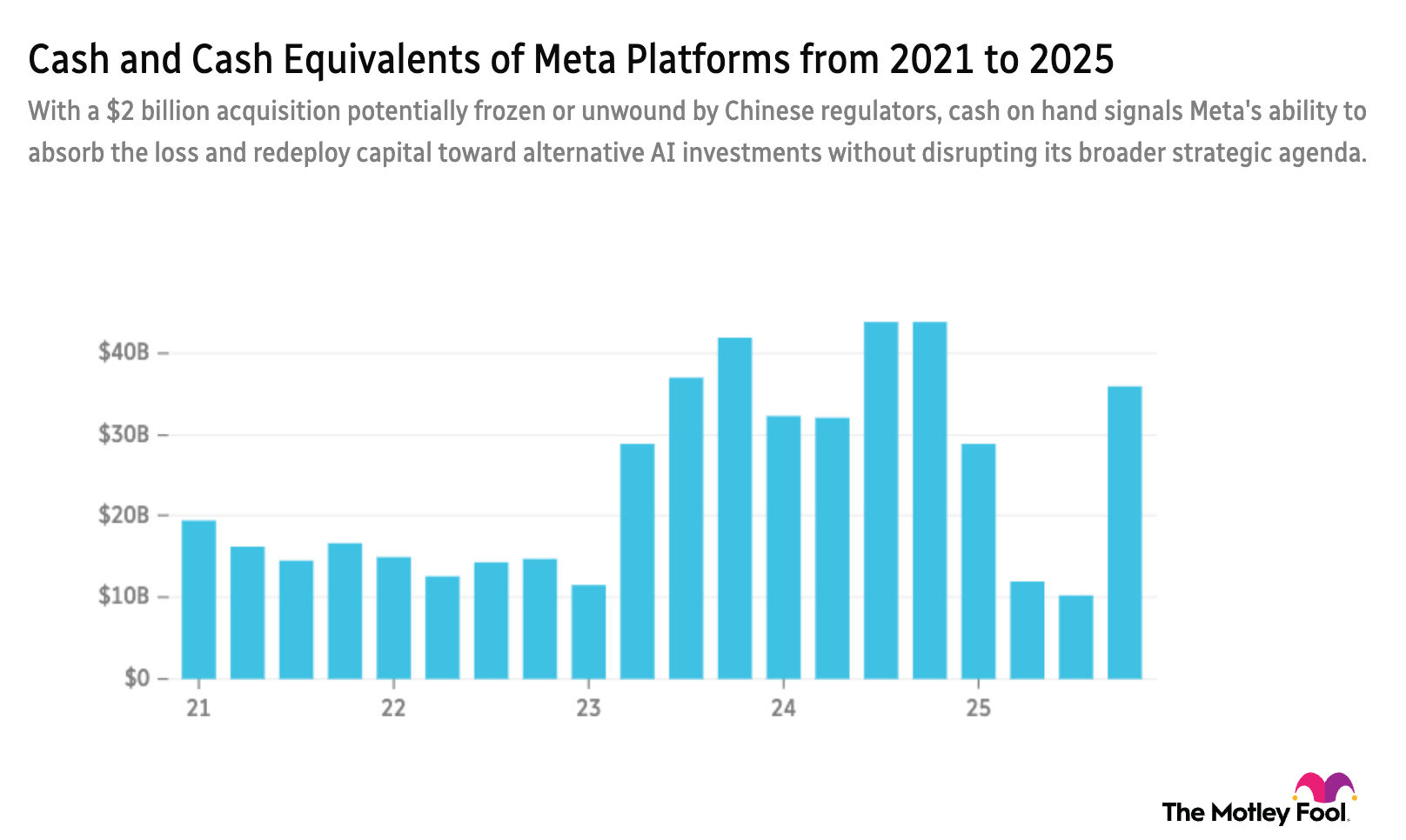
Meta Platforms (META 3.91%) faces a geopolitical quagmire after Beijing intervened in its $2 billion acquisition of AI startup Manus. Though Meta integrated the Singapore-based team this month, Chinese regulators are reviewing the deal for tech export violations and have reportedly barred Manus’s founders from leaving China. The move shatters the “Singapore washing” strategy used by offshore startups to dodge U.S.-China scrutiny. For Meta, the friction threatens a key investment in autonomous agents capable of independent coding, just as the company seeks to outpace domestic rivals in the high-stakes AI race.
- Valuation Discrepancy Risks: Chinese AI startups often trade at a fraction of U.S. multiples; Beijing’s crackdown on mid-growth “pivots” to the West could trap promising tech in lower-valuation domestic markets.
- The Code-Root Reckoning: Regulators are now looking past legal facades to scrutinize original source code and R&D history, meaning Meta’s $2 billion asset could be deemed illegal “outbound investment” by Beijing.
Today’s Lunchtime News
1:00 pm — MSFT -1.6%
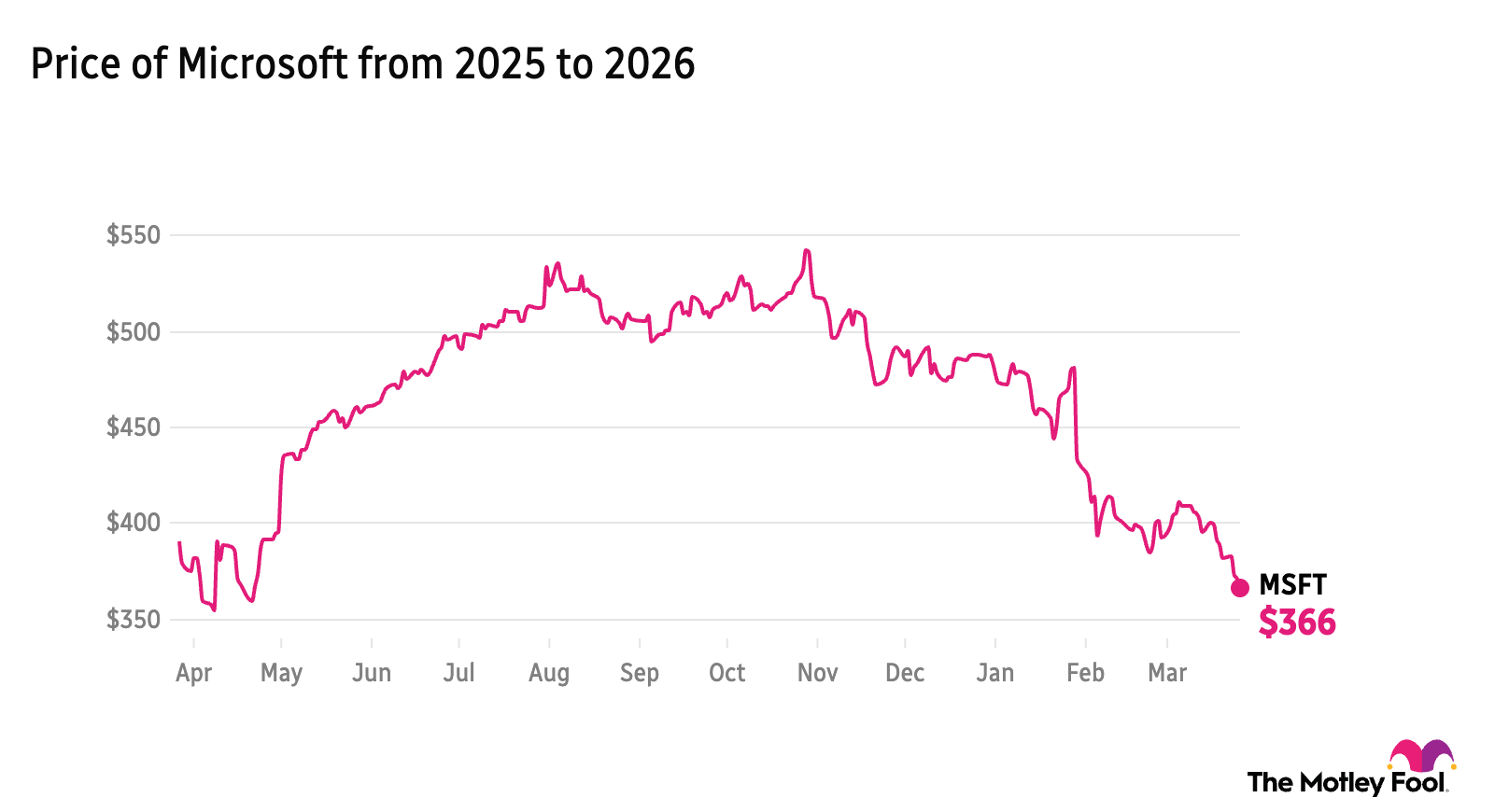
Microsoft’s (MSFT 2.44%) stock is down 25% in the first quarter, on pace for its worst quarterly performance since the 2008 financial crisis, as two AI-related fears converge. Investors worry the company is spending too heavily on AI infrastructure without enough growth to show for it, while also fearing that AI agents from start-ups like Anthropic and OpenAI could undercut Microsoft’s core software business.
- The numbers: Capital expenditures are projected to hit $146 billion in fiscal 2026, up 66% from last year, with spending expected to climb further to $191 billion by fiscal 2028. Azure growth decelerated slightly last quarter, and Copilot has gained limited user traction, prompting a leadership shake-up.
- Two threats at once: Microsoft faces AI disruption from both sides, spending billions to build AI infrastructure while simultaneously watching AI start-ups potentially undercut its core software products. As one portfolio manager put it, customers may bypass Microsoft entirely and go “directly to AI vendors,” pressuring pricing and margins across the business.
New Anthropic AI Threatens Cyber Moats
12:25 pm
Cybersecurity stalwarts plummeted Friday following reports that Anthropic is testing “Mythos,” a model with advanced capabilities that may heighten digital risks. The iShares Cybersecurity ETF (IHAK 4.11%) dropped 3%, while industry leaders CrowdStrike (CRWD 5.77%) and Palo Alto Networks (PANW 5.86%) fell over 5%. Investors fear this new AI wave empowers attackers and introduces native security tools that could commoditize traditional software moats. With Tenable (TENB 9.98%) and SentinelOne (S 6.16%) seeing even steeper declines, the sector is grappling with a shifting landscape where autonomous agents make sophisticated hacking increasingly accessible.
- The Automation Arms Race: As state-sponsored actors already utilize models like Claude to automate attacks, the “Mythos” rollout suggests a future where defensive software must innovate faster than AI can exploit.
- Structural Disruption Risks: This selloff reflects growing anxiety that Big Tech’s integrated AI tools will eventually bypass specialized security vendors, forcing a radical re-evaluation of long-term sector growth.
Correcting the Stock Market “Correction” Narrative
12:05 pm

By Brian Richards
Team Rule Breakers
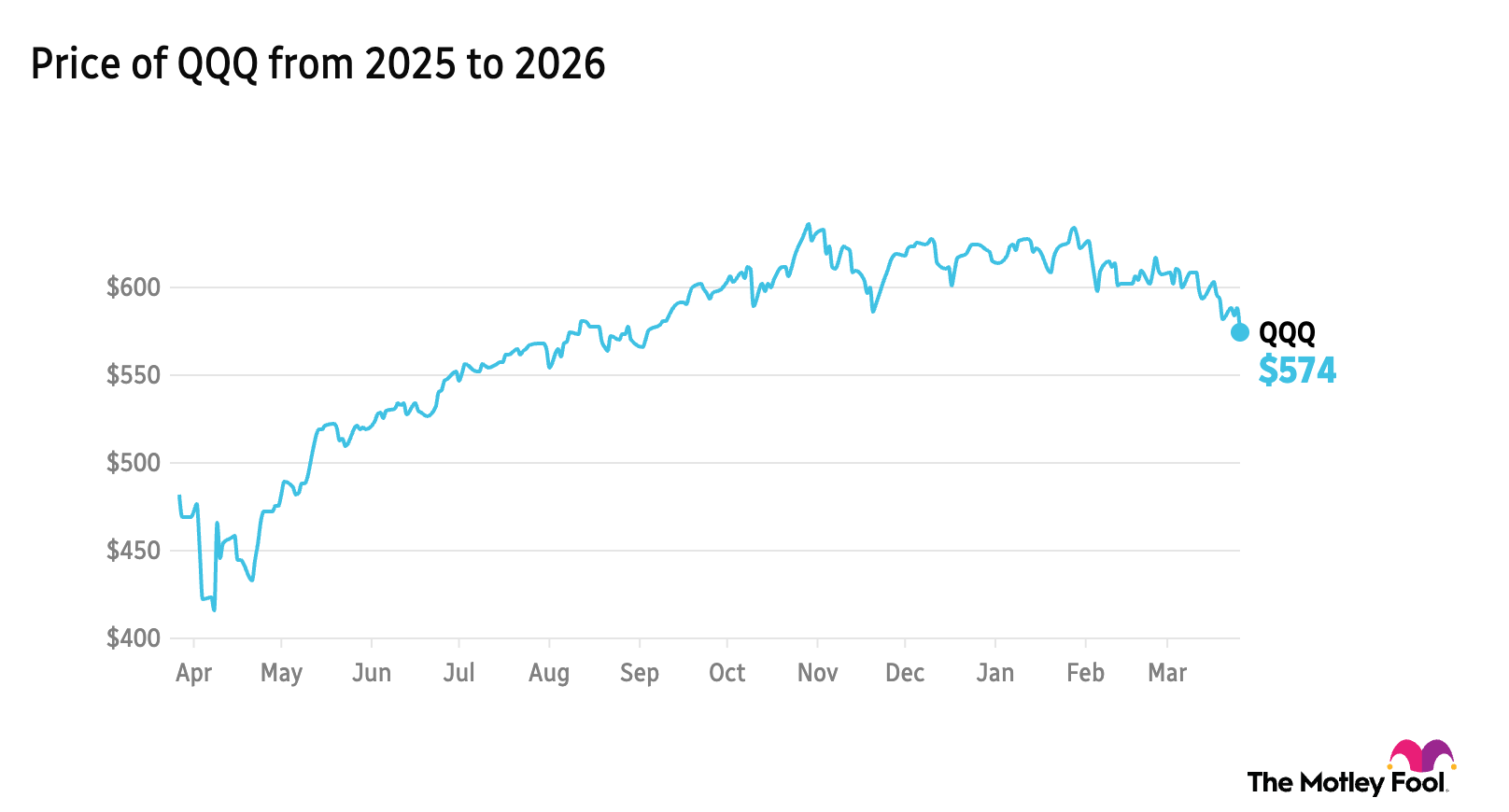
The Nasdaq 100 (QQQ 1.86%) ended yesterday in “correction” territory, defined as falling 10% or more from its high. In the case of the QQQs, that was hit in October. This morning, the Dow “briefly fell into correction territory,” per CNBC. (A reminder that the media uses “correction” when describing a 10% decline from highs, while “bear market” is a 20% decline.)
Between the war in Iran, AI’s disruptive impact on whole industries, softness in the labor market, higher-than-we’d-like inflation prints, I’m not going to say that everything is hunky-dory out there.
That said, I want to channel Fool co-founder and Chief Rule Breaker David Gardner and push back on that specific word: correction.
Quoting from David’s recent book, Rule Breaker Investing:
The media will then call this a “correction…” … that’s the term! I don’t know when this started, but I completely disagree that when the stock market goes down, that should be called a correction; invariably, they say the market is correcting only when it goes down.
Why is it correct when the stock market goes down? The idea is that the market has overshot to the upside, and so it’s correct that it should return to a lower place. But by the same logic, when the market undershoots, isn’t it also correcting when it rises? Using “correction” only for drops contradicts the stock market’s truth: It rises two years out of every three, and over your lifetime, it will rise a great deal in value. (Rollercoaster up a mountain, anyone?) And that’s really what’s correct.
If stocks continue to decline in the near term, keep those words in mind.
How Tax Brackets Actually Work: A Simple Guide
11:20 am

By Robert Brokamp, CFP®
Team Hidden Gems
If you’re like me, when you were a kid, you heard grown-ups say things that stuck with you.
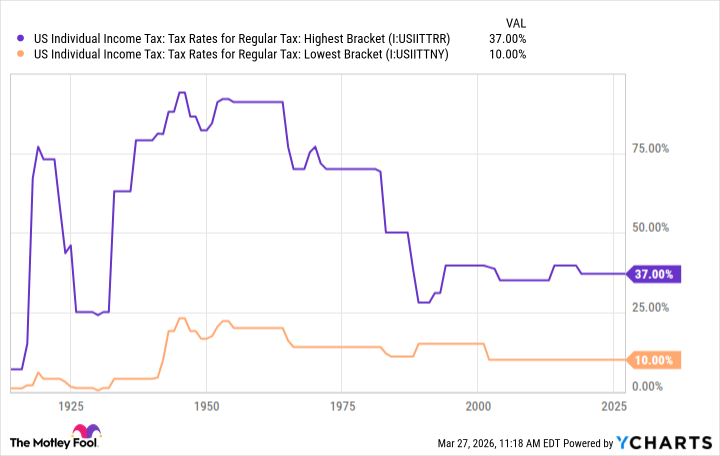
When I was in my early teens, a close adult family friend explained how a raise he received put him in a higher tax bracket, which caused all his income to be taxed at a higher rate. “I would have been better off if I didn’t get the raise,” he said.
His seemingly justified outrage at the government partially formed my younger ideas about Uncle Sam and the IRS. It wasn’t until I was in my 20s and began learning about personal finance that I discovered he had it all wrong.
However, he’s not alone in thinking that a taxpayer’s tax bracket is the rate at which all income is taxed. I recently read this on X (formerly Twitter): “Gotta love getting that 3% raise which then bumps you into the next tax bracket so you actually end up losing money.”
I get it. Taxes are complicated, especially when it comes to understanding how different sources of income are taxed differently yet affect one another.
In this article, I’ll attempt to demystify the mechanics of tax brackets.
Top of the Morning
10:40 am — META -2.9%, GOOG -1.1%

By Morning Show host Jim Mueller, CFA
Team Rule Breakers
A couple of recent court rulings lead me to ask the following: How much responsibility do tech companies bear for taking advantage of human psychology? Note, salespeople have been taking advantage of that for a very long time. Is there a line that is too far?
Earlier this week, a jury in California found that Meta (META 3.91%) and Alphabet‘s (GOOG 2.45%) Google were “liable for a young woman’s depression and suicidal thoughts after she said she became addicted to Instagram and YouTube at a young age.” They ordered the companies to pay her a combined $6 million.
In a second case in New Mexico, Meta was found to have “misled users about the safety of its products for young users and enabled the sexual exploitation of children on its platforms.” There, a jury penalized the company to the tune of $375 million.
In both of these cases (and many others now winding their way through the court system), the question of where the line lies is being argued. Where should we draw the line between good business and what could be viewed as damaging, predatory business?
10:25 am

By Morning Show host Jim Gillies
Something of an “energy stream-of-consciousness” rumination this morning, but it’s been interesting to see that “Energy” has been somewhat forgotten in recent years by investors.
Tell me I’m wrong. The Energy sector weighting in the S&P 500 is currently a somewhat minuscule 3.5% (by comparison, as of early 2026 Information Technology was 32.5% and Financials were 12.5%). Note that this is after the energy sector has risen about 25% in 2026 due to [points in general direction of the Middle East].
Probably my favorite “Energy gets no respect” factoid is how ExxonMobil (XOM +2.97%) was wrenched out of the Dow Jones Industrial Average in August 2020 (you know, when the world was under COVID shutdown restrictions and just a couple of months after oil prices briefly went negative), replaced by Salesforce (CRM 3.47%). Since that switch Exxon is up 307% (409% with dividends assumed reinvested), while Salesforce is down 31.5% (or down “just” 30.7% with dividends).
Shout out to the pointy heads who made that decision.
But things are, somewhat obviously, different today.
9:40 am

By Morning Show host Alicia Alfiere
Team Rule Breakers
In a partnership with Coinbase (COIN 7.10%), Better Mortgage (BETR 7.46%) has a new mortgage product that aims to help younger homebuyers use Bitcoin as collateral.
So, how does it work?
According to the Better Mortgage website, “…Instead of putting cash down, you pledge Bitcoin or USDC and receive two loans: a conforming Fannie Mae mortgage on the home, and a separate loan that is secured by the crypto that you pledge and a second lien on the home to fund your cash down payment…”
Why is this a thing?
Higher housing prices mean that a lot of buyers are effectively priced out of the market. That means the pool of buyers is likely a bit older and a bit smaller than some in the mortgage business might prefer. So it’s not surprising that some mortgage brokers would create products to lure younger buyers into the market.
Amazon Slashes Jobs to Fund AI Future
10:30 am — AMZN -3.1%
Amazon (AMZN 3.89%) is accelerating its transition into an AI-first powerhouse, with AWS CEO Matt Garman projecting that current demand for cloud tools will sustain growth for the next decade. To seize this window, the company is ratcheting up infrastructure spending to a staggering $200 billion this year while simultaneously thinning its workforce by tens of thousands to increase operational speed. AWS, which generated $128.7 billion in sales last year, remains the backbone for giants like Netflix (NFLX +0.27%) and Starbucks (SBUX 4.76%). Garman suggests the current AI upheaval mirrors the early days of cloud computing—a “misunderstood” bet that ultimately redefined the enterprise landscape.
- Capital Intensity vs. Efficiency: The pivot to AI requires a massive reallocation of capital; by axing legacy roles, Amazon is attempting to self-fund the hardware required to prevent rivals from chipping away at its dominant cloud market share.
- Locked-In Longevity: Management believes that even if AI technology plateaued today, the backlog of corporate migrations and “agentic” integrations would provide a five-to-ten-year runway of high-margin service revenue.

Today’s Change
(-3.89%) $-8.07
Current Price
$199.47
Key Data Points
Market Cap
$2.2T
Day’s Range
$199.14 – $206.62
52wk Range
$161.38 – $258.60
Volume
2.6M
Avg Vol
50M
Gross Margin
50.29%
Opening Bell
9:35 am
U.S. equities fell Friday as the Nasdaq entered a technical correction, dropping 10% from its October high. Despite President Trump extending a pause on attacking Iranian energy facilities until April 6, Brent crude futures jumped 2% to over $110. The S&P 500 is pacing for its fifth straight losing week as the Strait of Hormuz remains effectively closed, with Iranian forces reportedly turning back Chinese vessels. While the Dow remains 9% below its record, the looming threat of 10,000 additional U.S. troops in the Middle East continues to fuel a “war premium” that is punishing growth-sensitive sectors.
This Morning’s Breakfast News
9:05 am — AAPL -0.07%, GOOG -1.3% in pre-market trading
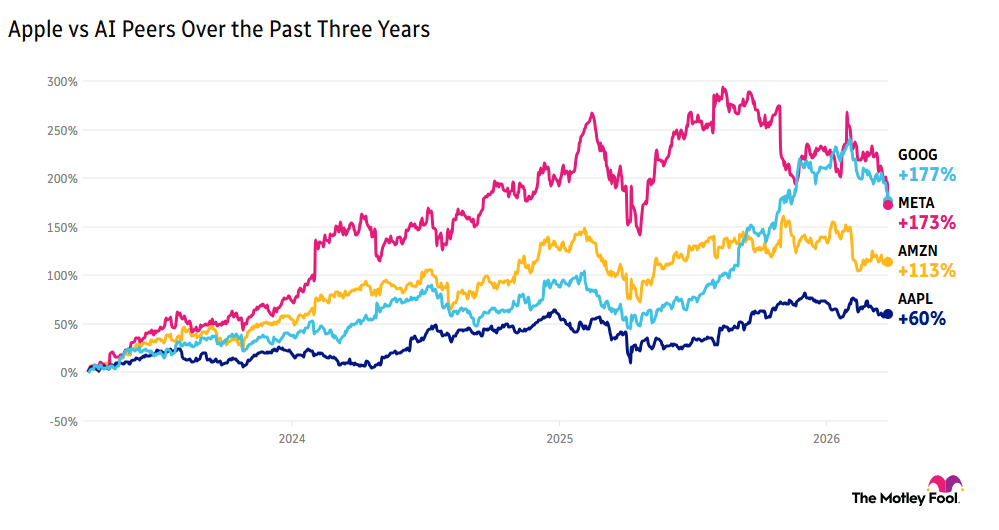
Apple (AAPL 1.45%) is planning to open up the Siri operating system to outside AI assistants in the upcoming software release in a bid to catch up to peers and generate more revenue from third-party AI subscriptions. The stock rose almost 1% ahead of the market open.
- AI chatbot apps installed on the iPhone will be able to integrate with Siri: The iOS 27 operating system overhaul should enable users to send questions to Anthropic’s Claude, Alphabet‘s (GOOG 2.45%) Gemini, or others, according to those familiar with the matter.
- Clear potential to boost services revenue: Under the new reported measures, Apple would no longer be an exclusive user of OpenAI’s ChatGPT, although the move could allow Apple to take a percentage of paid subscriptions from the different new providers integrated on Siri.
$20B Content Plan Forces Netflix Hikes
8:55 am — NFLX +1.1% in pre-market trading
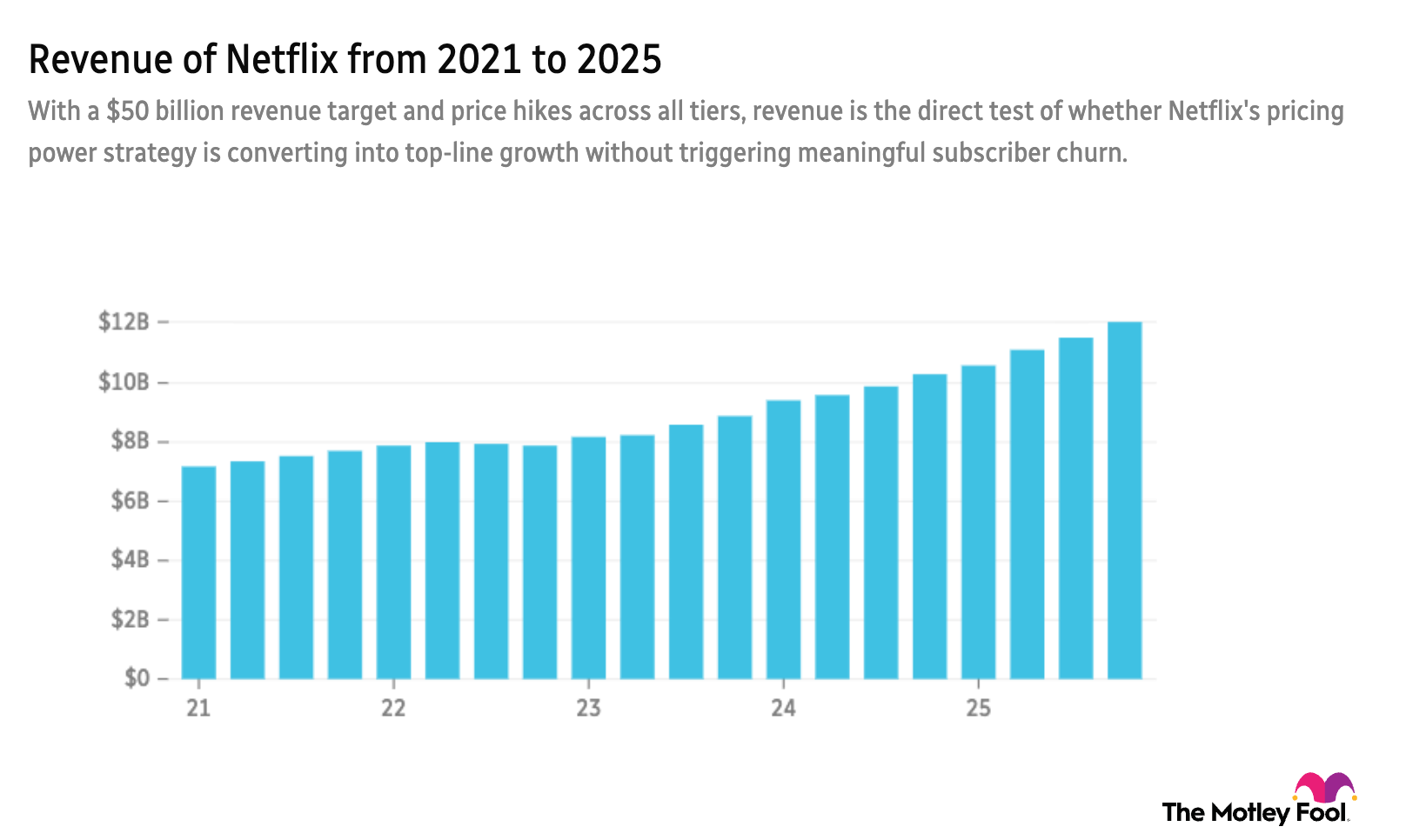
Netflix (NFLX +0.27%) increased subscription costs across all tiers Thursday, its first hike since early 2025. Monthly rates for the ad-supported tier rose to $8.99, while the premium plan climbed to $26.99. These adjustments support a massive $20 billion content budget for 2026 as the company expands into live events and video podcasts. Management is betting on “pricing power” to reach a revenue target of over $50 billion this year, even after losing the Warner Bros. bidding war to Paramount Skydance (PSKY 0.96%). The move follows a broader industry trend where streamers prioritize profitability over pure subscriber growth.
- Ad-Tier Ambitions: By raising the floor on its cheapest plan, Netflix is nudging users toward a higher-revenue “doubling” of ad sales projected for 2026.
- The Premium Ceiling: With the top-tier plan now nearing $30, the company is testing the upper limits of consumer loyalty in an increasingly fragmented and expensive streaming market.
Before the Opening Bell
8:50 am
U.S. equity futures retreated Friday as the Nasdaq officially entered correction territory, down 10% from its October peak. Despite President Trump extending the deadline for potential strikes on Iranian energy facilities to April 6, Brent crude futures jumped 2% to over $110 per barrel. The S&P 500 and Dow Jones Industrial Average remain under pressure as the Strait of Hormuz remains closed, with Iranian forces reportedly turning back Chinese vessels. While the administration signals “ongoing” talks, conflicting reports from Tehran and a potential 10,000-troop Pentagon deployment have fueled a fifth consecutive week of losses for major benchmarks.
- Waterway Chokepoints: The grounding of a cargo ship and the blockade of the Strait of Hormuz are creating a logistical nightmare that could keep the “war premium” embedded in energy prices indefinitely.
- The Correction Threshold: With the Dow now 9% below its all-time high, a further 1% drop would trigger a technical correction across all three major U.S. indexes simultaneously.