
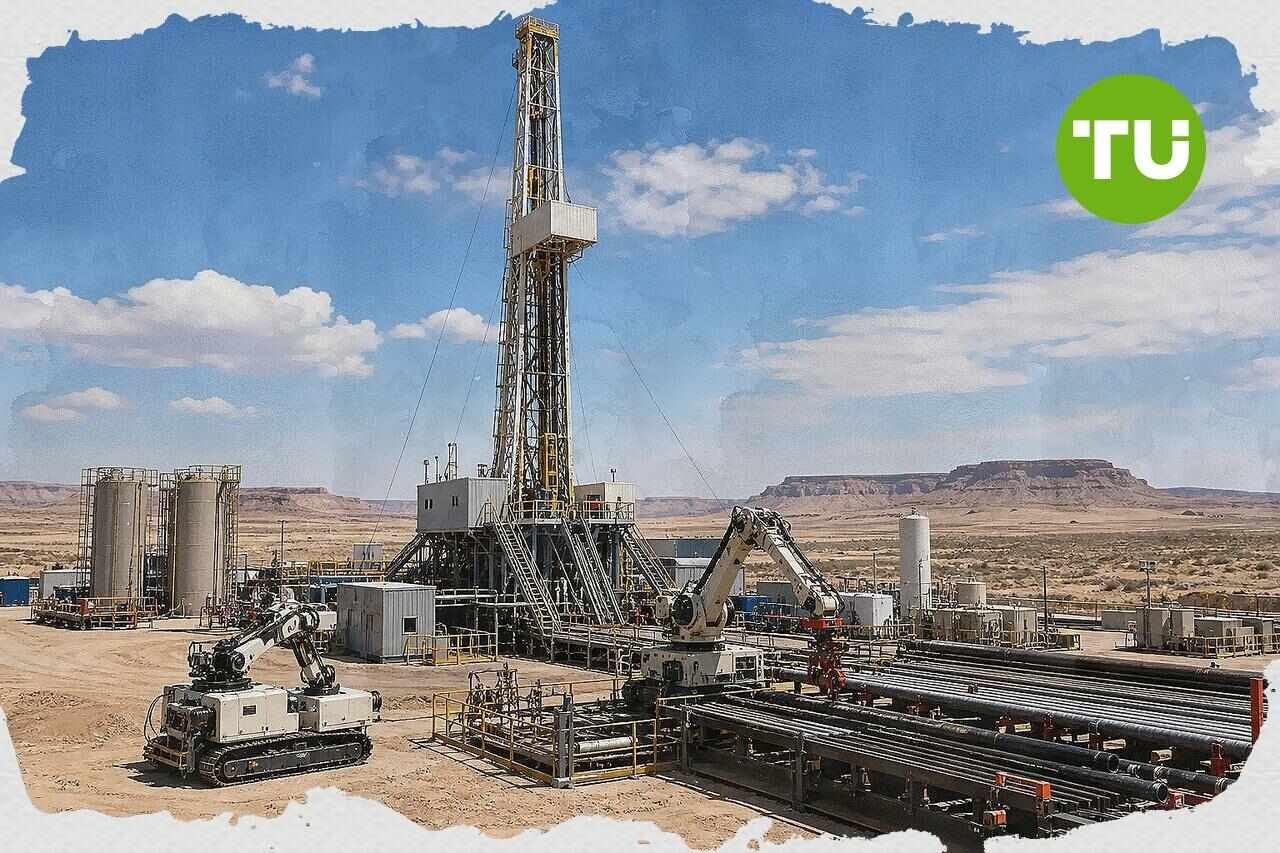
Oil producers in the Permian Basin are using artificial intelligence to drill longer wells faster and lower operating costs across U.S. shale fields. The shift is also reducing headcount in some of the sector’s most hazardous frontline roles, even as crude output continues to rise.
Highlights
- Devon Energy reduced its cost per well to $800 per foot, a 28% drop since 2023, as AI-driven automation improves drilling efficiency in the Permian Basin.
- Atlas Energy Solutions will boost its fleet of driverless trucks from 28 to 100 by mid-2027, while Texas oil and gas workforce fell 26% to a record low.
- Chevron targets 2026 as an AI inflection point, and BP reports 2,000 barrels per day extra production at no additional cost, with industry eyeing up to 1 trillion extra barrels from improved recovery.
AI adoption reshapes drilling economics
As reported by Financial Times, Devon Energy is using AI on drilling rigs in the Bone Spring play in the Permian Basin to help crews drill six wells from a single location, with wells stretching as far as two-and-a-half miles.
Beau Bromley, Devon Energy’s drilling and completions AI supervisor, says wells of that depth and length would have taken twice as long a decade ago. Devon says its cost per well is now $800 per foot, down 28% since 2023, compared with an industry average of $900 per foot.
Automation is spreading across oil and gas operations as companies apply AI to tasks once handled by workers in the field. Dangerous drilling jobs are increasingly carried out by automated systems, while rig engines and gas compression systems are monitored by AI, reducing the need for daily manual checks.
Production rises while workforce shrinks
Smaller crews are becoming more common on rigs, and roles such as well loggers are becoming harder to find as companies streamline operations. In the Permian Basin, Atlas Energy Solutions is also expanding its fleet of driverless trucks from 28 to 100 by mid-2027, extending automation beyond the well site.
Billy Randel of Truckers Movement for Justice says the technology threatens jobs that were once seen as premium blue-collar work. Even so, U.S. crude production averages more than 13.7 million barrels a day in 2025, up from a decade earlier, while the Texas oil and gas workforce has fallen 26% to its lowest recorded level.
Large producers are treating 2026 as a key year for broader deployment. Chevron describes 2026 as an inflection point for AI, while BP says the technology has lifted well production by an extra 2,000 barrels a day at no added cost; the wider industry believes improved recovery from existing fields could unlock as much as 1 trillion additional barrels.
The latest update follows our earlier article on Latin America resources and how AI-driven energy demand is steering investment interest.
This material may contain third-party opinions, none of the data and information on this webpage constitutes investment advice according to our Disclaimer. While we adhere to strict Editorial Integrity, this post may contain references to products from our partners.