
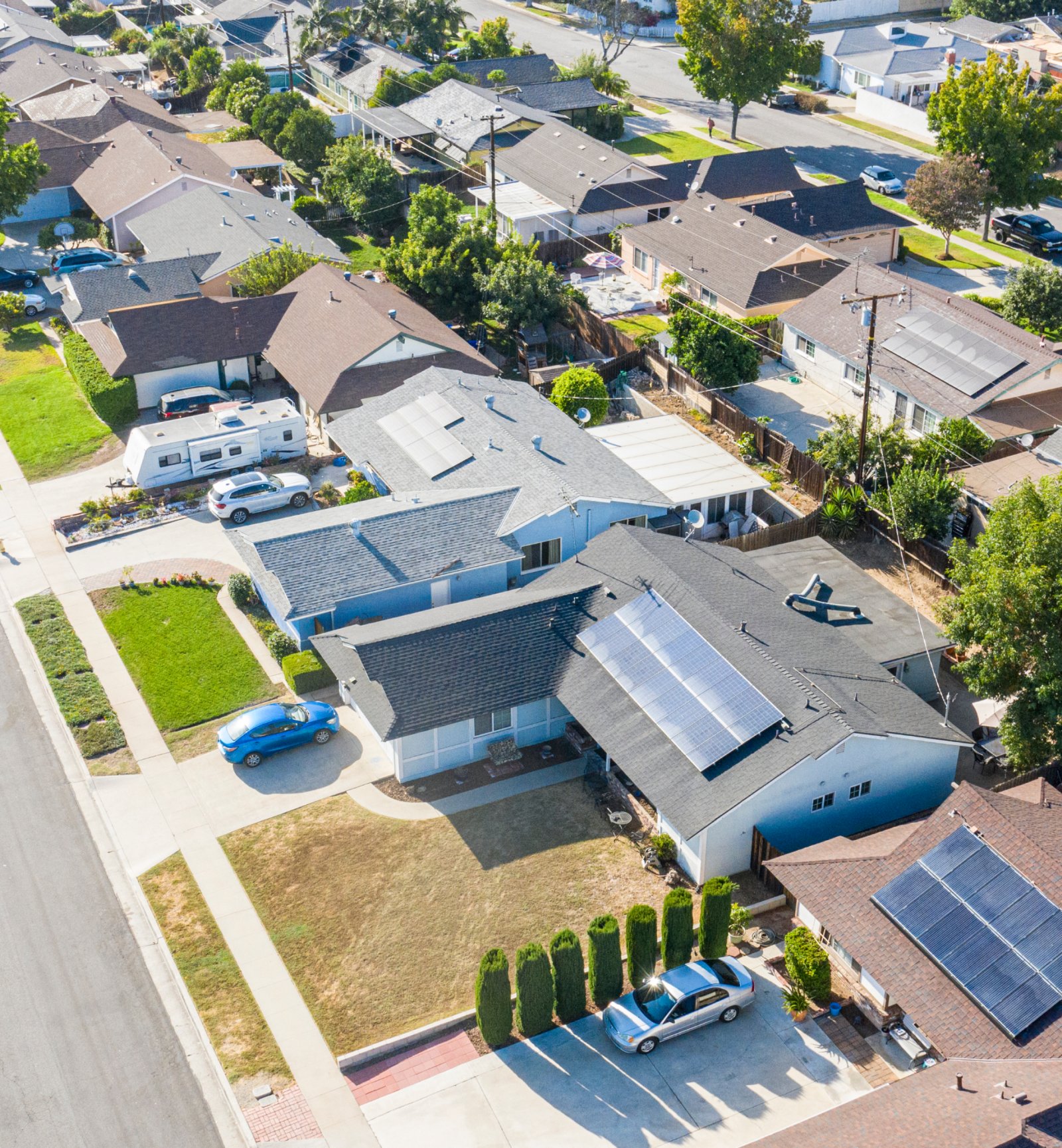
Utilities, state policy makers, regulators and participants all have a role to play in ensuring that virtual power plants (VPPs) reach their full potential, as discussed in The ABCs of VPPs, a report from the Clean Energy States Alliance (CESA).
A VPP is a network of distributed energy resources including solar, batteries and EVs, that together support the electric grid. They have the potential to help meet rising electricity demand while saving billions of dollars annually in avoided costs.
In its 2025 Pathways to Commercial Liftoff: Virtual power plants, the U.S. Department of Energy (DOE) estimates that VPP capacity could grow from roughly 33 GW today to 80 to 160 GW by 2030, based on the assumption that VPPs could serve 10% to 20% of projected future U.S. peak demand. According to research firm Wood Mackenzie, the capacity of resources enrolled in VPPs nationwide reached 37.5 GW last year.
The benefits of VPPs to participants include revenue and energy cost savings during business-as-usual conditions, backup power during grid outages, cost reduction for ratepayers by providing lower-cost grid services that displace higher-priced resources. The report emphasizes, however, that clear operating rules must be in place to achieve all of this.
Before a single customer is enrolled, the report outlines some basic questions that need to be answered:
- Who enrolls customers
- Who sends dispatch instructions
- Who controls the enrolled devices
- Who measures performance
- Who pays whom and on what basis
- Who can override dispatch for reliability or safety, or to accommodate resiliency needs
Utilities also from valuable VPP services including reducing peak demand, shifting energy use, discharging stored energy, relieving local grid constraints, providing ancillary market services such as frequency regulation, and deferring traditional grid investments such as poles-and wires or substation expansion. See Program Design for Battery-Based Virtual Power Plants for more about VPP design.

While VPPs are a relatively new concept, they are up and running in at least 30 states, according to CESA. State energy agencies developing a VPP program need to ask:
- What services should VPPs provide in their state
- Who will be able to participate
- How will participants be compensated
- How will performance be measured
- What rules are needed to make the program scalable
VPPs require coordination among several entities, beginning with customers who are ratepayers that provide access to behind-the-meter (BTM) energy resources and receive value through payments, bill savings, backup power, resilience, or participation in a community reliability effort.
Device manufacturers and installers provide the parts and pieces for controlling devices. Aggregators or VPP providers enroll customers, connect devices, forecast available flexibility, dispatch resources, measure performance, and manage compensation. For some VPP programs, utilities aggregate resources. In other programs, device manufacturers or installers serve as aggregators. In some VPPs, aggregators are third parties.
The role of state energy offices, regulators and program administrators is to shape program design, customer protections, eligibility rules, incentives, reporting, and equity requirements.
Overall, VPPs depend on trusted information exchange. Not only is information on customers and enrollment important, but which devices are enrolled, what the customer has agreed to, and how the customer can withdraw or opt out. Furthermore, performance and financial information are also essential.
The report outlines that utilities, aggregators, and market operators need to know how much load was reduced, how much energy was exported, whether the resource followed the dispatch instruction, and whether customers opted out. Settlement then depends on the terms of the customer contract or tariff, and the performance of the enrolled resources.
Utilities have historically been slow to embrace innovative distributed energy resources, rooftop solar, and combined-heat-and-power (CHP) as solutions to grid constraints. VPPs are a relatively new concept and are not directly owned by the utility or under its control. Utilities may also have financial concerns about resources that can reduce demand for utility-supplied electricity and alter traditional revenue and investment patterns.
To reduce utility perception of VPP risk, the report points to three important concepts that are based on a 2026 EnergyHub report:
Visibility: Can the utility see what the VPP is doing before, during, and after dispatch? This depends on telemetry quality, reporting speed, and integration with utility systems.
Schedulability: Can the VPP respond when and how it is asked? A more mature VPP can follow shaped schedules, not just simple start-and-stop events.
Availability: Can the VPP be counted on often enough to matter for planning and operations? A resource limited to a few hours on summer afternoons has less value than one available across seasons and longer event windows.11
Reducing risk for participants and other ratepayers comes down to addressing economics risk, trust and control issues and knowledge gaps. They need to know that promised VPP program revenues will materialize and that cost savings will justify their investment. They also need to understand whether they give up control of their enrolled devices and if they can opt out of events. Overall, de-risking VPPs for participants requires information and transparency.
State policymakers and regulators must require consumer protections as part of VPP program development, according to the report, and ensure that enrollment contracts are clear and easy to understand.
To reduce ratepayer risk perception, it is important to ensure the VPP will be cost effective, and to identify and mitigate potential cost shifts from one group of ratepayers to another.
The report points out that the Ratepayer Impact Measure (RIM) test can help identify cost shifts between participating and non-participating customers. For more information on these tests see CESA’s report Energy Storage Benefit-Cost Analysis: A Framework for State Energy Programs
While technology is advancing and new devices are becoming available, growing VPP programs is primarily dependent on trusted communication among devices, customers, aggregators, utilities, markets, and regulators. In addition to standards and embedding equity components in a program, VPPs need customer protections, cybersecurity plans, performance measurement, data governance, and compensation rules that are clear enough to be relied upon by customers, utilities, aggregators and market operators.