
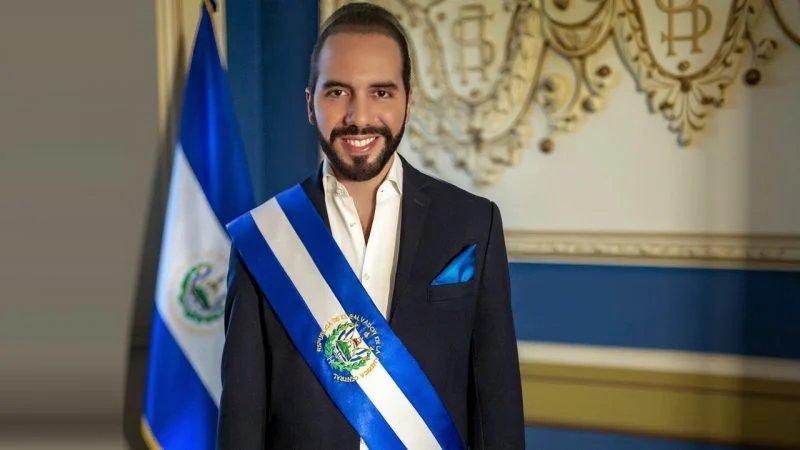
El Salvador’s President Nayib Bukele fired back at media reports suggesting the country had transferred its sovereign Bitcoin holdings to private entities, calling the interpretations “totally false” on social media. The clarification came one day after the International Monetary Fund released a staff-level agreement that, depending on how you read it, could sound like the country was quietly offloading its crypto stash.
It wasn’t. According to Bukele, only equity shares in the Chivo wallet, the government-backed Bitcoin payment app, were transferred to a private operator. The nation’s Strategic Bitcoin Reserve, holding roughly 7,764 BTC valued between $618 million and $632 million, remains firmly in government hands.
What the IMF actually said
On September 3, the IMF published findings from the combined second and third reviews of El Salvador’s $1.4 billion Extended Fund Facility program. The agreement would unlock approximately $140 million in new disbursements, pending board approval.
Buried in the language was a detail that caught headlines: majority ownership and operational control of the Chivo wallet had been transferred to a private operator. The government retained a minority stake and continued to serve as custodian for customer assets.
The IMF also noted something important about El Salvador’s recent Bitcoin additions. Any BTC acquired since the last review came through private donations, not public funds. And looking forward, the fund made clear that no additional public accumulation of Bitcoin is expected.
The Chivo confusion
The root of the misunderstanding appears to be conflation between two separate things: the Chivo wallet’s corporate structure and the Strategic Bitcoin Reserve. They’re not the same.
Chivo was El Salvador’s flagship Bitcoin payment app, launched in 2021 alongside the country’s historic decision to make Bitcoin legal tender. The app was supposed to onboard millions of Salvadorans into the crypto economy, complete with a $30 sign-up bonus in Bitcoin.
The Strategic Bitcoin Reserve is a different beast entirely. It’s the country’s sovereign stockpile of BTC, accumulated over several years and now sitting at nearly 7,764 coins. At current valuations, that puts the reserve’s worth somewhere north of $618 million.
What changed, according to Bukele, is that the Chivo wallet entity got restructured. A private operator now runs the show, with the government stepping back to a minority ownership position. The Bitcoin reserve itself didn’t move anywhere.
IMF pressure and the Bitcoin balancing act
This episode highlights the increasingly awkward dance between El Salvador and the IMF. The $1.4 billion Extended Fund Facility, a 40-month program initiated in early 2025, came with strings attached. One of the most significant: El Salvador revoked Bitcoin’s legal tender status earlier that year as a precondition for the deal.
That was a dramatic reversal. In September 2021, El Salvador became the first country in the world to adopt Bitcoin as legal tender.
Yet Bukele hasn’t abandoned Bitcoin entirely. The Strategic Reserve remains intact and has actually grown through private donations, a workaround that technically satisfies IMF conditions while keeping the crypto dream alive. The fund acknowledged as much in its latest review, noting the donation-funded acquisitions without objection, so long as public money stays out of the picture.
The $140 million disbursement now pending board approval represents the latest installment in a program designed to shore up El Salvador’s fiscal position and debt sustainability.