
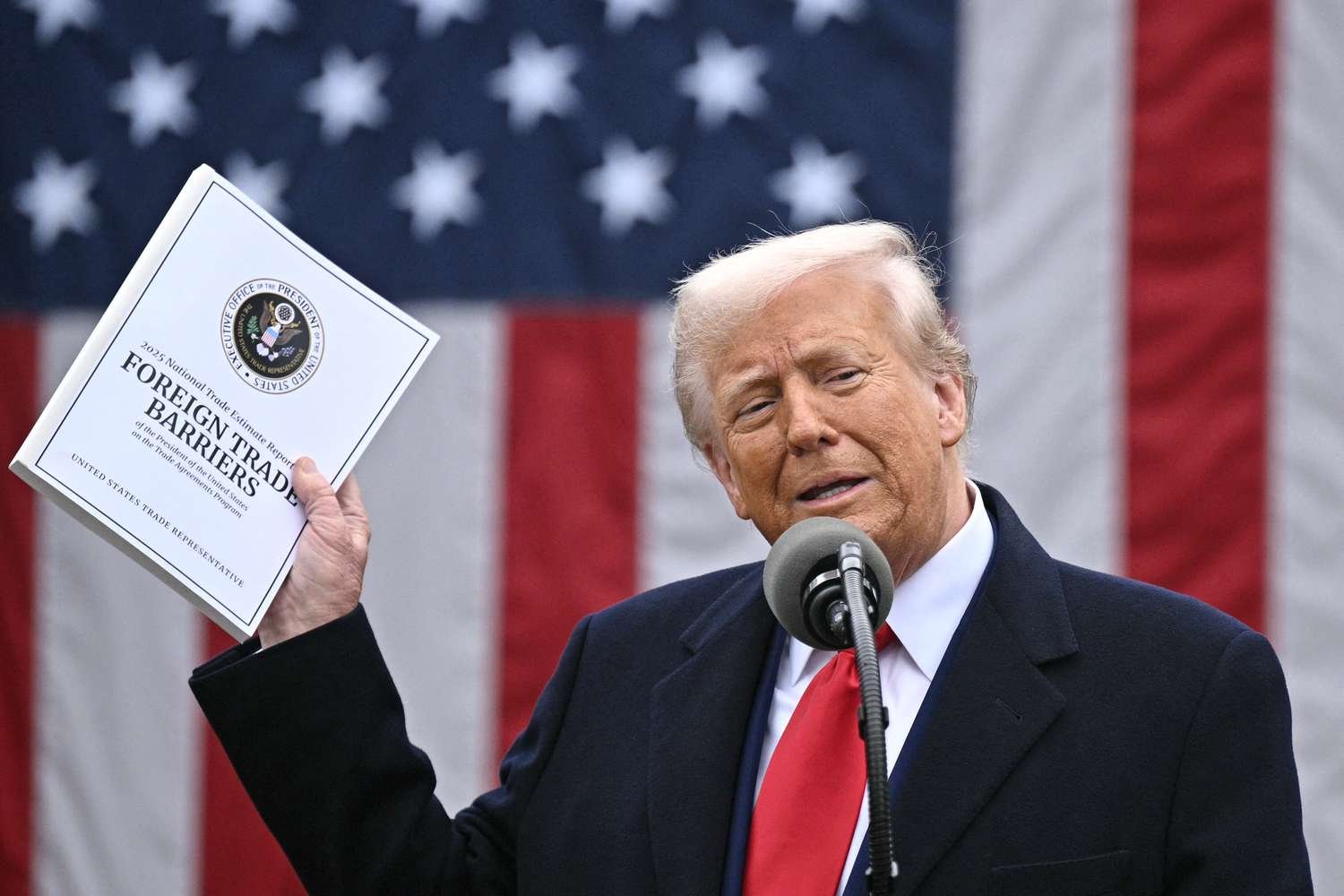
Presidents get a lot of the blame and take a lot of the credit for stock market performance when in office. While a president’s influence on the economy is generally indirect, the major shifts in world markets following Donald Trump’s April 2025 tariff announcement showed that executive actions can have immediate effects.
Key Takeaways
- Presidents often have little direct impact on the stock market, but they still seem to get some credit when performance is good and more of the blame if markets are down.
- Typically, fiscal policy, which is shaped by joint efforts between Congress and the administration, and monetary policy, which is set by the independent Federal Reserve, play major roles in shaping markets. Presidential actions can also have direct effects, as seen in the aftermath of the Trump administration’s 2025 tariff moves.
- Fiscal spending legislation passed by Congress can influence market sentiment.
- The independent Federal Reserve can have a significant impact by raising (bearish) or lowering (bullish) interest rates.
- Bullish stock market sentiment can improve a president’s popularity, while a bearish stock market outlook can undermine it.
How Presidents Impact the Stock Market
Because presidents are responsible for implementing and enforcing the law, they have some control over business and market regulation. This can be direct or through the president’s ability to appoint cabinet secretaries, such as the head of the Department of Commerce, as well as trade representatives. They also negotiate with Congress and sign into law bills that represent the fiscal policy of the United States.
In addition, the president nominates the chair of the Federal Reserve, as well as the seven members of the Federal Reserve Board of Governors. Those governors serve on the Federal Open Market Committee, which collectively sets monetary policy. The President does not nominate members directly to the FOMC seats. The Fed is an independent government body whose monetary policy goals are maximizing employment, stabilizing prices, and moderating long-term interest rates.
The Fed’s monetary policy often affects the stock market—past Fed chair speeches have set off massive buying or sell-offs, although the Fed officials over the years have cautioned the public that they don’t consider the performance of the stock market as an isolated factor in their decisions. The extent to which the person picked as Fed Chair is hawkish or dovish on monetary policy will determine how they affect the economy.
All presidents would like to be seen as leading the charge during an economic expansion and a rising stock market because those correlate well with better chances of reelection. As President Bill Clinton’s campaign manager, James Carville, once famously said, “It’s the economy, stupid.”
This chart shows the S&P 500’s price change over each four-year presidential term going back to 1953, while also including the early performance of the second Trump administration. Two of the terms have two names because President Kennedy was assassinated before the end of his term, and President Nixon resigned before the end of his second term. Their terms were finished by their vice presidents, Lyndon Johnson and Gerald Ford, respectively.
S&P 500 Under Biden
Under President Biden, the S&P 500 had a choppy ride at first but made record gains in 2024.
Biden took office in January 2021 as the energy, hospitality, and travel sectors were still rebounding from the losses suffered due to the COVID-19 pandemic. Rising interest rates, higher inflation, and a slowing economy all contributed to the decline in the S&P Index for most of 2022. Throughout 2023, the market showed increased volatility as market participants speculated on the size and timing of further Fed rate hikes.
As investors anticipated that rate hikes were ending and the Fed signaled that rates were likely at or near their peak, the S&P 500 began to climb, breaking 5,000 for the first time in February 2024. It continued to rise steadily, peaking in July 2024 and then breaking through 6,000 in December, not long before Biden left office.
TradingView
Second Trump Administration
President Donald Trump’s return to office in January 2025 was initially treated with market optimism, with the S&P 500 gaining 4% between the November election and the inauguration. The positive market sentiment on Wall St. was largely in anticipation of tax cuts and business-friendly policies, including deregulation. However, that mood all sharply reversed in April 2, 2025 when Trump announced sweeping new tariffs that were the highest in more than a century.
The market turmoil was immediate:
- The S&P 500 Index plummeted 10.5% over two days, wiping out $5.4 trillion in market capitalization. This was its worst decline since the 2020 pandemic, and the S&P Dow Jones Indices reported that the intraday low on April 7th was 21.35% lower than the February high.
- Trading volumes reached historic highs, and circuit breakers in markets worldwide were triggered to limit the damage.
- Market volatility, as measured by the VIX, surged to levels last seen during the pandemic.
Companies with significant exposure to global supply chains, such as automakers, semiconductor manufacturers, and companies dependent on imports from China, like Apple Inc. (AAPL), took on heavy stock losses.
The first quarter of Trump’s second term thus represented one of the most volatile periods in recent market history, with the unprecedented tariff policy creating what one analyst described as “a defining negative moment in history” for financial markets.
Do Government Policies Have an Effect on Stock Market Performance?
Yes, government policies can have an effect on stock market performance, especially to the extent that they deliver large fiscal spending programs. Market investors view extra government spending as a boon to consumers and then to the market. Changes in regulations in various sectors also have an impact.
Do Tax Cuts Count As Fiscal Spending?
Tax cuts are a form of fiscal stimulus for individuals since they leave more money in consumers’ pockets, which can support personal spending. While tax cuts may also improve expectations for corporate earnings, they do not necessarily lead to broadly bullish investor sentiment or higher equity returns.
Do the Policies of the Fed Impact the Performance of the Stock Market?
Yes. The U.S. Federal Reserve is an independent government body that sets monetary policy by raising or lowering interest rates, among its main tools. Higher interest rates, or speculation on them, generally have a bearish impact on stocks. The thinking is that higher rates will raise the cost of borrowing and act as a headwind to the overall economy. Lowering interest rates, known as monetary easing, can support stocks, but the market reaction depends on expectations and the information the decision conveys. If easing responds to a weak economy, that signal may offset the support from lower rates.
The Bottom Line
While the president can influence the economy through policies and economic agendas that can impact the stock market, in most periods, the president probably gets too much blame and too much credit when it goes down or up. That’s because larger macro events, often in motion long before and after specific presidential terms, generally drive investment sentiment over the longer term.
A strong or bullish stock market, by raising consumer optimism, often rebounds to the president’s benefit in approval ratings. The same can be said if the stock market is down and investor sentiment is bearish, auguring poorly for the incumbent at voting time. Perhaps it’s often better to look at how the stock market influences the president than the other way around.