
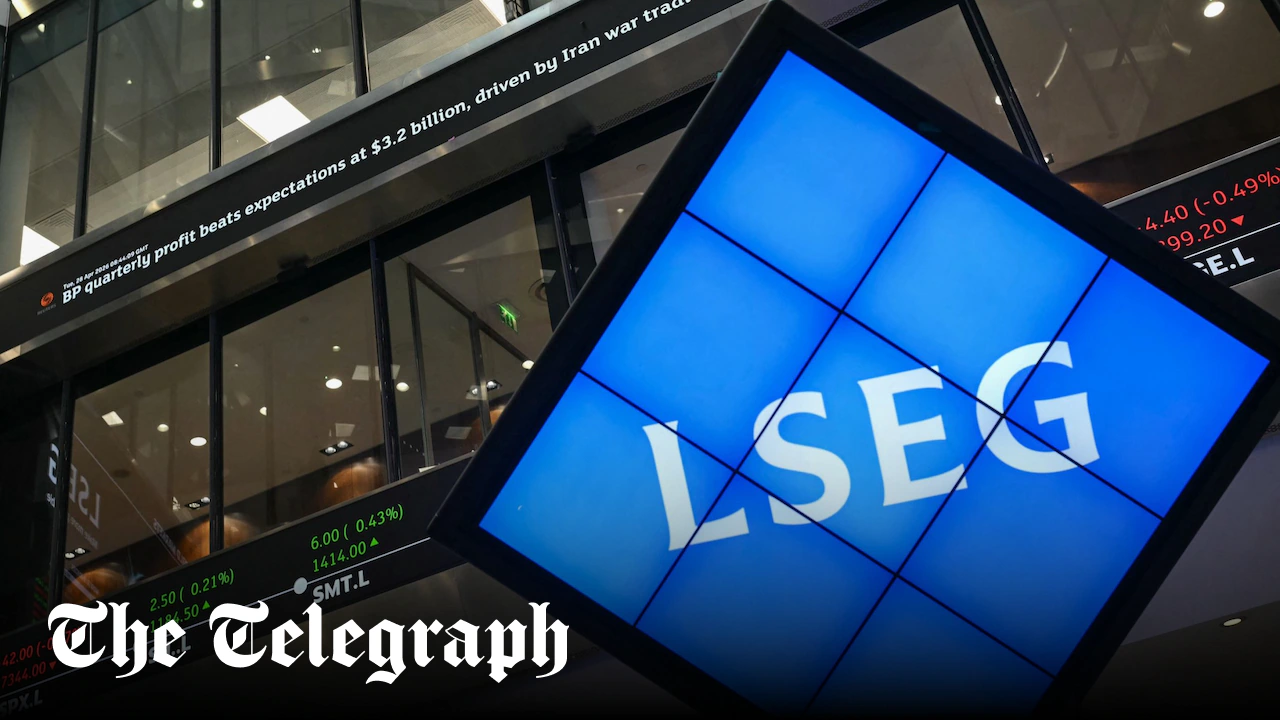
The London Stock Exchange (LSE) is preparing to launch round-the-clock trading for the first time, stepping up efforts to curb an exodus of companies choosing to list in the US.
Called LSE 24, the new trading service will run overnight from 5pm to 7.50am on weekdays. It will operate alongside, rather than replace, the exchange’s main market, which will retain its current hours of 8am to 4.30pm.
Testing is expected to begin by the end of 2026 with initial trading focused on exchange-traded products, such as index funds, from the first half of 2027. Individual stocks are expected to follow later.
Global exchanges are racing to meet demand for near-continuous access as investors seek to react instantly to developments across time zones.
Algorithmic investing, a boom in amateur day trading and a surge of interest in cryptocurrency, which is available to buy or sell at all hours, have only accelerated the shift.
Proponents say longer trading windows will enable faster responses to market-moving events outside traditional hours, from economic data releases to geopolitical shocks and company announcements.
US venues have already been moving towards 24-hour trading, extending their own sessions in recent months.
For the LSE, a round-the-clock offering represents another attempt to boost the City’s competitiveness after an exodus of blue-chip stocks and a long struggle to attract new public listings.
A string of FTSE 100 companies – including CRH, the building materials group, and Flutter, the owner of Paddy Power – have moved to cancel their London listings this year after previously shifting their focus across the Atlantic.
At the same time, the number of new stocks hitting the market via public offerings has remained subdued.
The LSE has also fallen behind South Korea’s main market and the Taiwan Stock Exchange in overall capitalisation this year as Asian indexes have soared on the AI boom.
Julia Hoggett, chief executive of London Stock Exchange Group, described LSE 24 as “an important step in the evolution of our markets”, offering traders greater flexibility beyond standard hours and supporting “more digital, connected global markets”.
She added: “By integrating with LSEG’s digital markets infrastructure, LSE 24 will help support deeper liquidity, greater efficiency and broader participation in our markets, reinforcing London’s position as a leading global financial centre.”
The LSE has also launched a new secondary market for trading shares in privately held businesses in an effort to boost Britain’s attractiveness to high-growth companies.
Earlier this month Wayve, the self-driving car giant, completed an $85m share sale on the so-called Private Securities Market, allowing early employees to sell some of their stock.