
Published Wed, Jun 24, 2026 · 09:20 AM — Updated Wed, Jun 24, 2026 · 11:44 AM
[SINGAPORE] A cautious rebound in Asian stocks following on Tuesday’s global tech-led sell-off lost momentum as losses in bellwether chipmaker Taiwan Semiconductor Manufacturing weighed on the market.
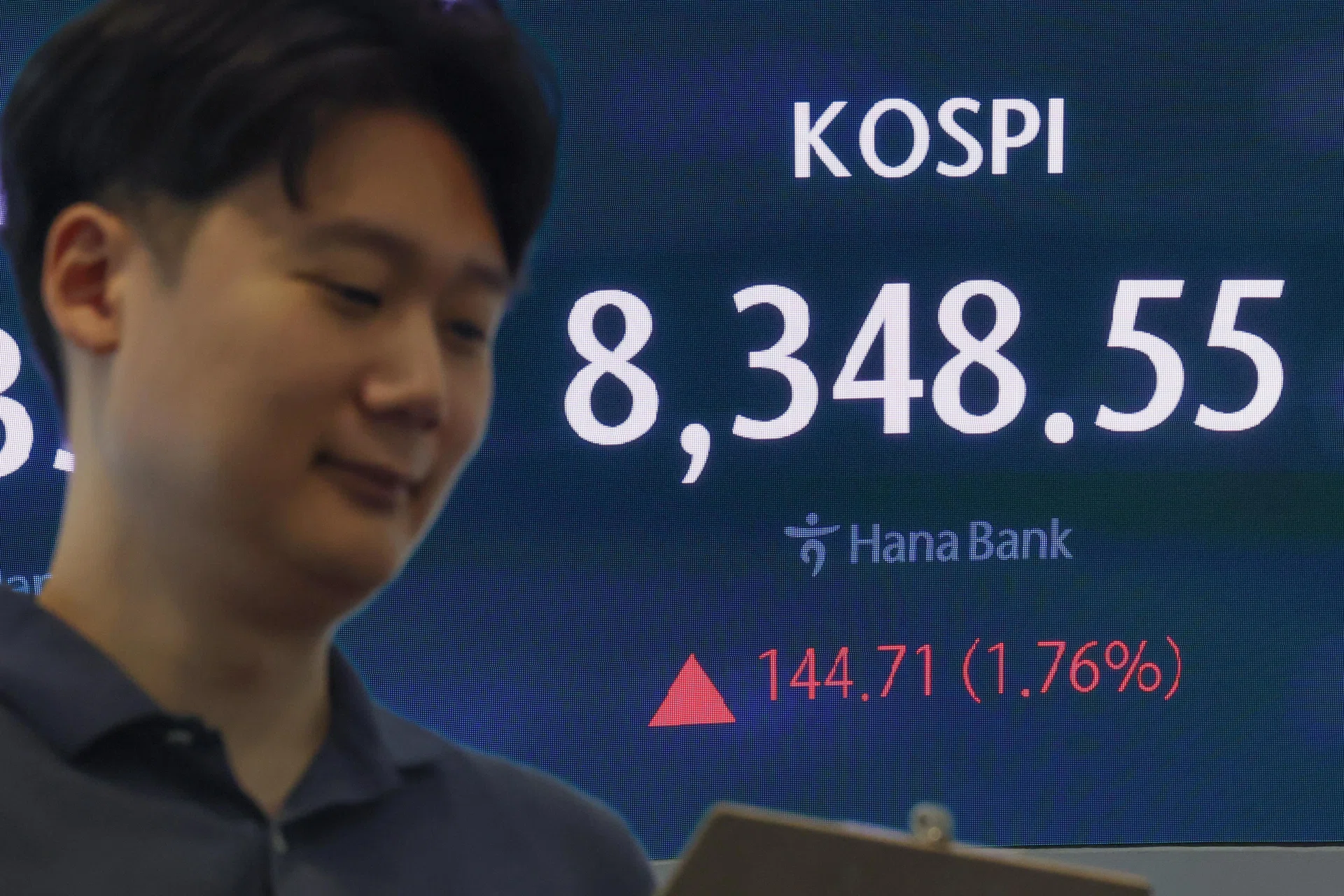
The MSCI Asia-Pacific Index edged lower after rising nearly 1 per cent earlier. Shares of TSMC, which accounts for more than 10 per cent of the regional gauge, lost 3 per cent after largely weathering yesterday’s broader rout. South Korea’s chip-heavy Kospi Index, which tumbled 10 per cent in the previous session, pared an early advance. Samsung Electronics climbed, bolstered by a report that it may announce a buyback.
Shares of Cerebras Systems dropped about 10 per cent in late US trading after the newly public chipmaker gave an annual sales forecast that disappointed investors looking for the company to take a bigger slice of the AI data centre market.
The volatile backdrop has sharpened the focus on memory chipmaker Micron Technology’s results on Wednesday, which may provide crucial cues on whether demand for AI infrastructure remains strong enough to sustain this year’s rally. Veteran strategist Louis Navellier said the report will be the grand finale to a “stunning” earnings season. Micron’s shares dropped 13 per cent on Tuesday but are still up more than 250 per cent in 2026.
“The AI bubble is by far the biggest stock-market bubble that mankind has ever seen – both in scale and scope, in terms of the leverage that’s in there and in terms of the sheer excessive exuberance that’s driven valuations,” Paul Gambles, co-founder and managing partner at MBMG Group, said on Bloomberg TV. “But, we don’t think the markets have actually thrown in the towel yet. It’s got a lot lot further to go down before it gets to chip-wreck. At some point, we think that’s inevitable.”
Wednesday’s moves come after renewed concerns that the artificial intelligence-driven rally may have run too far, too fast triggered a global equity rout that saw the Asian benchmark slump the most since early March. The Nasdaq 100 plunged 3.3 per cent and the S&P 500 fell 1.4 per cent. A closely watched US semiconductor gauge – which had more than doubled from its war-driven lows – lost about 8 per cent.
Growing concern over whether the massive spending commitments by technology firms will generate sufficient returns, coupled with elevated valuations and crowded positioning, have triggered sharp pullbacks in AI-linked stocks from time to time. Even so, equity markets look set to close out the first half of 2026 with some blockbuster gains.
‘Volatility amplifiers’
The MSCI All Country World Index is up about 13 per cent since the end of March, on course for its best quarter since the period ended Dec 31, 2020. For the Kospi, Tuesday’s rout was one of its steepest plunges in history as a turnaround in investor sentiment sparked a rapid unwind of leveraged positions in the world’s best-performing equity market.
“Volatility amplifiers like outflows from levered products probably went into over-drive and became quickly exhausted yesterday, paving the way for today’s rebound in South Korea. But the same is not true for Taiwan, which, in hindsight, was relatively calm in yesterday’s session despite having the same sensitivity to global tech hardware narratives,” said Homin Lee, strategist at Lombard Odier in Singapore.
SEE ALSO

Elsewhere in markets, Brent slipped to trade below US$77 a barrel as tanker traffic through the Strait of Hormuz became more visible following an interim peace agreement between the US and Iran. The Bloomberg US dollar Spot Index steadied after a two-day advance.
Gold fell for a second day, under pressure from a stronger US dollar and the tech-led sell-off in equities that prompted investors to cut bullion holdings and cover losses elsewhere.
Indonesian stocks edged higher after MSCI again delayed its review of the nation’s equity market, saying it needs more time to assess whether recently announced transparency reforms are working. MSCI had in January warned of a possible downgrade to frontier status due to investability concerns.
The New York-based index provider also retained South Korea in its emerging-markets basket.
In fixed income, Treasuries advanced on Tuesday as the equity sell-off and falling oil prices were seen as easing pressure on the Federal Reserve to raise interest rates to contain inflation. Yields fell roughly one to three basis points, led by shorter maturities that are most sensitive to changes in Fed policy. The two-year yield dropped around three basis points to about 4.20 per cent.
An auction of two-year Treasury notes drew strong demand about a week after Kevin Warsh’s first press conference as Fed chair spurred a sharp increase in yields as traders priced in more tightening in response to rising inflation. Focus now turns to this week’s personal spending data for more cues.
Warsh’s commitment to lowering inflation bolsters the Fed’s credibility, supporting long-dated Treasury yields and a lower term-premium, according to Citadel Securities.
Trading in the US$31 trillion US Treasury market since last week’s Fed meeting has been defined by relatively more stable long-dated yields versus the policy sensitive two-year sector, and “a hyper-credible Fed should be good for long end rates,” as per Nohshad Shah, the firm’s head of EMEA fixed-income sales. BLOOMBERG