
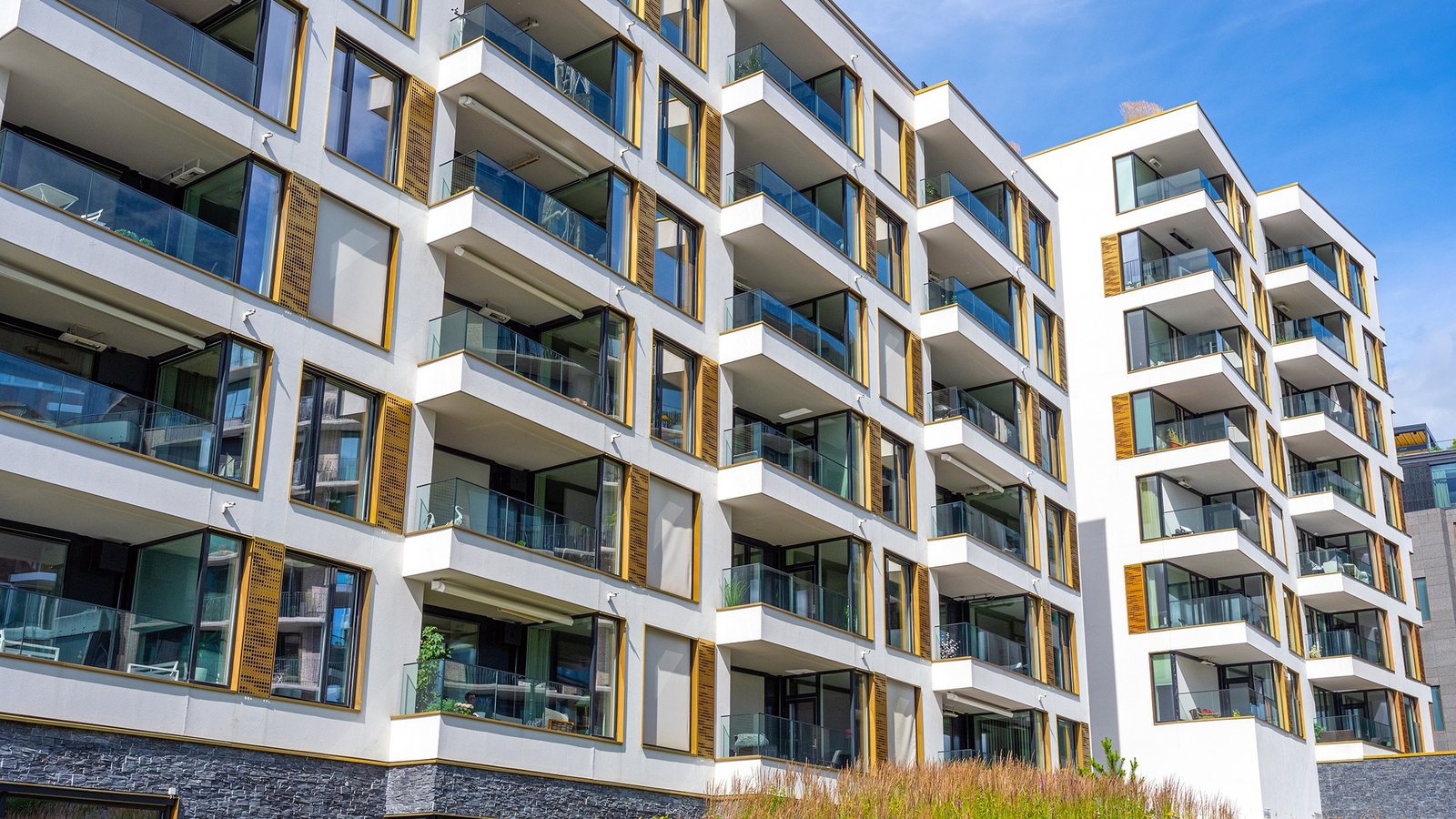
First introduced into England and Wales in 2002, commonhold is a system of land tenure whereby occupiers own the freehold of their flats, while the common parts of the building are owned and managed collectively through a commonhold association (CA), a company whose members are the unit holders themselves.

The loss of longer-term revenue streams might result in developers looking to purchasers to make up the shortfall, possibly leading to an increase in prices for new-build flats
The CA is governed by a commonhold community statement (CCS), in prescribed format.
Commonhold resembles condominium ownership in North America and strata title in Australia.
In England and Wales there are fewer than 20 commonhold developments.
And in January this year the government published a draft bill aimed at reinvigorating the commonhold regime.
The innovations in the bill include:
-
Leasehold ban. Ending the granting of new long leases (more than 21 years) so that all new-build flats and conversions (with some exemptions) will be commonhold.
-
Introduction of “sections”. Subdividing complex developments into a series of independent sections, managed solely by the occupants of that section alone. This should enable complex mixed-use estates to be held as commonhold.
-
Conversion to commonhold. Replacing the current requirement of unanimity with 50 per cent leaseholder consent.
-
Directors. Enabling lenders to replace existing directors where there is mismanagement.
-
Funding. Replacing service charges with commonhold contributions, agreed on by a vote. Mandating CAs to hold reserve funds to cover the cost of future major works.
-
Protection of minorities in the CA. Empowering unit holders to challenge an amendment to the CCS within one month of amendment — limited to certain amendments to CCS.
Impact on flat owners
The commonhold system has obvious benefits for occupiers.
Commonhold owners hold a perpetual interest in their flat and will never have to pay to extend a lease.
They also have a say in the management of the block.
Once the market adjusts, commonhold units ought to attract a higher market value than comparable leasehold properties, if only because of these two advantages.
Leasehold blocks no longer need unanimity to convert to commonhold.
Any non-converting leaseholders will remain leaseholders, and the block will be multi-tenure.
They will continue paying any ground rent to their landlord, but will pay the commonhold contribution in place of the service charge due under their lease.
This could lead to a number of undesirable outcomes:
-
The commonhold contribution may be higher than the service charge because the CA is required to maintain a reserve fund and professional indemnity insurance — liabilities the leaseholders may not have to pay under their lease. The non-consenting leaseholders (who did not vote for conversion) may be unhappy about this.
-
The leaseholders will be required to convert to commonhold when they sell their flats, and will have to pay a premium to do so. An impecunious leaseholder may have no alternative but to increase the asking price for the flat to fund the premium. This could create a two-tier market for flats in the block, thereby further disadvantaging the non-consenting leaseholder.
-
More generally, the democratic governance model has its drawbacks. Neighbours may become sworn enemies if one believes the other is making bad management decisions. The bill purposely limits minority protections to facilitate the smooth running of the CA, so individual unit holders could find themselves subject to the tyranny of the majority. While this issue can also arise in enfranchised blocks, in commonhold conversions there will be an added tension between unit holders (who have paid a premium to join the commonhold) and non-consenting leaseholders (who have not). The former group might grow to resent the latter.
Impact on the housing market
Commonhold is likely to lead to seismic changes for the business model adopted by many developers.
It will no longer be possible for them to retain their freeholds once the building has been completed.
Ground rent revenue, already squeezed by the cap due to commence in 2028, will be further eroded from existing buildings when income from lease extensions is lost.
The loss of longer-term revenue streams might result in developers looking to purchasers to make up the shortfall, possibly leading to an increase in prices for new-build flats.
Developers could find themselves refocusing their business on buildings likely to be exempted from the leasehold ban, such as build to rent or social housing.
Impact on lenders
Buy-in from lenders is critical.
The Law Commission’s 2020 report on commonhold found that the 2002 legislation failed in part because of lender reluctance.
Lenders will be pleased by the measures in the bill designed to ensure the solvency of the CA and the effectiveness of its management.
However, UK Finance — representing 120 first-charge lenders — has expressed concern that mixed tenure blocks represent “non-standard security”, which could be “highly problematic” and likely be harder to mortgage.
Lenders will need to update their lending policies and the systems they use to process applications.
There could be a short-term reduction in the supply of mortgage products while this work is done.
Impact on managing agents
Managing agents will probably have the most day-to-day contact with directors seeking to discharge their management responsibilities.
Possibly in recognition of this fact, the government is considering introducing mandatory professional qualifications for managing agents.
Managing agents may increase their charges to compensate them for the extra work.
The number of existing leaseholders who decide to convert to commonhold when these new rules are introduced remains to be seen.
However, the ban on most new leaseholds will almost certainly happen — albeit probably not until 2029.
The best way to avoid a market slowdown when the ban takes effect is for every group of relevant professionals to use the time before the ban to ensure they have in place the policies, systems and training they need to enable commonhold to function as it should.
There needs to be comprehensive support available for newly appointed directors of commonhold associations to enable them to understand their obligations.
And particular care should be taken, ensuring unit holders understand how to resolve any disputes that arise in a manner that is both economical and best preserves the relationship between parties who are also neighbours.
Scott Goldstein is a property disputes partner at Payne Hicks Beach