
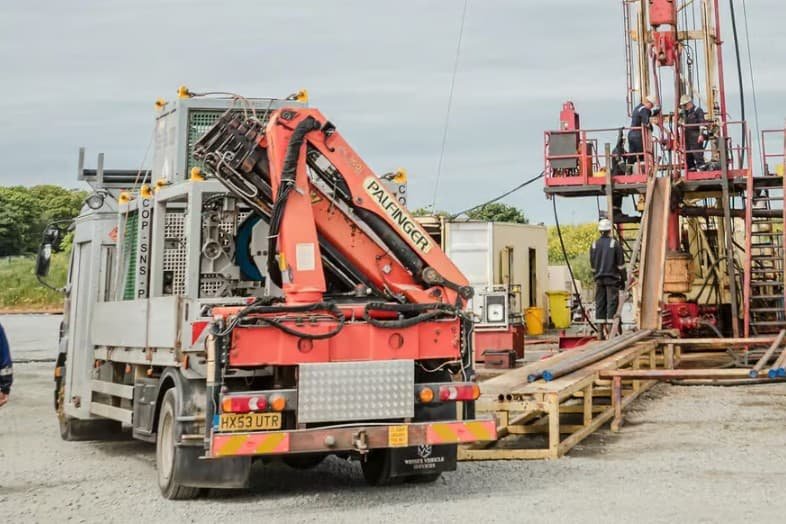

Published 21st Apr 2026, 06:00 BST
Investors have revealed they want to use a controversial method of gas drilling – which campaigners say is “fracking” – in rural east Yorkshire to provide energy to mine for cryptocurrency.
Residents have been protesting for more than 13 years over plans to carry out a “proppant squeeze” in West Newton, which the Environment Agency has described as a “mini-frack”.
This method of gas extraction is not included in the current ban on fracking, which sees liquids pumped deep underground at high pressures to release the gas trapped inside.
It is estimated that West Newton, which sits between Hull and the east Yorkshire coast, has up to eight billion cubic metres of gas sitting underneath it.
The EA recently granted a permit for Rathlin Energy to carry out proppant squeezing, which the firm says “reflects a thorough and independent review of the technical, environmental and operational information we provided”.
Now Rathlin’s investors, Reabold Resources, have confirmed they will use the gas to power a data centre, which would mine Bitcoin – the energy-intensive method of creating more of the cryptocurrency.


Sachin Oza, co-chief executive, told the Daily Telegraph: “A private gas supply means we can run a data centre to mine Bitcoin relatively cheaply.
“Initially, this would help fund the further development of the gas field and prove the concept – meaning it could become the precursor to a far larger data centre.”
This has proved controversial due to the climate impacts of Bitcoin mining.
In 2024, Poland’s annual electricity use matched that of Bitcoin across the world, while cryptocurrency’s water footprint between January 2020 and December 2021 was estimated to be the equivalent of 660,000 Olympic swimming pools.
Reabold has said that the Bitcoining mining would be used “to demonstrate the ability to use West Newton gas to fuel data centre developments that will be crucial to the future UK economy”.
“The significant onshore natural gas resource at the West Newton site in Yorkshire has and will continue to be progressed for the benefit of UK energy security, which is particularly important at this time of significant geopolitical uncertainty.
“In addition, Reabold will continue to engage with all stakeholders, both locally and nationally, to ensure the optimal development pathway for West Newton is achieved.”
The revelations however have left local residents “furious”. Sarah Hockey, of the West Newton Said No campaign group, said: “It’s absolutely disgraceful … this company is saying we’re just going to use it [the site] to make loads and loads of money for ourselves.”
Ms Hockey said herself and other campaigners believe that the company is carrying out fracking, adding that they hoped it would be included in Ed Miliband’s ban.
She said West Newton Said No objected to the increased traffic, emissions and “damage to the local environment”.
“These are real people that are dealing with this, people have moved away and lost their dream homes – I’ve watched grown men cry,” she added.
Fellow campaigner Pete Lomas has brought a judicial review against the EA’s decision to grant Rathlin a permit as it “did not properly consider the potential risks, including small earthquakes and water pollution”.
The regulator responded by saying: “We want to reassure people that the permit variation will ensure that robust levels of environmental protection are met.”
The Department of Energy Security and Net Zero previously told The Yorkshire Post that proppant squeezing would not be included in the fracking moratorium.
A Reabold spokesperson said: “The Environment Agency issued Rathlin Energy Limited, operator of the licence, the variation to the permit for the West Newton ‘A’ Well Site allowing for the recompletion works to be carried out at the West Newton A-2 well subject to certain pre-operational conditions.
“The EA’s approval underscores the diligent and careful work undertaken for the planned recompletion works to take place within a responsible environmental and social governance framework.”