
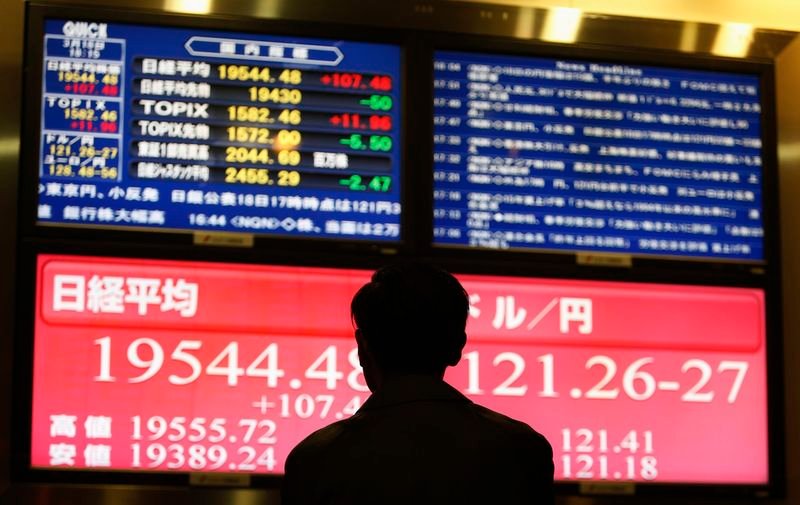
Investing.com– Most Asian stock markets edged higher on Tuesday, tracking overnight gains on Wall Street, as investors drew comfort from a rebound in U.S. technology shares and easing inflation signals, although trading remained subdued amid thin year-end volumes.
Major U.S. stock indices closed higher for the third straight session on Monday, while futures tied to them were steady during Asia hours on Tuesday.
Get exclusive Asian stock markets insight, in-depth analysis by uograding to InvestingPro
Asia stocks rise modestly, volumes thin
Wall Street’s gains were supported by strength in chipmakers and expectations that softer inflation could allow the Federal Reserve more scope to cut interest rates next year, lifting risk appetite across the region.
Market participation, however, was limited as investors trimmed positions and avoided large bets with several Asian markets set to close later in the week for holidays. Year-end trading typically brings lighter volumes, which can exaggerate price moves while keeping overall momentum muted.
China’s rose 0.3%, while the gained 0.6%. Hong Kong’s edged up 0.4%.
South Korea’s added 0.4%, while Singapore’s ticked 0.3% higher.
Futures tied to India’s ticked up 0.1%.
RBA minutes, Japan FX intervention in focus
In Australia, the S&P/ASX 200 jumped over 1%, with miners leading the charge on higher commodity prices.
Minutes from the Reserve Bank of Australia’s latest policy meeting showed policymakers had discussed the possibility that interest rates may need to rise in 2026 if inflation proves more persistent than expected. The minutes highlighted the central bank’s continued focus on price stability, even as markets had been leaning toward a more dovish outlook.
Japan’s was little changed, while the broader gained 0.6%.
Japan’s finance minister Satsuki Katayama said on Tuesday that authorities had a “free hand” to deal with excessive moves in the yen.
The remarks reinforced expectations that Tokyo remains alert to sharp currency swings that could destabilise markets.
A weaker currency tends to support Japan’s export-heavy sectors by boosting overseas earnings, while abrupt appreciation can pressure shares.