
On Thursday, TIME named “the Architects of AI” Person of the Year in recognition of the profound ways that AI is reshaping our society, including the picture for climate and energy.
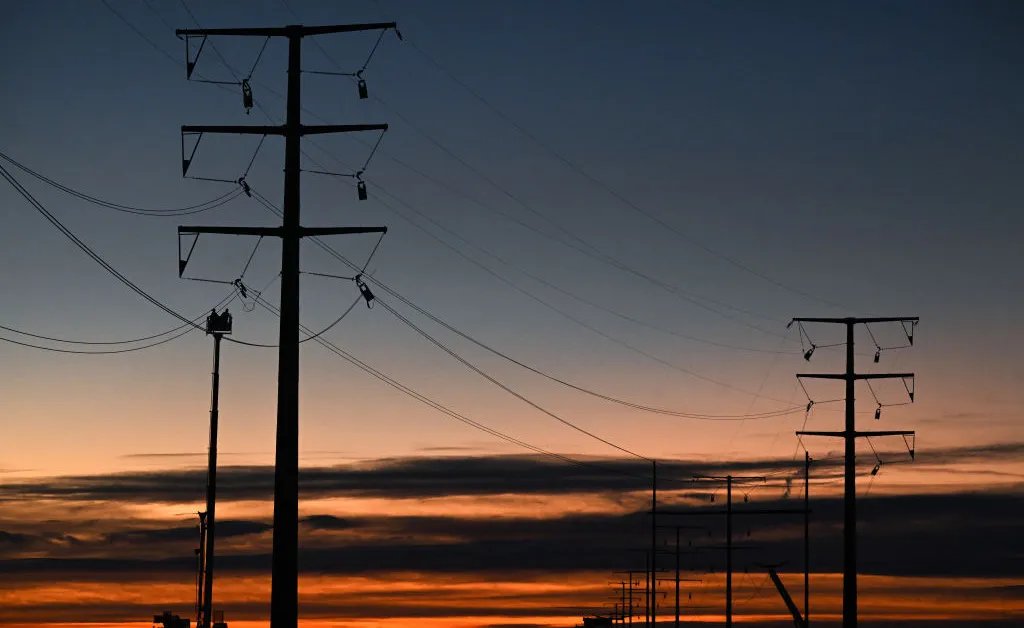
In the short term at least, AI has meant growing energy demand, an increase in projected emissions, and rising electricity prices. It also has completely changed the landscape for the utility sector—turning the slow and steady industry into a fast-growing juggernaut.
It’s a trend I’ve returned to many times this year—and it’s one many politicians have their eye on. This includes political hopeful Tom Steyer. I’ve chatted with Steyer on several occasions over the last few years. The investor turned politician turned investor again who is now competing in another political race has been an outspoken voice about the urgency of addressing climate change and has made it a central part of his time in public life.
Since entering the California governor’s race in November, he has taken a more populist approach, shifting his focus away from climate and toward affordability. This is consistent with the national dialogue, but he has put his own spin on it, calling for California to break up the monopoly electric utilities. In a late November Wall Street Journal letter, he wrote that electric utilities are an example of “coddled powerful interests” that are profiting off everyday people.
“I’ll break up the utility monopolies and reduce electric bills by 25%,” writes Steyer. “That’s only the start.”
The road for Steyer to become governor is a steep one. Recent polls have him in single digits. And the pathway to shift away from the monopoly utility business model is an even steeper one. (Steyer doesn’t specify exactly how he would structure a breakup, and there are different paths with different implications). The industry is politically powerful, and moving away from the long-standing model is complicated and comes with real risks.
Still, Steyer is tapping into a powerful populist sentiment. Rising power demand due to AI, electrification, and other factors has led to a spike in what consumers pay for power, upsetting voters across the political spectrum and playing a key role in statewide elections in Virginia, New Jersey, and Georgia. In this environment, it’s not surprising that the utilities themselves would become a central sticking point in a rapidly evolving landscape. It’s early days, but how the public debate on the role of utilities unfolds will have significant implications—for climate as well as AI and the economy.
The structure of regulated utilities in the U.S. is their greatest strength but also their greatest vulnerability. The exact structure varies from state to state, but broadly, utilities are granted exclusive territories in exchange for an obligation to serve and regulation that allows them to recover approved costs and earn a set return on invested capital. That approach has made investor-owned utilities reliably profitable but not huge growth businesses.
The AI boom—and the rising electricity demand that has followed—is changing that calculus. The Edison Electric Institute, the trade group for investor-owned electric utilities, said earlier this year that its companies would spend more than $1 trillion to meet this demand by 2030. As they build out the grid and add power generation to meet the demand, suddenly their profits are poised to grow and stock prices have risen to reflect that.
But the budding voter and consumer backlash to higher prices threatens to throw a wrench in those plans. Over the summer, I wrote about growing public consternation in Georgia about rising electricity bills as Georgia Power, the state’s monopoly utility, plans a massive infrastructure buildout. In November, voters elected two upstart candidates to the state utility regulator by overwhelming margins. In many places across the state, local officials have sought to halt the build out of data centers, which should in theory slow the growth of new electricity and by extension utility profits.
Breaking up utilities and introducing competition—as Steyer envisions—is a whole different level of pushback that could significantly erode utility profits—or, in the case of replacing investor-owned utilities with public ones, could end the business entirely.
This isn’t a new threat. In the 1990s, many states added competition to parts of the power business, even as the local utility kept a regulated monopoly over the wires. Since then, however, these ideas largely subsided—until the last few years when efforts have bubbled up in places like Maine, New York, and California. At the start of this year, more than 10 communities across the U.S. were considering municipalization, the process of transferring a utility to local control, according to a report from the Brattle Group.
Utilities are certainly aware of the risk, and the issue typically shows up near the top of the risk section of regulatory disclosures. “If legislative and regulatory structures were to evolve in such a way that PSE&G’s exclusive rights to serve its regulated customers were eroded, its future earnings could be negatively impacted,” says last year’s SEC filing from New Jersey utility PSE&G.
Even without breaking up monopoly utilities, a tall order given the many constraints, the rhetoric signals a new public relations challenge for the sector. Consumers can bring anti-data center noise at public hearings and push politicians to crack down on utilities. And it’s a sentiment—with potential for real world consequences—that will likely follow everyone into the new year.
To get this story in your inbox, subscribe to the TIME CO2 Leadership Report newsletter here.
This story is supported by a partnership with Outrider Foundation and Journalism Funding Partners. TIME is solely responsible for the content.