
TEMPO.CO, Jakarta – The Indonesian government has announced a deregulation of its import policy on 10 key commodity groups. This move involves the revocation of Trade Ministerial Regulation Number 36 of 2023 and Trade Ministerial Regulation Number 8 of 2024.
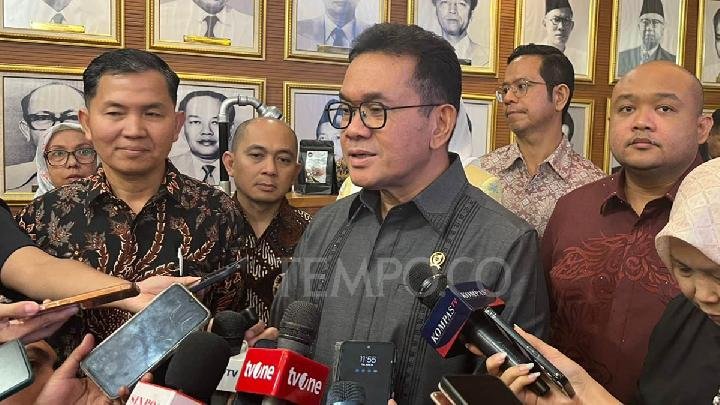
Coordinating Minister for Economic Affairs, Airlangga Hartarto, stated that these revocations are a response to global dynamics and an effort to boost national competitiveness. “Indonesia received a lower review this year. Thus, deregulation is a necessity requested by the President for us to remain competitive,” Airlangga said during a press conference at the Trade Ministry office on Monday, June 30, 2025.
This deregulation impacts 10 commodity groups with a total of 482 harmonized system (HS) tariff codes. Below are the key changes in the import policy for these commodities:
1. Forestry products (441 HS)
Previously: Required import approval (PI) from the Ministry of Forestry.
Now: No prohibitions and restrictions (lartas), but still requires an import declaration from the Ministry of Forestry.
2. Subsidized fertilizers (7 HS)
Previously: Required technical PI from the Ministry of Agriculture.
Now: No lartas.
3. Other fuels (9 HS)
Previously: Required technical PI from the Ministry of Energy and Mineral Resources/the Ministry of Industry.
Now: No lartas.
4. Plastic raw materials (1 HS)
Previously: Required non-technical PI.
Now: No lartas.
5. Saccharin, cyclamate, and alcohol-scent preparations (6 HS)
Previously: Required technical PI from the Ministry of Industry and a surveyor report (LS).
Now: Only requires LS.
6. Certain chemicals (2 HS)
Previously: Required technical PI and LS.
Now: Only requires LS.
7. Pearls (4 HS)
Previously: Required technical PI from the Ministry of Maritime Affairs and Fisheries and LS.
Now: Only requires LS.
8. Food trays (2 HS)
Previously: Required technical PI and LS.
Now: No lartas.
9. Footwear (6 HS)
Previously: Required non-technical PI and LS.
Now: Only requires LS.
10. Two-wheeled and three-wheeled bicycles (4 HS)
Previously: Required non-technical PI and LS
Now: Only requires LS.
However, Trade Minister Budi Santoso clarified that some commodities are excluded from this deregulation policy. This decision is based on three main parameters: strategic goods determined through commodity balance, commodities related to safety, health, and environmental security (K3L), as well as moral risk, and commodities related to strategic and labor-intensive industries.
Budi emphasized that textile products, batik-patterned textiles, and textile goods will still require import approval based on technical considerations from the Ministry of Industry and border supervision. He added, “There is an addition of new regulations, namely ready-to-wear clothing and clothing accessories.”
Previously, the import of ready-to-wear clothing and its accessories was subject to PI based on surveyor reports and Directorate General Regulation Number 7 of 2024, along with border supervision. Now, this regulation will be supplemented with technical requirements from the Ministry of Industry.
The government plans to replace Trade Ministerial Regulation Number 8 of 2024 with Trade Ministerial Regulation Number 16 of 2025 concerning Import Policies and Regulations. This new regulation will serve as the general basis for all import activities. “The import trade ministerial regulation comes into effect two months after being enacted,” Budi confirmed.
Furthermore, the government will issue eight new trade ministerial regulations to provide more detailed regulations for the import of specific commodities. These include:
1. Trade Ministerial Regulation Number 17 of 2025 concerning Import Policies and Regulations for Textile and Textile Products.
2. Trade Ministerial Regulation Number 18 of 2025 concerning Import Policies and Regulations for Agricultural and Livestock Products.
3. Trade Ministerial Regulation Number 19 of 2025 concerning Import Policies and Regulations for Salt and Fisheries Commodities.
4. Trade Ministerial Regulation Number 20 of 2025 concerning Import Policies and Regulations for Chemicals, Hazardous Substances, and Mining Materials.
5. Trade Ministerial Regulation Number 21 of 2025 concerning Import Policies and Regulations for Electronic and Telematics Products.
6. Trade Ministerial Regulation Number 22 of 2025 concerning Import Policies and Regulations for certain industrial products.
7. Trade Ministerial Regulation Number 23 of 2025 concerning Import Policies and Regulations for Consumer Goods.
8. Trade Ministerial Regulation Number 24 of 2025 concerning Import Policies and Regulations for Second-hand Goods and Non-hazardous and Non-toxic Waste.
Editor’s Choice: Danantara Set to Secure Rp162tn in New Foreign Funding
Click here to get the latest news updates from Tempo on Google News